
Yucca moth miner
Prodoxus phylloryctus
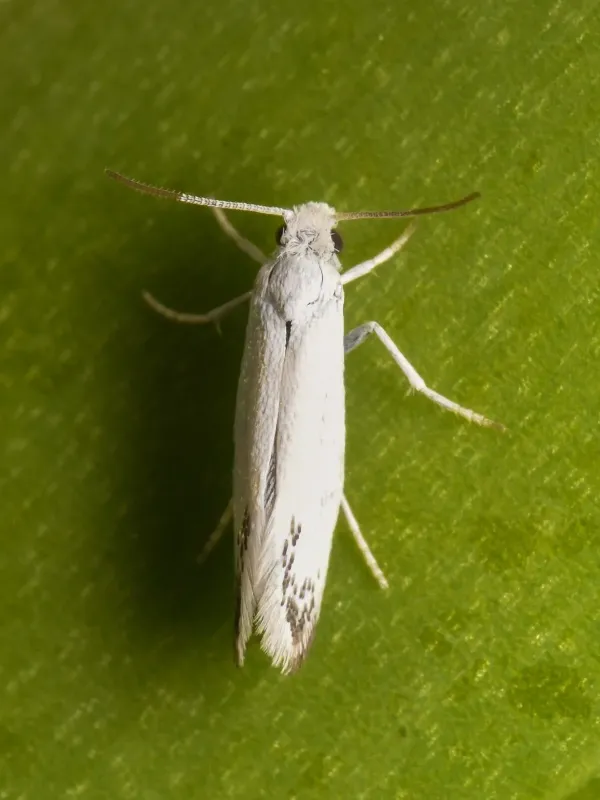
Description
How to identify
The yucca moth miner (Prodoxus phylloryctus) belongs to the family Prodoxidae, a group of moths known for their complex relationships with yucca plants. This specific species is categorized as a pest due to its leaf-mining behavior.
Adult moths are small, nondescript insects often active at night or dusk. They are well-adapted to the environment of the host plant, and their life cycle is highly specialized, typically occurring in sync with the host's physiological phases.
The larval stage is the primary cause of damage. These larvae spend their developmental period inside the leaf tissue, which serves both as a food source and a protective shelter against predators and harsh environmental conditions.
Because they live within the leaf mesophyll, they are rarely seen unless the leaf is carefully inspected or dissected. Their presence is detected mainly by the tracks they leave behind.
Taxonomically, they are distinct from the well-known yucca pollinators, as their larvae focus on mining vegetative tissues rather than solely consuming yucca seeds.
What it damages
The primary hosts for this species are various members of the genus Yucca. The moth targets thick, fleshy leaves where the larva can safely excavate tunnels.
Damage occurs when larvae consume the internal layers of the leaf. This mining activity disrupts the plant's photosynthetic capability, leading to weakened leaves and decreased plant vigor.
In cases of heavy infestation, larvae may also feed on the base of flower stalks, which can lead to structural instability of the inflorescence or early wilting of the blossoms.
Visible scarring and internal decay of the leaves are common, which significantly detracts from the plant's aesthetic value, a critical factor for ornamental gardening.
Secondary infections, including various fungi and bacteria, frequently colonize the damaged tissues, potentially leading to widespread necrosis and the death of the affected leaf or the entire plant.
When it appears
The phenology of Prodoxus phylloryctus is strictly regulated by the seasonal growth of its host. Adult activity typically coincides with the arrival of spring and the beginning of the vegetative season.
Adults emerge to mate and lay eggs during the period when the yucca plant is pushing out new, tender foliage, which is essential for the survival of the neonate larvae.
The larval development phase usually spans the duration of the summer months. During this time, they remain active, continuously creating tunnels that expand as the larvae increase in size.
As autumn approaches, mature larvae prepare for their dormant stage. This overwintering usually occurs within the host's dried tissues or by moving into the soil at the base of the plant.
In warmer climates, the moth can complete multiple generations per year, creating a continuous threat throughout the growing season and requiring constant monitoring.
Signs of infestation
The presence of the pest is most easily recognized by the characteristic patterns left on the surface of the yucca leaves, which are indicative of the larvae's feeding habits.
- Winding, light-colored, or translucent tunnels within the leaf blade.
- Small, dark frass deposits visible through the transparent leaf cuticle.
- Yellowing and necrotic patches along the leaf surface.
- Premature drying of leaf tips or entire sections of the leaf.
- Tiny emergence holes where the adult moth has exited the mine.
Control measures
Effective management begins with early detection. Regularly inspect your yucca plants for the first signs of leaf mining, especially during the spring growth phase.
Sanitation is a vital first step; prune and destroy any affected leaves or stalks immediately to reduce the population and prevent the larvae from completing their development.
Systemic insecticides are the most effective chemical control method. Because the pest lives inside the leaf, contact sprays are largely ineffective; a systemic product is absorbed by the plant and kills the larvae from within.
Maintain healthy plant conditions through proper irrigation and balanced fertilization, as stressed plants are significantly more susceptible to insect colonization.
In highly infested areas, consider using organic or biological controls if available, and ensure that leaf litter around the base of the plants is cleaned up in late autumn to remove overwintering larvae.
Taxonomy
- Latin name
- Prodoxus phylloryctus
- Order
- Lepidoptera (butterflies)
- Family
- Prodoxidae
- EPPO code
- PRDXPH
Discussion
No discussions yet — be the first.