
Yucca moth
Tegeticula mexicana
Description
How to identify
The Yucca moth belongs to the family Prodoxidae and is famous for its obligate mutualistic relationship with the Yucca plant.
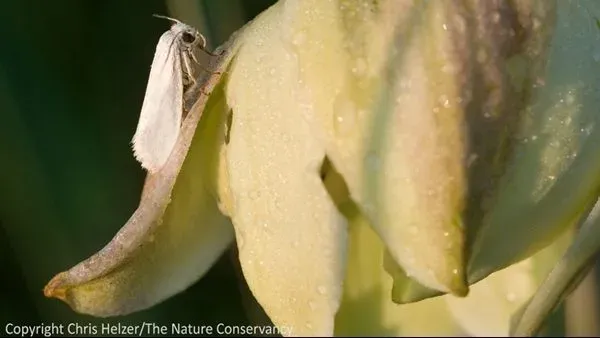
Adult moths are small, white or creamy-colored insects with a wingspan of approximately 20–30 mm.
The female possesses unique specialized appendages on her mouthparts that allow her to actively collect and carry pollen.
The larvae are typically whitish, legless or short-legged caterpillars that reside entirely within the plant tissue.
This species is highly specific to the Yucca genus, making it a critical biological agent in the ecology of desert plants.
What it damages
Damage is primarily concentrated within the seed pods, where larvae feed on developing yucca seeds.
While the interaction is essential for plant pollination, larvae may consume a significant portion of the seed crop.
High infestation rates can lead to reduced germination capacity for seeds if collected for nursery propagation.
Structural damage to the seed capsule can cause premature dropping of the fruit before full maturation.
In ornamental landscaping, this damage is generally cosmetic, but it can be problematic if seed production is intended.
When it appears
The moth's life cycle is strictly synchronized with the flowering phenology of the yucca plant during the summer months.
Mating and pollination activities occur during the night when the yucca flowers are open.
After pollination, the female oviposits eggs into the floral ovary using her specialized ovipositor.
Larvae develop throughout the summer, feeding on the seeds as the fruit capsule matures and dries.
Once mature, larvae exit the pods and burrow into the soil to form cocoons, where they undergo diapause until the next season.
Signs of infestation
The most visible sign of infestation is the presence of small exit holes in the mature, dried seed pods.
The interior of a damaged pod will contain frass, webbing, and hollowed-out seeds rather than viable ones.
Premature shriveling or yellowing of specific capsules is a strong indicator of larval development inside.
In some cases, the flower petals may show physical damage or early senescence caused by the moth's entry.
- Circular exit holes in dried fruit.
- Visible larvae or frass within the capsule.
- Reduced seed count upon harvest.
Control measures
Control is generally unnecessary in ecological contexts, as the moth is the sole pollinator of the plant.
To protect seed crops, gardeners should use fine netting to cover the inflorescences before the moths arrive.
Chemical control is strongly discouraged as it disrupts the essential pollination cycle and harms beneficial insects.
Sanitation practices, such as removing and destroying fallen pods, can limit the local population of larvae entering the soil.
Hand-picking affected capsules early in the season can prevent the larvae from completing their development and re-infesting the area.
Taxonomy
- Latin name
- Tegeticula mexicana
- Order
- Lepidoptera (butterflies)
- Family
- Prodoxidae
- EPPO code
- TEGTME
Discussion
No discussions yet — be the first.