
Yucca moth
Tegeticula
Description
How to identify
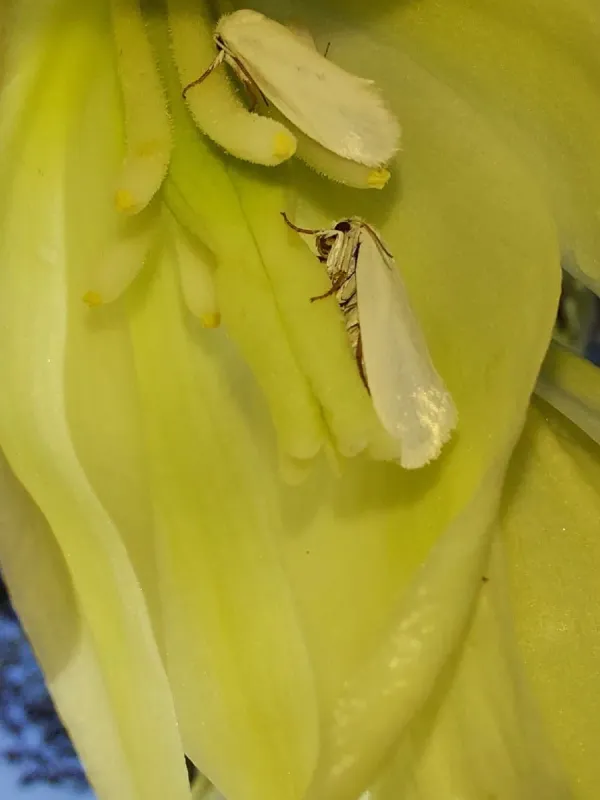
The yucca moth (genus Tegeticula) belongs to the family Prodoxidae, order Lepidoptera. These are small moths known for their specialized mouthparts that allow them to deliberately transfer pollen.
The adults are relatively inconspicuous, usually possessing pale or silvery-white wings. They are strictly nocturnal, which protects them from many day-active predators.
The relationship between the yucca moth and the yucca plant is a classic example of obligate mutualism. The plant depends on the moth for pollination, and the moth larvae depend exclusively on the plant's seeds for food.
Larvae are typically white or cream-colored caterpillars with a chewing mouthpart, designed to thrive within the protective environment of the seed pod.
Their life cycle is perfectly timed with the yucca's blooming period. They complete one generation per year, ensuring the survival of the species along with the host plant.
What it damages
The primary damage is caused by the larvae feeding on developing yucca seeds. When the female lays her eggs, she places them directly into the ovary, ensuring food for her offspring.
As the larvae grow, they consume a significant portion of the seeds, which can reduce the seed yield of the host plant substantially.
In ornamental landscaping, this damage is generally considered harmless to the overall health and appearance of the yucca plant, as the foliage remains untouched.
Commercial growers and plant breeders suffer the most damage, as the presence of these moths complicates the harvesting of viable, intact seeds for commercial distribution.
When moth populations are high, the majority of seeds within a pod may be consumed, effectively preventing natural seed germination and plant reproduction in the wild.
When it appears
The moths emerge from the soil precisely when the yucca plants begin to flower, usually in the mid-to-late summer months.
Mating and oviposition occur during the night. After mating, the female moth travels to a flower, collects pollen, and visits another flower to deposit eggs and pollen simultaneously.
The larval stage occurs inside the fruit, lasting several weeks as the seeds develop and mature alongside the feeding caterpillars.
By late summer or early autumn, the mature larvae exit the seed pods and burrow into the soil to pupate and enter diapause.
They overwinter as pupae in cocoons located in the soil beneath the host plant, waiting for the cues of the next year's flowering season to emerge.
Signs of infestation
The most reliable sign of moth activity is the consistent development of fruit pods on yucca plants, indicating successful pollination occurred during the night.
Upon closer inspection, you may find small exit holes in the walls of the seed pods, which serve as doorways for the mature larvae to exit the fruit.
Opening a seed pod often reveals remnants of seeds and larval frass, confirming that the internal contents have been compromised by feeding activity.
Adult moths can occasionally be observed resting on yucca flowers or flying nearby at night, especially during the peak of the blooming season.
A lack of healthy seeds in harvested pods, despite the presence of fully developed fruit, is a definitive indicator of previous infestation by these larvae.
Control measures
In typical garden settings, no control is necessary as the moth is essential for the plant's natural reproduction cycle and does not damage the aesthetic appeal.
If seed production is a priority, covering the flower stalks with fine-mesh netting before the buds open will effectively prevent the moths from reaching the flowers.
Manually removing and destroying infested pods before the larvae emerge can help manage the population density in a controlled garden environment.
Chemical intervention is generally discouraged, as these moths are beneficial pollinators. Indiscriminate spraying would harm local biodiversity and reduce seed set.
Cultural practices, such as clearing debris and gently tilling the soil around the base of the plant in late autumn, can destroy overwintering cocoons and disrupt the life cycle.
Taxonomy
- Latin name
- Tegeticula
- Order
- Lepidoptera (butterflies)
- Family
- Prodoxidae
- EPPO code
- TEGTSP
Discussion
No discussions yet — be the first.