
American badger
Taxidea taxus
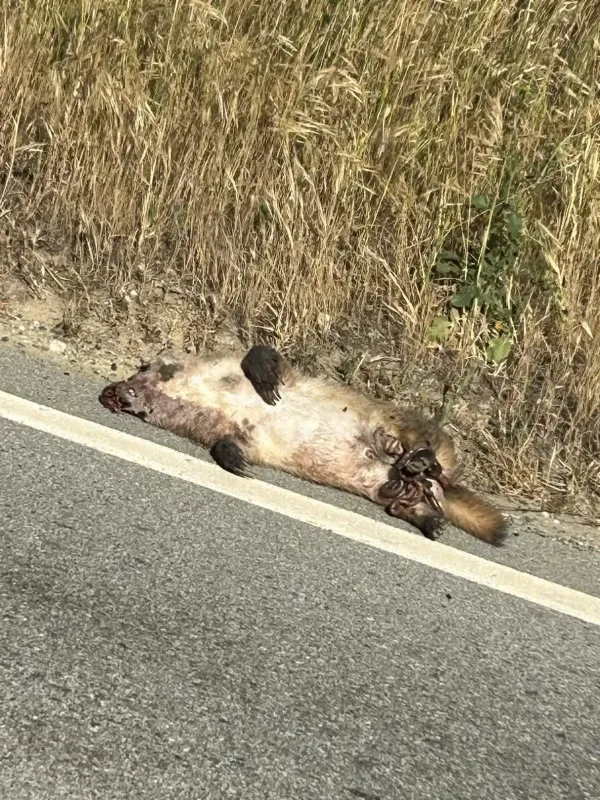
Description
How to identify
The American badger (Taxidea taxus) is a carnivorous mammal of the weasel family, specialized for life on open plains and agricultural landscapes. It is characterized by a stocky body, flat shape, and powerful forelimbs equipped with long claws used for digging.
This species is predominantly nocturnal, which makes it difficult for farmers to spot during field operations. An adult badger weighs between 4 and 12 kilograms, showcasing immense strength in burrowing deep tunnels beneath the soil.
Visually, the American badger is identified by its grizzled greyish-brown fur and a distinct white stripe extending from its nose to its shoulders. It is a highly territorial animal that rarely tolerates intruders within its established range.
Its physical design allows for rapid excavation, meaning it can disappear into the earth within seconds. This ability makes it a formidable pest to manage in large, open row-crop environments.
Due to its high mobility, a single badger can cover large areas of farmland in a single night, often creating multiple burrow sites across different parts of a field.
What it damages
The primary damage caused by the American badger is the large-scale disruption of soil structure. Their extensive burrowing activities create unstable ground, leading to soil erosion and degradation of topsoil quality.
Soil excavated from tunnels often buries young crops, leading to significant yield losses in those specific areas. The disruption of plant root systems caused by underground tunneling leads to wilting and death of crops.
Badgers frequently damage irrigation systems, including subsurface pipes and drainage infrastructure. This can cause flooding of fields, water loss, and failure of critical irrigation equipment.
Agricultural machinery is at risk when operating in areas with active or old badger burrows. Wheels of tractors and harvesters can sink into these hidden tunnel systems, causing mechanical failure and potential injury to operators.
The presence of badgers also interferes with field maintenance, as the mounds of dirt created at burrow entrances complicate mechanical weeding and other soil-tillage practices.
When it appears
Activity of the American badger peaks during spring and summer, as this corresponds with their mating and denning seasons. During this time, they are most aggressive in expanding their burrow systems across fields.
In autumn, badgers increase their hunting activity to build up fat reserves for the winter, leading to more frequent digging in search of prey such as rodents, which further damages field integrity.
Although badgers do not hibernate in a traditional sense, they enter a period of reduced activity during winter. However, they may still emerge during warm spells, causing damage to winter crops and soil structures.
Spring tillage and planting seasons are the most critical times, as these coincide with high badger activity. Early detection of burrow sites before planting is essential for field safety.
Wet soil conditions tend to trigger increased burrowing behavior, as the softer ground is easier for the animal to move, leading to higher damage potential after rain events.
Signs of infestation
The most prominent sign of an American badger is a large, semi-circular or elliptical hole in the ground, accompanied by a substantial mound of excavated soil.
Distinct paths or trails leading from the burrows to hunting grounds often become visible due to flattened vegetation or claw marks left on the ground surface.
Subsurface soil collapses near field roads, irrigation ditches, or fence lines are strong indicators of an active tunnel system belonging to this species.
Droppings found near the burrow entrances are a reliable confirmation of their residency in a specific area of the farm.
Areas of localized crop failure or wilting where roots have been disturbed underground are common indirect signs of badger activity within a planting zone.
Control measures
Controlling the American badger requires a multi-faceted approach, often focusing on exclusion and habitat modification to make the field less appealing to the animal.
Installing buried wire mesh fencing, reaching at least 50 centimeters deep, is the most effective physical barrier against badger infiltration into sensitive crop areas.
Systematic collapsing of burrows using heavy equipment is a common practice to discourage badgers from establishing permanent residency in active agricultural zones.
Integrated pest management focusing on reducing rodent populations in the field is crucial, as an abundance of prey is the primary factor attracting badgers to farmland.
Consulting with local wildlife authorities is recommended, as regulations regarding the protection of badgers vary, and legal methods for removal must be strictly followed.
Taxonomy
- Latin name
- Taxidea taxus
- Family
- Mustelidae
- EPPO code
- TAXITA
Discussion
No discussions yet — be the first.