
Tanystoma maculicolle
Tanystoma maculicolle
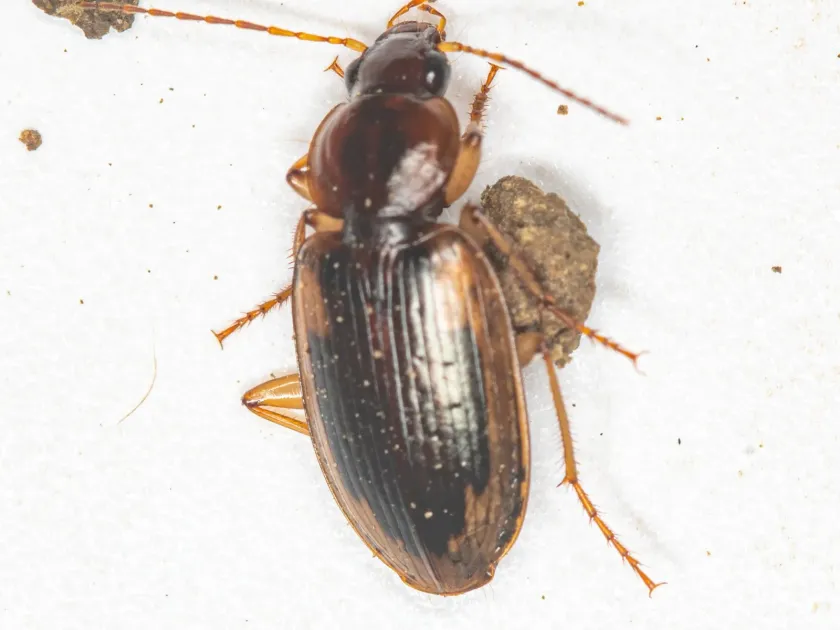
Description
How to identify
Tanystoma maculicolle is a species of weevil (family Curculionidae) known for its distinctive morphology. Like other weevils, it features a characteristic snout or rostrum, which it uses to feed on various plant tissues.
The adult beetles are identifiable by the specific spotted pattern on their pronotum, which gives the species its scientific name. Their bodies are generally compact and covered with small, resilient scales that may change appearance based on environmental moisture levels.
The larval stage is typically legless, white-colored, and resides within the soil or deep inside the plant tissues where they feed on roots. The adults are capable of flight, allowing them to migrate between fields and find suitable host plants for oviposition.
Their reproduction is closely tied to soil temperatures and moisture content, which determine the rate of development. Females deposit eggs near the root systems of preferred host plants, ensuring the emerging larvae have immediate access to food.
These insects are primarily active in regions with temperate climates, preferring fields that receive significant sunlight. They are often spotted during the early stages of the growing season when environmental conditions become stable.
What it damages
Adult beetles cause visible damage by chewing the edges of leaves, creating characteristic notches. This feeding behavior reduces the total surface area available for photosynthesis, which can stunt the overall growth of the plant.
Larvae represent a more hidden but dangerous threat, as they feed on the root systems of host plants. By consuming the roots, they disrupt the plant's ability to uptake water and essential minerals, leading to wilting and reduced vigor.
Host crops for this pest include a range of vegetables and certain field crops. Young plants are particularly vulnerable, as their limited root systems can be easily destroyed by a small number of larvae.
Severe root damage often facilitates secondary infections by soil-borne pathogens, such as fungal root rots. Consequently, the symptoms observed by farmers may be misidentified as disease rather than pest damage.
Economic impact is determined by the severity of the infestation, with losses ranging from minor yield reductions to complete crop failure in localized areas. Prevention of larval population growth is essential for crop security.
When it appears
The appearance of Tanystoma maculicolle in fields typically coincides with the warming of the soil in early spring. Adult beetles emerge from their overwintering sites to begin feeding and mating as soon as temperatures permit.
During the summer months, the pest reaches its peak reproductive activity. This is the time when farmers should be most vigilant, as the accumulation of new eggs and active larvae can cause rapid escalation in damage.
As autumn approaches, the beetles prepare for overwintering, retreating into the soil to survive the cold. The depth of their retreat depends on the soil structure and expected severity of the winter season.
Population dynamics are heavily influenced by the weather conditions of the previous season. Mild, moist winters and warm springs generally support higher survival rates, increasing the risk of significant outbreaks.
Consistent monitoring throughout the season allows for timely interventions. Early detection of adult activity can prevent the subsequent larval damage that is much harder to control once it begins.
Signs of infestation
The initial signs of an infestation are the notched edges on foliage caused by feeding adults. These notches are often easy to spot if you inspect the undersides of the leaves and the growth tips.
Unexplained wilting of plants during the warmest hours of the day is a major indicator of larval activity on the roots. If plants show signs of distress while soil moisture is adequate, root feeding is a likely cause.
Field inspection involves carefully digging up the soil around the base of the plant to check for the presence of larvae. Finding white, legless larvae in the rhizosphere confirms the pest's involvement.
A noticeable lack of plant uniformity across the field can also signal a localized infestation. Plants in affected areas may appear stunted, chlorotic, or weaker than those in unaffected zones.
Regular scouts for adults on the soil surface at dusk or dawn can provide early warning. If adults are present, there is a strong probability of egg-laying occurring nearby.
Control measures
Cultural practices form the foundation of management for this pest. Deep fall plowing is highly effective, as it exposes overwintering stages to harsh temperatures and predatory birds.
Crop rotation is a critical tool that disrupts the pest's lifecycle by replacing host plants with non-host crops. This forces the larvae to relocate or die, significantly reducing the pressure in the next season.
Chemical control should be implemented during the adult stage, prior to the peak egg-laying period. Utilizing registered insecticides with the correct mode of action is essential to protect crop quality.
Biological control methods, such as the application of entomopathogenic nematodes, offer a targeted approach to managing larval populations within the soil without disrupting beneficial organisms.
Managing weeds along field borders and ditches is also important, as these areas often serve as refuges for adult beetles. Maintaining clean fields makes them less attractive to migrating pests.
Taxonomy
- Latin name
- Tanystoma maculicolle
- Order
- Coleoptera (beetles)
- Family
- Carabidae
- EPPO code
- AGOUMA
Discussion
No discussions yet — be the first.