
Eastern chipmunk
Tamias striatus
Description
How to identify
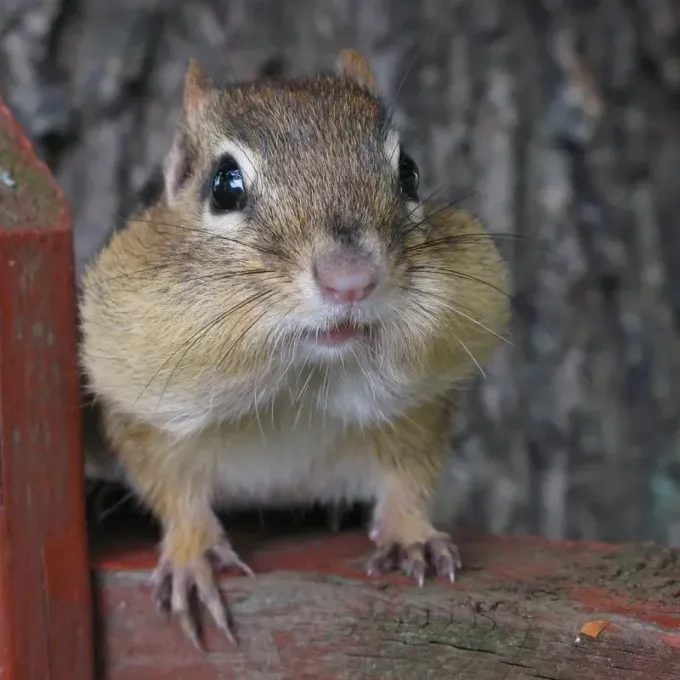
The Eastern chipmunk (Tamias striatus) is a small, ground-dwelling rodent belonging to the Sciuridae family. It is easily identified by its distinctive five dark longitudinal stripes running along its back, bordered by white or cream-colored fur.
These animals are highly adapted to life on the ground but are also skilled climbers. They construct complex burrow systems that include storage chambers, nesting areas, and tunnels that can extend several meters in length, providing them with a secure shelter.
Chipmunks are diurnal, meaning they are most active during the day. They possess expansive cheek pouches that allow them to carry large quantities of seeds, nuts, and fruit back to their burrows, which often leads to significant losses in gardens and farms.
The reproductive cycle includes two breeding seasons per year, typically in spring and late summer. Litters consist of three to five pups, which mature quickly, causing population densities to rise rapidly in areas with abundant food supplies.
During colder months, they enter a state of torpor, a light hibernation. They do not sleep continuously but wake periodically to consume the extensive food reserves they have cached in their burrows during the autumn.
What it damages
The Eastern chipmunk causes substantial damage to vegetable crops, particularly by raiding newly sown seeds. Their preference for corn, beans, and pumpkin seeds can devastate an entire planting area within a few days.
In orchards and garden beds, they frequently consume stone fruits, berries, and apples. By biting into fruit while it is still on the vine or tree, they introduce pathogens that lead to rapid decay and attract further pests.
Their burrowing activity is physically destructive to the landscape. Excavating tunnels beneath trees and shrubs exposes root systems, causing the plants to lose stability, experience nutrient stress, and eventually wither.
Flower gardens are particularly vulnerable to their activity. Chipmunks have a known habit of digging up and eating flower bulbs, especially tulips, crocuses, and daffodils, right after they have been planted.
Young trees and woody shrubs often suffer from bark gnawing, which can girdle the stem and disrupt the plant's vascular system, leading to the death of the branches or the entire plant.
Signs of infestation
One of the primary signs of a chipmunk infestation is the presence of small, circular burrow openings, usually 5-7 cm in diameter, often hidden near rocks, logs, or foundation walls.
Finding piles of discarded seed husks, shells, or partially eaten fruits scattered around the base of trees or near rock piles indicates the presence of a chipmunk feeding area.
Widespread disappearance of seedlings or unearthed bulbs, which are often left with clear teeth marks, confirms that chipmunks are actively foraging in your planting beds.
Distinctive vocalizations, such as sharp "chip" or "chuck" sounds accompanied by tail flicking, are clear behavioral indicators that these rodents are nearby and alert to human presence.
Visible trails of trampled vegetation leading to their burrow entrances become more apparent as the season progresses and the chipmunks move repeatedly between their food sources and shelters.
Control measures
Exclusion is the most effective long-term strategy. Installing hardware cloth or fine-mesh wire barriers around bulbs and beneath raised garden beds prevents the rodents from accessing the sensitive root zones.
Live trapping is a humane method to remove nuisance individuals. Using cage traps baited with peanut butter or sunflower seeds allows for the relocation of the animals to a suitable natural habitat away from gardens.
Modifying the habitat by removing piles of wood, stone, or debris minimizes available cover, making the area less attractive for chipmunks to establish their burrows and nesting sites.
The use of commercial repellents containing predator scents or natural oils (such as peppermint) can discourage chipmunks from frequenting specific areas, though these require frequent reapplication.
- Planting repellent companion crops like garlic or onions;
- Installing motion-activated sprinklers to deter rodents;
- Regularly harvesting crops to reduce the attractiveness of the garden.
Taxonomy
- Latin name
- Tamias striatus
- Order
- Rodents
- Family
- Sciuridae
- EPPO code
- TAMIST
Discussion
No discussions yet — be the first.