
Pallas's squirrel
Callosciurus erythraeus
Description
How to identify
Pallas's squirrel (Callosciurus erythraeus) is a species of squirrel native to Southeast Asia. It is classified within the Sciuridae family and is known for its ability to rapidly colonize new environments.
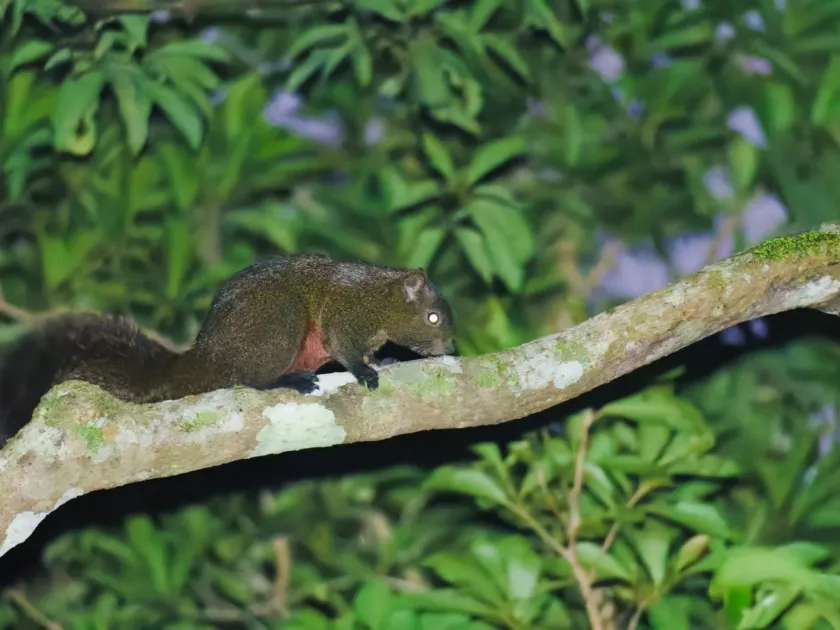
The squirrel features an olive-brown dorsal coat and a distinct reddish or orange belly. It has a slender body, usually measuring 20–25 cm in length, with a bushy tail that aids in balance.
This species is highly active during the day and shows great agility in moving across forest canopies. Its behavior is more aggressive compared to native squirrel species, allowing it to compete effectively.
The biological cycle is characterized by a high reproductive rate, with females often producing two litters per year. This potential for population growth facilitates its success as an invasive species.
Due to its lack of natural predators in introduced areas, Pallas's squirrel populations can reach high densities, leading to significant economic impacts on forestry and agriculture.
What it damages
This rodent is a serious threat to fruit orchards and nut plantations. It consumes buds, flowers, and fruits, including walnuts, hazelnuts, and various soft fruits, leading to substantial yield losses.
A major form of damage is the barking of trees. By gnawing away the bark to reach the inner tissues, these squirrels disrupt the tree's vascular system, causing branch death or total tree failure.
These wounds create entry points for various pathogens, including fungi and bacteria, which can lead to diseases like canker, further weakening the health of the orchard.
The predation of bird eggs and nestlings impacts the biodiversity of the orchard, removing natural insect-control agents and leading to an increase in insect-related issues.
In forestry, the damage to young trees can be catastrophic, as the squirrels often target the apical shoots, destroying the tree's form and stunting its growth.
Signs of infestation
Evidence of activity includes partially eaten fruits and nuts found on the ground, showing precise tooth marks made by rodent incisors.
Strips of removed bark on branches and trunks are highly visible. Circular gnawing around the trunk is a critical indicator of severe damage that can kill the tree.
Large, spherical nests called drays, composed of woven twigs, leaves, and bark, are often found in the upper canopy, serving as permanent or semi-permanent homes.
Unusual bird activity is a common sign, as native birds often react aggressively or nervously when a squirrel, which is a nest predator, is present in the area.
Droppings left on branches or near feeding sites are reliable indicators that the squirrels have established a territory in that specific section of the orchard.
Control measures
Physical barriers such as metal sleeves or metal cones attached to tree trunks prevent the squirrels from climbing into the canopy to access fruits or bark.
The use of live traps is a widely accepted control method. Once caught, squirrels should be managed according to local regulations regarding invasive species.
Maintaining clear spaces between tree crowns by regular pruning limits the squirrels' ability to move across the entire orchard canopy, isolating them to specific areas.
Acoustic and ultrasonic deterrents can provide temporary relief, though their efficacy varies and usually requires frequent rotation to avoid habituation.
Integrated pest management (IPM) strategies, involving professional wildlife control services, are recommended when dealing with established populations to ensure sustainable results.
Taxonomy
- Latin name
- Callosciurus erythraeus
- Order
- Rodents
- Family
- Sciuridae
- EPPO code
- CLLCER
Discussion
No discussions yet — be the first.