
Beautiful squirrel
Callosciurus
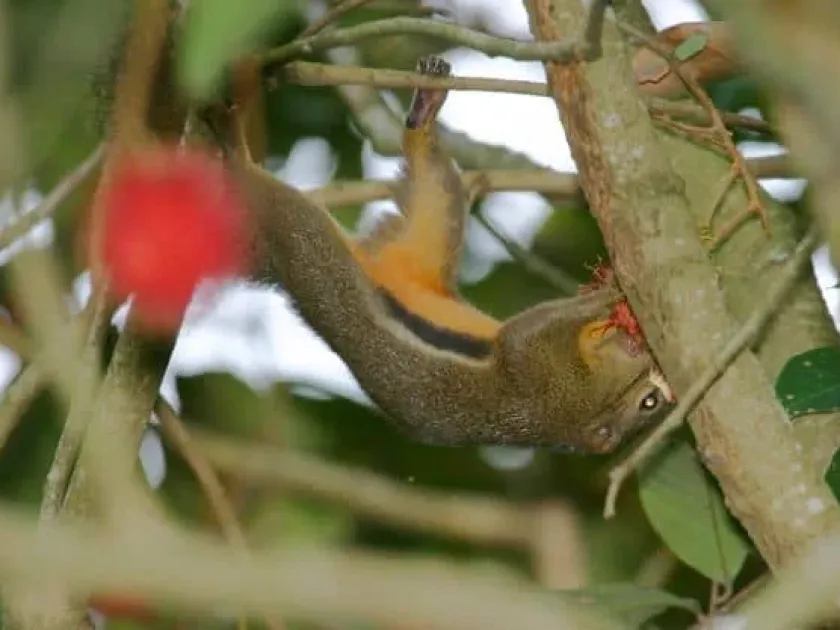
Description
How to identify
The beautiful squirrel (Callosciurus) is a genus of rodents in the Sciuridae family, widely recognized for its impact on agriculture and forestry. These animals are typically small to medium-sized, characterized by agile bodies and long, bushy tails adapted for life in the canopy.
Their fur coloration is diverse, often ranging from greyish-brown to reddish, which provides excellent camouflage among tree branches and foliage, making them difficult to spot during routine garden inspections.
Taxonomically, they belong to the order Rodentia. As highly intelligent and adaptive mammals, they have successfully colonized various habitats, including human-managed plantations and orchards where food is abundant.
The reproductive rate of Callosciurus is high, allowing for rapid population growth. In favorable conditions, they can establish stable colonies that are extremely difficult to eradicate once they settle in a new area.
These rodents are territorial and social, often working in small groups or pairs to forage. Their physical ability to jump between trees and climb vertical surfaces allows them to access almost any part of a tree in an orchard.
What it damages
These squirrels cause significant damage to nut and fruit crops. They are particularly fond of walnuts, hazelnuts, and various pomaceous fruits like apples and pears, consuming them well before they are ready for harvest.
Beyond fruit consumption, they frequently strip the bark from trees. This behavior, known as "bark ringing," can weaken trees significantly, restrict sap flow, and create entry points for secondary infections like fungal pathogens.
They often target young buds in the spring, eating the most nutritious parts of the tree before the leaves have even fully developed. This causes a reduction in potential fruit production for the entire season.
In some agricultural settings, they have been observed damaging irrigation infrastructure, specifically chewing through rubber hoses and plastic components, which leads to water loss and operational downtime.
The economic impact is further exacerbated by the fact that they often leave partially eaten fruits behind, which then attract other pests like wasps, flies, and rot-causing organisms, ruining the remaining fruit.
When it appears
Activity levels remain high throughout the growing season. In early spring, the primary damage is the consumption of tender buds and shoots as the trees begin their seasonal growth cycle.
The peak period of damage occurs during the summer and early autumn when fruits are ripening. This is when squirrels are most active in the canopy, searching for sugar-rich food to satisfy their energy needs.
As autumn progresses, the focus shifts to foraging for hard-shelled nuts and seeds. They gather these resources to build caches for winter, which can lead to the removal of a large percentage of a crop in a very short time.
Winter activity depends heavily on local climate conditions. In regions with mild winters, they remain active year-round, continuing to cause damage to bark and woody tissue even when fruit is no longer available.
Monitoring for this pest should be most intense approximately one month before harvest, as this is when the population pressure on the orchard is at its highest.
Signs of infestation
A primary sign of a squirrel infestation is the presence of half-eaten fruits or shells on the ground underneath tree canopies, often with distinctive marks left by their incisors.
Nests, known as "dreys," are another clear indicator. These are globular structures made of twigs, leaves, and moss, typically tucked into the forks of tree branches where they provide protection from predators.
Vertical or ring-like bite marks on the tree bark are a definitive sign. Squirrels use these surfaces to sharpen their teeth, often leaving deep grooves that expose the underlying cambium layer of the tree.
Increased noise levels, such as chattering or scurrying sounds in the tree canopy, are common behavioral signals of their presence, especially during the early morning and late afternoon hours.
Droppings found on branches or at the base of trees also confirm an active population. Regularly inspecting for these signs helps in early detection and prevents significant crop losses.
Control measures
To prevent squirrels from accessing tree canopies, install metal sheet guards around the trunks of individual trees at least 1.5 meters above the ground, making the surface too slippery for them to climb.
Physical exclusion, such as using protective netting over individual trees or entire sections of an orchard, is one of the most effective methods for saving high-value fruit crops from infestation.
Sanitary orchard management is crucial. Keep trees pruned to remove excessive hiding spots and ensure that fallen fruits are collected and disposed of promptly to prevent attracting rodents to the area.
Acoustic and ultrasonic deterrents can provide temporary relief, but they should be used in rotation with other methods, as these clever rodents often habituate to repetitive sounds over time.
In cases of severe infestation, professional-grade live traps can be used. Always ensure that the trapping and relocation of any rodent species are done in compliance with local wildlife and environmental regulations.
Taxonomy
- Latin name
- Callosciurus
- Order
- Rodents
- Family
- Sciuridae
- EPPO code
- CLLCSP
Discussion
No discussions yet — be the first.