
Prairie dog
Cynomys
Description
How to identify
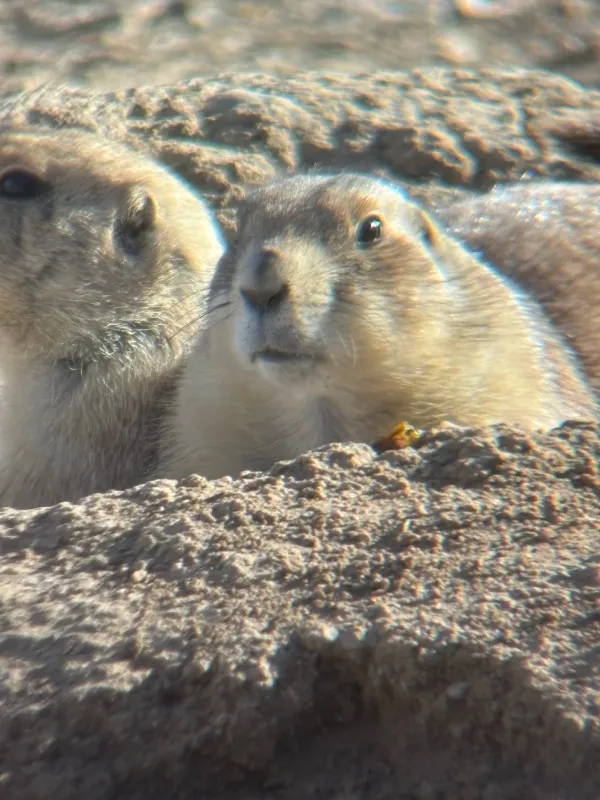
Prairie dogs (genus Cynomys) are ground-dwelling rodents belonging to the squirrel family. They are stout animals characterized by short limbs with powerful claws for digging and a short tail.
Their fur color typically ranges from grayish-brown to yellowish-tan, which provides effective camouflage in the open grassland environments where they thrive.
An adult prairie dog usually measures between 30 and 40 centimeters in length, with males generally being larger and heavier than females during the peak season.
These rodents are highly social creatures that live in complex underground networks called colonies, which can span several hectares.
A signature behavioral trait is their distinct, high-pitched barking sound used to alert other members of the colony to nearby potential threats.
What it damages
Prairie dogs cause significant agricultural losses by feeding on a variety of crops, including wheat, corn, and alfalfa, which can devastate newly planted fields.
On grazing lands, they deplete forage available for livestock by clipping grasses close to the ground, which can lead to overgrazing and soil degradation.
Their burrowing activity alters soil structure, often causing erosion and creating hazards for farm equipment that can break axles or cause other mechanical damage.
In intensive farming regions, they compete directly with domesticated animals for food, leading to decreased biomass production and economic loss for farmers.
Beyond feeding, the large mounds of soil excavated for their burrows cover up vegetation, creating bare patches that are prone to weed infestation and erosion.
When it appears
Prairie dogs become active in early spring as temperatures rise, signaling the start of their daily emergence from winter dormancy to forage for fresh vegetation.
The peak period for agricultural damage coincides with the active growing season of crops when tender shoots are highly attractive to these rodents.
During the intense heat of summer, activity may shift to dawn and dusk, but feeding continues aggressively to sustain the colony throughout the season.
In autumn, they engage in heavy feeding to accumulate body fat reserves, which is critical for their survival during the colder months spent underground.
Winter dormancy marks a period of minimal surface activity, during which the animals stay inside their burrows and do not pose a direct threat to crops.
Signs of infestation
The presence of large, circular mounds of dirt around burrow entrances is the most obvious visual indicator of a prairie dog colony in a field.
Areas of sparse or completely stripped vegetation around these mounds are clear signs of the rodents' intensive feeding and foraging activities.
Spotting the animals standing upright on their hind legs and observing their alert behavior provides definitive proof of their infestation on a site.
Audible, repetitive barking sequences are a constant feature of an active colony, especially when human presence is detected in the vicinity.
Visible trails or paths leading from burrow systems to feeding spots are common in areas with established populations and high rodent density.
Control measures
Fumigation is considered one of the most effective methods for controlling prairie dog populations by applying gases directly into the burrow systems.
Strategic tillage and deep plowing can help collapse burrow structures, although this is labor-intensive and may need to be repeated frequently.
The use of toxic baits must be managed strictly according to local regulations and safety protocols to avoid secondary poisoning of non-target wildlife.
Keeping vegetation around crop fields short can make the area less desirable for prairie dogs, as they require tall grass for cover from predators.
Installing underground fencing barriers around high-value crops can prevent the rodents from accessing sensitive areas, provided the barriers are properly maintained.
Taxonomy
- Latin name
- Cynomys
- Order
- Rodents
- Family
- Sciuridae
- EPPO code
- KYMSSP
Discussion
No discussions yet — be the first.