
Tachys micros
Tachys micros
Description
How to identify
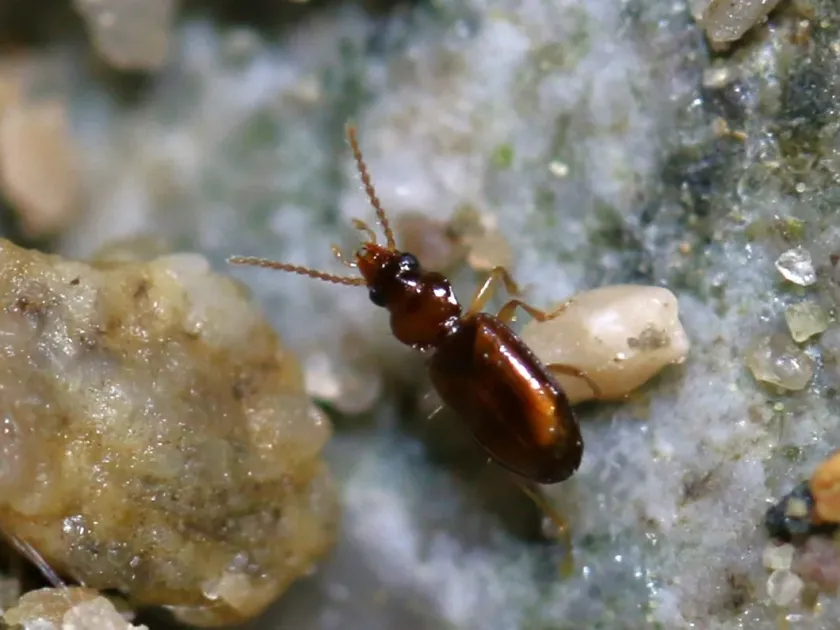
Tachys micros is a member of the Coleoptera order and the Carabidae family. It is a tiny ground beetle typically measuring between 2 and 3 millimeters in length.
The beetle usually exhibits a dark brown or black coloration, often with a subtle metallic sheen on the elytra, which feature distinct longitudinal grooves.
These insects possess well-developed wings, allowing for rapid movement between fields in search of suitable habitats or feeding grounds throughout the season.
The larvae are elongated with a well-developed chewing mouthpart and three pairs of legs, allowing them to remain active within the top layer of the soil.
This species thrives in moist soil environments, making them particularly prevalent in low-lying areas, near irrigation channels, or on waterlogged agricultural land.
What it damages
While many carabids are predatory and beneficial, Tachys micros can occasionally switch to feeding on agricultural seeds and young seedling tissues.
The primary damage occurs during the germination phase of cereal crops, as beetles burrow into the soil to consume the embryonic portion of the swollen seeds.
Furthermore, the beetles may gnaw on the stems of young sprouts near the root collar, leading to rapid wilting and the subsequent death of the seedling.
Winter cereals and early-sown vegetable crops are the most vulnerable to this pest, especially when planted directly into the open field without seedling protection.
Significant pest populations can cause thinning of crop stands, which leads to reduced yields and economic losses if control measures are not implemented in time.
When it appears
The activity of these beetles begins in early spring, as soon as soil temperatures at a depth of 5-10 cm reach approximately +8 to +10 degrees Celsius.
The peak of their harmful impact aligns with the germination period and the emergence of first true leaves, which usually occurs in early spring months.
Adult beetles are mostly nocturnal, preferring to stay hidden during the day and emerging on the soil surface at night to forage and find mates.
As autumn temperatures drop, the population enters a state of diapause, burrowing deeper into the soil or hiding under plant debris for overwintering.
The rate of development is highly dependent on moisture levels; increased humidity in the soil can accelerate their life cycle and boost larvae survival rates.
Signs of infestation
A primary indicator of a Tachys micros infestation is the presence of irregular, patchy germination across the field shortly after planting.
Soil excavations in affected areas often reveal partially eaten seeds or seedlings with characteristic nibbling marks around the root zone.
On moist soil surfaces, one can often spot small, shallow burrows or tunnels near the base of the damaged plants, indicating the beetle's activity.
The infestation is typically focal, concentrating in parts of the field with heavier, wetter soil types where the environment is most favorable for the pest.
Monitoring using sticky traps can help detect the presence of adults and provide information on the onset of peak pest activity within the crop.
Control measures
The most effective strategy is the application of systemic seed treatments, which provide a protective chemical zone around the germinating seed.
Implementing crop rotation helps disrupt the pest's life cycle, particularly in fields where outbreaks have been observed in previous growing seasons.
Good agricultural practices, including deep autumn plowing, disturb the beetles' overwintering sites and significantly reduce the local population density.
- Improving drainage in fields prone to excessive moisture.
- Ensuring timely and precise seedbed preparation to promote rapid germination.
- Applying insecticides as a last resort if economic damage thresholds are exceeded.
In cases of high pest pressure, targeted insecticide applications during the evening hours can effectively reduce adult populations and protect young crops.
Taxonomy
- Latin name
- Tachys micros
- Order
- Coleoptera (beetles)
- Family
- Carabidae
- EPPO code
- TCHYMI
Discussion
No discussions yet — be the first.