
Tachys
Tachys
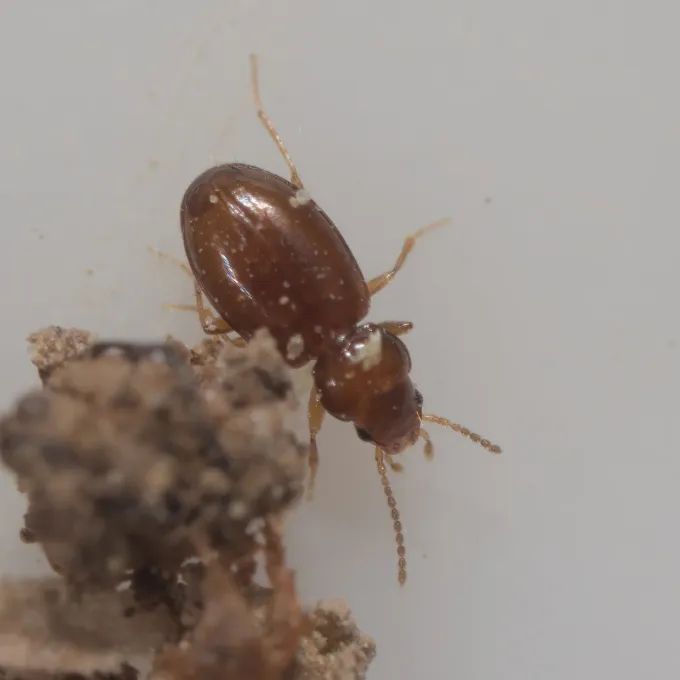
Description
How to identify
The genus Tachys belongs to the family Carabidae, commonly known as ground beetles. These are small insects, typically ranging from 3 to 4 millimeters in length, characterized by their agile movement.
They often exhibit a brownish to black body color, sometimes with a metallic sheen. Their elytra display distinct grooves, which serve as a primary physical feature for identification in field settings.
Being members of the ground beetle family, these insects have well-developed legs designed for rapid locomotion across soil surfaces and around plant bases, allowing them to escape danger quickly.
Larvae are also slender and typically reside in the upper soil layers. Their development involves several instars, with their behavior heavily influenced by soil moisture and temperature conditions.
While many species are known predators of other soil-dwelling organisms, they can transition to opportunistic feeding on tender plant tissues when their primary food sources are scarce or during high-density outbreaks.
What it damages
Tachys beetles primarily cause damage during the germination and early seedling stages of various agricultural crops, including cereals, vegetables, and technical crops.
They feed on the epidermis and soft stems of young seedlings, creating localized lesions that hinder the plant's ability to transport water and essential nutrients effectively.
This feeding damage results in stunted growth, thinning of crop stands, and in severe cases, the total destruction of the seedling, leading to significant yield losses for the grower.
High levels of plant residue, common in conservation tillage systems like No-Till, create a microhabitat that favors the survival and proliferation of these beetles, increasing the risk of seedling loss.
Mechanical damage caused by beetle feeding also makes plants more susceptible to secondary fungal or bacterial pathogens, further complicating the recovery of affected crops.
When it appears
Activity is heavily dependent on soil temperatures. Adults typically emerge from overwintering sites in early spring, once soil temperatures consistently exceed 10–12 degrees Celsius.
The life cycle is closely linked to humidity levels. Peak feeding intensity occurs during cool, damp spring weather, which delays crop development while maintaining high beetle activity.
As summer temperatures rise and soil moisture decreases, the beetles migrate to deeper, more humid soil layers, significantly reducing their presence on the soil surface.
A secondary period of activity may occur in the autumn, particularly when planting winter crops, posing a potential threat to emerging seedlings before the onset of winter dormancy.
Proactive scouting during these critical windows is essential for growers to assess population levels and determine if protective intervention is necessary.
Signs of infestation
The earliest signs of infestation include irregular holes or feeding scars on the epidermis of young plant stems and the base of the leaves near the soil surface.
Patches of dying or missing seedlings across the field are common symptoms. These areas often correlate with high soil moisture levels where the beetle populations concentrate.
Affected seedlings frequently appear wilted or yellow, indicating that the vascular system of the stem has been compromised by the feeding activities of the insects.
Growers may observe small, shallow burrows or tunnels at the base of affected plants, which are more visible after rainfall or irrigation events when the soil surface is disturbed.
Using pitfall traps is a highly reliable method for monitoring the presence and density of Tachys beetles before visible damage reaches an irreversible threshold.
Control measures
The most effective strategy is the use of seed treatments with systemic insecticides. This provides comprehensive protection to the seedling during its most vulnerable developmental stages.
Cultural practices, such as proper seedbed preparation and weed management, are crucial for reducing suitable habitats for beetles and limiting their ability to migrate into crop rows.
Adjusting planting dates to ensure rapid germination and seedling establishment can help plants outgrow the period of high susceptibility, reducing the duration of exposure to the pest.
When monitoring indicates a population above the economic threshold, targeted foliar applications of approved insecticides should be performed in the evening to maximize effectiveness.
Maintaining soil fertility and vigor helps crops recover faster from minor grazing damage. Strong, fast-growing seedlings are better equipped to withstand and outpace the pressure from insect pests.
Taxonomy
- Latin name
- Tachys
- Order
- Coleoptera (beetles)
- Family
- Carabidae
- EPPO code
- TCHYSP
Discussion
No discussions yet — be the first.