
Systoechus vulgaris
Systoechus vulgaris
Description
How to identify
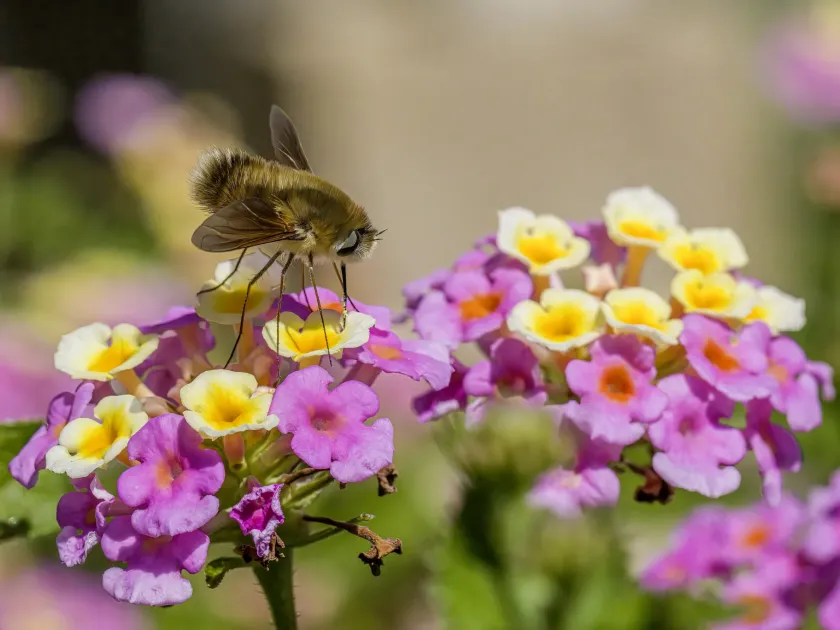
Systoechus vulgaris belongs to the Bombyliidae family, commonly known as bee flies. They are distinct for their mimicry, resembling bumblebees with their dense, hair-covered bodies.
The adults are characterized by a long proboscis used for nectar feeding, and their flight pattern involves hovering effectively over flowers before darting away at high speed.
Larvae are typically whitish and maggot-like, adapted to life within the soil profile. Their physical structure is specialized for moving through the soil to locate their prey or host sites.
The wingspan of the adult fly is moderate, usually ranging around 12–15 mm. They are most active during warm, sunny weather when they are frequently seen in open fields and grasslands.
The life cycle involves a complex metamorphosis, where the larval stage is spent underground, significantly influenced by local soil moisture and the presence of primary host insects.
What it damages
While often recognized as parasitoids of grasshopper egg pods, Systoechus vulgaris can become a secondary pest when host populations fluctuate, leading them to feed on crop roots.
In cereal crops like wheat, the larvae may consume portions of the underground stem or primary roots, causing the plants to lose vigor and show signs of stunted growth.
Damage is typically concentrated in patches, as larvae are often distributed unevenly throughout the field based on the previous year's oviposition sites.
The economic impact is generally correlated with the density of larvae per square meter. High infestations during the seedling stage can lead to significant thinning of the crop stand.
Furthermore, the physical wounds caused by larval feeding serve as entry points for various soil-borne pathogens, compounding the negative effect on the overall crop yield.
Signs of infestation
The primary visual sign is the presence of adult flies hovering over flowering crops during the spring and early summer months, indicating a nearby breeding population.
Wilting of young plants in the absence of obvious leaf diseases or water stress is a diagnostic indicator that suggests subterranean larval feeding activity.
Digging into the soil around affected patches may reveal white larvae or empty host egg pods, providing direct evidence of the pest's involvement in the field.
A sudden decline in the grasshopper population on a specific plot, followed by the appearance of these flies, strongly suggests successful colonization and parasitism by the species.
Uneven germination and patches of yellowing seedlings are common field-scale signs that warrant further investigation of the root zone for larval damage.
Control measures
Deep autumn plowing is the most effective mechanical intervention, as it exposes soil-dwelling larvae to predators and environmental stress, significantly reducing the population density.
Effective crop rotation practices help to disturb the life cycle of the pest, preventing the buildup of large populations that occur with continuous monocropping.
Preserving natural predators of grasshoppers helps maintain ecological balance, thereby limiting the primary food source required for successful larval development of the fly.
Seed treatments with systemic insecticides provide a protective barrier around the root zone, deterring larvae from feeding on the vulnerable young roots of emerging seedlings.
Implementing a monitoring program with sticky traps enables growers to map the adult activity and plan soil cultivation strategies ahead of the peak egg-laying period.
Taxonomy
- Latin name
- Systoechus vulgaris
- Order
- Diptera (flies)
- Family
- Bombyliidae
- EPPO code
- SYSOVU
Discussion
No discussions yet — be the first.