
Systoechus sulphureus
Systoechus sulphureus
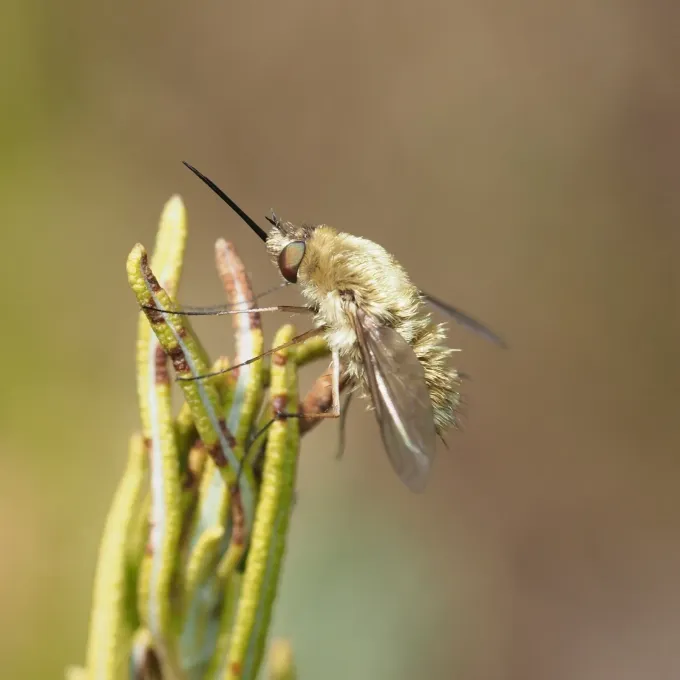
Description
How to identify
Systoechus sulphureus, commonly known as a type of bee fly, belongs to the family Bombyliidae, characterized by its dense, yellowish, bumblebee-like pubescence.
The adult insect has a compact body, typically measuring between 8 and 12 mm in length, and possesses a long, rigid proboscis for nectar feeding.
They are famous for their ability to hover steadily in the air over flowers before darting away at high speed, a behavior that aids in their identification.
The larvae are specialized parasites; they have a distinct body shape adapted to living within the egg pods of acridid grasshoppers.
These flies are primarily found in steppe and open grassland regions, where they rely on floral resources for adults and host availability for larvae.
What it damages
This species causes no damage to crops; instead, it is highly beneficial to agriculture as a natural enemy of various grasshopper and locust species.
The larvae feed on the egg pods of locusts, significantly reducing the survival rate of these agricultural pests before they even hatch.
By effectively parasitizing the eggs of grasshoppers, Systoechus sulphureus acts as a crucial regulator of pest populations in fields and pastures.
It is often considered a key component of integrated pest management, providing biological control services free of charge to the farmer.
Farmers should avoid confusing this species with actual crop pests, as its presence is an indicator of a healthy, balanced agroecosystem.
When it appears
Adults are typically active during mid-to-late summer, coinciding with the peak blooming period of nectar-producing plants in fields and meadow borders.
Female flies spend much of their time searching for oviposition sites, specifically areas where grasshoppers have recently deposited their eggs.
Larval development occurs within the soil, where they consume grasshopper eggs throughout the late summer and autumn seasons.
The pupal stage occurs in the soil during winter or early spring, allowing the adults to emerge as soon as the weather becomes sufficiently warm.
The emergence of the next generation of bee flies is tightly synchronized with the egg-laying and development cycle of their grasshopper hosts.
Control measures
No control measures should be applied to Systoechus sulphureus, as it is a beneficial insect and a valuable biological control agent.
The excessive use of broad-spectrum insecticides is detrimental to this species and can cause outbreaks of grasshoppers due to the removal of natural predators.
Preservation of field margins and wild floral strips is recommended to provide necessary food sources for the adult flies, thereby supporting their population.
Integrated Pest Management (IPM) strategies should prioritize the conservation of such beneficial insects by avoiding chemical sprays during the peak flight season of the adults.
Agricultural practices such as minimal soil disturbance in non-crop areas can help protect the larvae and pupae residing underground.
Taxonomy
- Latin name
- Systoechus sulphureus
- Order
- Diptera (flies)
- Family
- Bombyliidae
- EPPO code
- SYSOSU
Discussion
No discussions yet — be the first.