
Systoechus
Systoechus
Description
How to identify
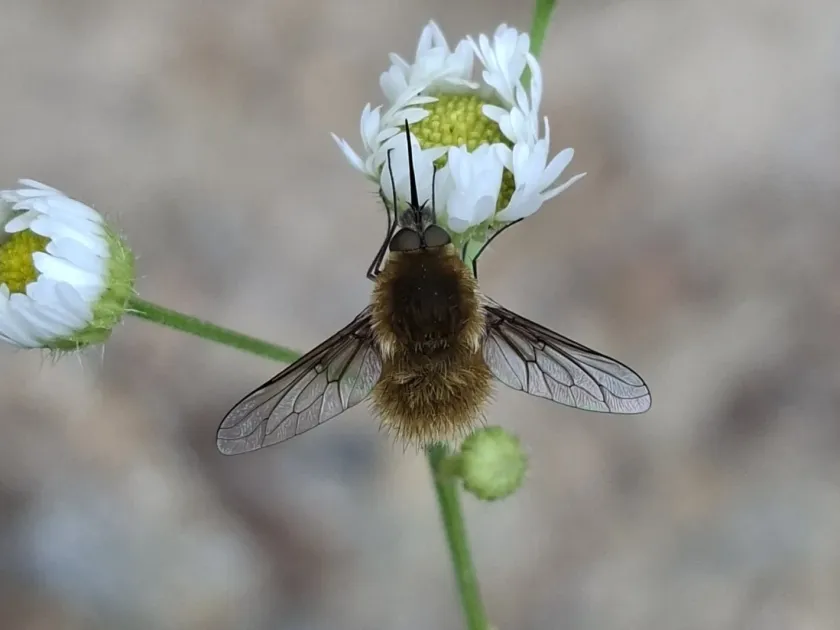
Systoechus is a genus of flies belonging to the family Bombyliidae, also known as bee flies. They are easily recognizable by their dense, furry appearance, which makes them look like small bumblebees, and their agility in flight.
The adult flies possess a long proboscis, adapted for feeding on nectar from various flowers. This makes them important pollinators in many ecosystems, though their primary agricultural value lies elsewhere.
The larvae are specialized parasites that live in the soil. They have a distinct morphology that allows them to locate and feed on the egg pods of other insects, primarily locusts and grasshoppers.
The adults are typically yellowish or grey, providing effective camouflage. Identifying species within this genus often requires professional entomological expertise due to subtle morphological differences.
The life cycle involves complete metamorphosis. The pupal stage is mobile within the soil, allowing the insect to move towards the surface before the adult fly emerges into the open air.
What it damages
Systoechus does not cause damage to agricultural crops. Instead, it is considered a beneficial insect because its larvae are natural predators of locust and grasshopper eggs.
By consuming locust egg pods, these insects provide a form of natural biological control that helps to keep pest populations in check without the need for synthetic chemicals.
There are no recorded instances of Systoechus larvae or adults feeding on crops, roots, or foliage, making them completely safe for farming environments.
Farmers should view the presence of these flies as a positive indicator of a healthy, balanced farm ecosystem with natural regulation mechanisms in place.
Their impact on agriculture is entirely positive, serving as allies to the grower in the prevention of grasshopper outbreaks.
When it appears
Adult Systoechus activity is concentrated in the summer months, coinciding with the flowering period of various weeds and crops, which they use as a source of nectar.
Their reproduction phase is synchronized with the egg-laying cycle of locusts, ensuring that the next generation of larvae has immediate access to food sources.
The overwintering stage typically occurs in the soil as larvae, which have a high capacity to withstand cold and harsh environmental conditions until spring arrives.
Emergence of the adults usually occurs in early to mid-summer, triggered by increasing soil temperatures and the emergence of host species.
Typically, there is one generation per year, and the population density is heavily dependent on the abundance of the host insects during the previous season.
Control measures
No control measures are needed for Systoechus. They are essential natural enemies of serious crop pests, and efforts should be directed toward their preservation rather than extermination.
The application of broad-spectrum insecticides can unintentionally kill these beneficial flies, leading to a disruption of the natural control of locust populations.
It is recommended to implement Integrated Pest Management (IPM) strategies that prioritize selective pesticides and maintain natural habitats for beneficial insect populations.
Preserving field borders and allowing for native vegetation can support the adult population of Systoechus, ensuring they remain present in the agricultural landscape.
- Avoid the use of non-selective, harmful pesticides.
- Maintain areas of native flora to support adult bee flies.
- Monitor locust populations instead of reacting with blanket spraying.
Taxonomy
- Latin name
- Systoechus
- Order
- Diptera (flies)
- Family
- Bombyliidae
- EPPO code
- SYSOSP
Discussion
No discussions yet — be the first.