
Common Hoverfly
Syrphus rectus
Description
How to identify
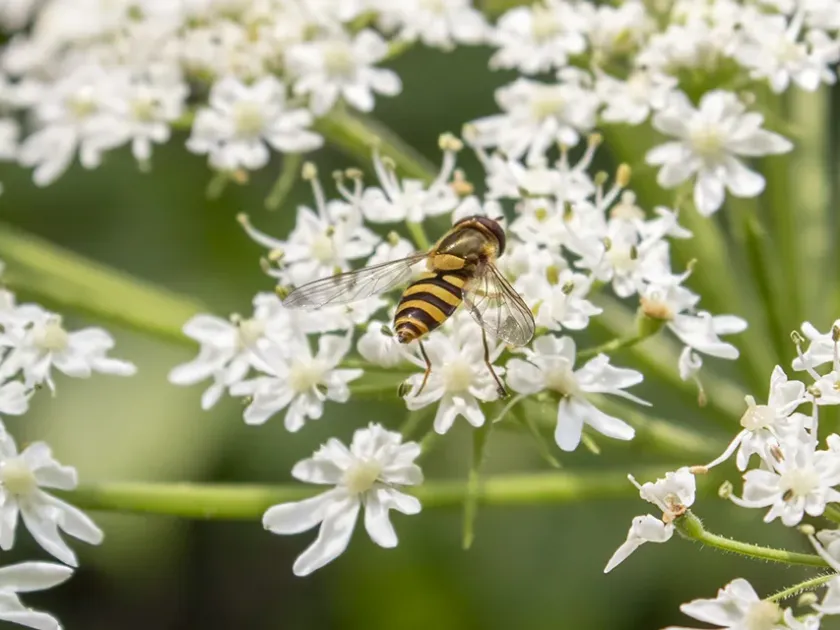
The Common Hoverfly (Syrphus rectus) belongs to the order Diptera and the family Syrphidae. Adult insects are known for their mimicry, resembling wasps or bees with their bright yellow and black abdominal patterns.
The adults are typically 10–12 mm long with slender bodies. They are famous for their unique ability to hover stationary in mid-air, a flight pattern that distinguishes them from most other flies.
The larvae are worm-like, usually pale green or yellowish, and lack a distinct head. They can reach up to 15 mm in length and are often found camouflaged against the stems or leaves of host plants.
Taxonomically, the family Syrphidae is diverse. While many members are beneficial predators of aphids, specific species like Syrphus rectus can occasionally cause damage to cultivated plants under certain conditions.
Positive identification in the field requires close inspection of plant tissues and observing the characteristic hovering flight of adults during warm, sunny hours of the day.
What it damages
Although adults feed on nectar and pollen, contributing to pollination, the larvae are the primary stage causing concern. They can feed on soft tissues of various crops, including vegetables and ornamentals.
Feeding larvae often damage tender buds, young shoots, and foliage. This consumption leads to stunted growth, loss of plant vigor, and reduced aesthetic value of decorative species.
In greenhouse environments, the impact of these insects can be more pronounced due to stable temperatures and the absence of natural predators, leading to rapid population growth.
Damage often includes surface scarring or internal tissue destruction, which makes the plant more susceptible to fungal pathogens and bacterial infections.
Severe infestations can lead to a significant decline in overall harvest quality, especially in young seedlings that have not yet developed robust defense mechanisms.
When it appears
Activity begins in late spring, following the first sustained warm days. Adults emerge to feed and begin mating, laying eggs on or near host plants.
The lifecycle consists of several stages: egg, larva, pupa, and adult. Throughout the summer, multiple generations can occur, with the speed of development driven by local climate conditions.
Pupation typically happens in the soil or within plant debris. Therefore, soil conditions during the winter are a critical factor in determining the survival of the next year's population.
Populations tend to peak during the mid-summer months when environmental conditions are optimal for rapid growth and frequent reproductive cycles.
Changes in local temperature and humidity levels can significantly influence the duration of each life stage, making seasonal monitoring essential for effective management.
Signs of infestation
The presence of adult hoverflies hovering near garden plants is the primary visual sign of their activity. Their flight is precise, and they can change direction instantaneously.
Signs of larval feeding include minor perforations in foliage, yellowing of young leaves, and a general lack of vitality in the plant's growing tips.
Inspect plant crevices and the underside of leaves for larvae. Their slow movement often allows them to remain unnoticed until damage to the plant becomes clearly visible.
Accumulations of larval excrement near the damaged plant parts indicate an active population. These spots are often small, dark, and localized near the feeding sites.
Distorted or misshapen buds are a strong indicator of larval presence, as they often target these high-nutrient parts of the plant for their initial development.
Control measures
Cultural control is highly effective; deep plowing or tilling the soil after harvest disrupts the pupal stage, significantly reducing the overwintering population.
Maintaining a clean garden by removing weeds and plant debris minimizes potential egg-laying sites, which helps prevent the establishment of the pest in the early season.
Biological control, including the use of entomopathogenic fungi or selective bio-pesticides, provides an eco-friendly way to manage larval populations without harming pollinators.
In cases where infestations exceed economic thresholds, authorized insecticides can be applied as a targeted treatment to minimize impact on non-target beneficial insects.
Regular monitoring using yellow sticky traps can provide early warning data, allowing growers to implement control measures before populations reach critical levels.
Taxonomy
- Latin name
- Syrphus rectus
- Order
- Diptera (flies)
- Family
- Syrphidae
- EPPO code
- SYRPRE
Discussion
No discussions yet — be the first.