
Synuchus
Synuchus
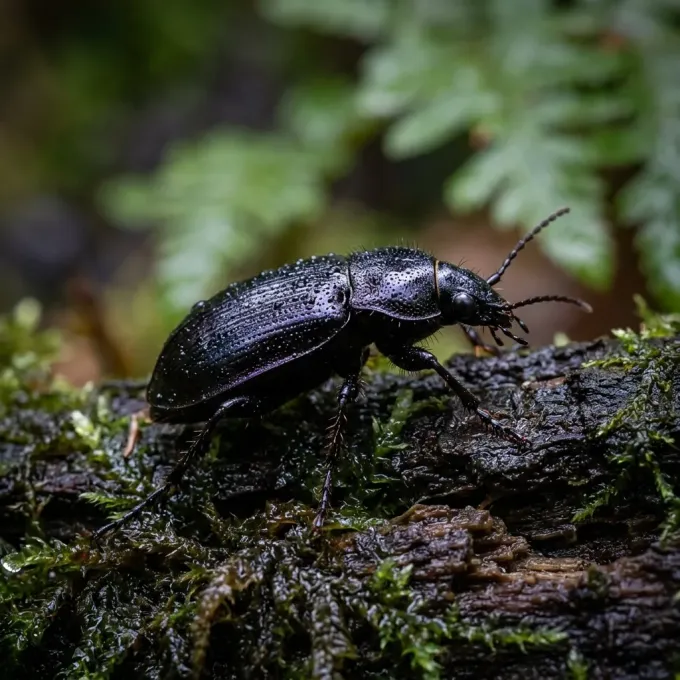
Description
How to identify
Synuchus is a genus of ground beetles (Carabidae) that are generally known for their predatory behavior. However, certain species within this genus have been observed feeding on plant tissues, classifying them as occasional pests of agricultural crops.
Adult beetles are typically slender, measuring between 10 and 15 mm in length. Their coloration is usually black or dark brown, often featuring a subtle metallic sheen. They possess strong mandibles adapted for grasping and chewing, which they use to consume both plant matter and small prey.
The larvae are soil-dwelling and display the characteristic campodeiform body shape of carabids. They are active mostly during nocturnal hours, making them difficult to detect during standard daytime field scouting missions.
The identification of Synuchus species requires careful examination of morphology, particularly the structure of the pronotum and tarsal segments. Specialized entomological keys are often necessary for accurate field species determination.
Their distribution is largely influenced by soil moisture levels and the presence of organic cover. They thrive in agricultural environments where reduced tillage practices provide consistent shelter and humidity throughout the growing season.
What it damages
The primary economic damage caused by Synuchus involves the consumption of cereal grains during the milk and dough stages of development. Beetles climb the stems to feed on the developing kernels within the ear.
This feeding behavior results in significant grain loss and reduced test weight. Furthermore, the presence of damaged, partially consumed grains lowers the quality of the harvested produce and makes it susceptible to mold growth.
Larval stages present in the soil feed on the roots and the base of young seedlings. This can lead to stunted growth, nutrient deficiency, and in severe cases, the complete collapse of the seedling during early stages of germination.
In fields with high population densities, the damage can be quite patchy. This uneven distribution often mirrors the moisture profiles of the soil, with higher damage localized in low-lying or poorly drained sections of the field.
Aside from direct feeding, the mechanical injuries created by the beetles provide entry points for pathogens. This creates a secondary risk of crop diseases that further degrade the overall health and yield potential of the grain.
When it appears
Activity begins in the early spring as ground temperatures rise. Overwintering adults emerge from the soil or leaf litter to find initial food sources, often targeting young winter wheat or emerging spring cereal crops.
The peak period of damage occurs during June and July, correlating with the grain filling stages. During this time, the beetles are most mobile and reproductive activity is at its highest, leading to increased pressure on the crops.
A second, minor peak of activity is often observed in the autumn as the population prepares for overwintering. They feed on post-harvest stubble or new weed growth, seeking nutrients to survive the approaching winter.
The lifecycle is typically univoltine, meaning there is one generation per year. Both adults and late-instar larvae are capable of overwintering by burying themselves deep into the soil profile to avoid freezing temperatures.
Weather patterns, specifically prolonged wet periods during summer, can encourage population explosions. In contrast, extreme summer heat tends to push the insects deeper into the soil, reducing their surface-level activity.
Signs of infestation
Visual identification of infestation is best achieved by inspecting the grain heads for holes and empty husks. The characteristic sign is a jagged or partially consumed grain kernel with visible scratch marks around the entry point.
Early-season signs include wilting or stunted growth in young plants. If a plant can be easily pulled from the ground and reveals chewed roots or stems, it is a strong indicator of larval activity in the soil profile.
Pitfall traps are the gold standard for monitoring populations. Installing these traps across different areas of the field will allow growers to quantify the beetle activity and decide on necessary intervention thresholds.
- Hollowed or partially consumed kernels within the ear.
- Sudden wilting of seedlings without evident root rot diseases.
- Presence of black ground beetles observed under debris or in traps.
- Increased bird activity in specific patches of the field, which may be hunting the beetles.
Farmers should pay attention to field edges and areas with heavy debris, as these are common hotspots for Synuchus populations to congregate before moving into the main production areas of the field.
Control measures
Effective management begins with proper tillage. Deep plowing after the harvest helps bury crop residues and exposes overwintering beetles and larvae to harsh weather conditions, significantly reducing the survival rate for the next season.
Crop rotation remains the most powerful tool. By breaking the cycle of cereal crops, farmers deny the pest its primary food source and shelter, which forces the population density to decline over time.
Chemical control should only be utilized when monitoring thresholds are exceeded. Applications are most effective when timed for the evening hours, taking advantage of the beetle's natural nocturnal activity cycle.
Biological control through conservation of natural predators is recommended. Maintaining healthy populations of other predatory insects and birds can help keep Synuchus numbers below the economic injury level.
Weed management on fallow land and field margins is essential. Keeping these areas clear eliminates alternate food sources and hiding spots, effectively pushing the pest population out of the production environment.
Taxonomy
- Latin name
- Synuchus
- Order
- Coleoptera (beetles)
- Family
- Carabidae
- EPPO code
- SYUSSP
Discussion
No discussions yet — be the first.