
Ground beetle
Syntomus foveatus
Description
How to identify
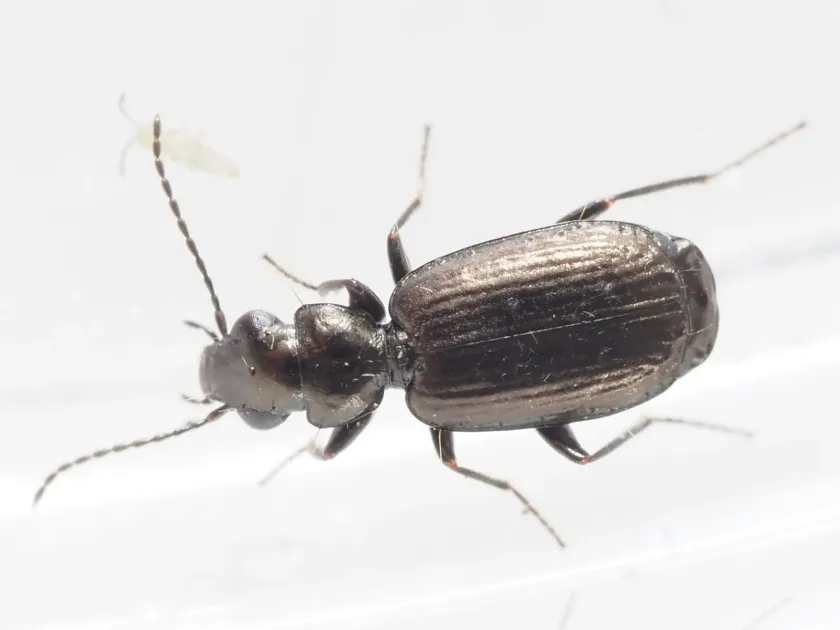
The ground beetle Syntomus foveatus belongs to the order Coleoptera and the family Carabidae. These insects are relatively small, typically measuring between 3 to 4 millimeters in length.
Their body shape is slightly flattened, which allows them to efficiently navigate through soil crevices and hide underneath crop residues or clods of earth.
The coloration of the elytra is generally brownish or yellowish, often featuring distinctive dark spots, which aids in camouflage within their natural environment.
The head and pronotum are usually darker, frequently displaying a subtle metallic sheen. The surface of the wing covers has fine longitudinal grooves that help identify the species.
These beetles possess fully developed wings and are capable of active flight, which enables them to spread across fields in search of food and suitable breeding grounds.
What it damages
Syntomus foveatus is known to cause significant damage to young crops, primarily targeting newly sown cereal grains and emerging seedlings.
The beetles are known to feed on seeds by hollowing out the interior, which prevents germination and leads to visible gaps in the crop rows.
They also attack young seedlings by chewing through the stems at the soil level, which causes the plants to wither and die shortly after emergence.
The severity of the damage often depends on the overall population density and the availability of alternative food sources within the field environment.
High infestation rates can lead to a drastic reduction in stand density, ultimately resulting in significant yield losses for farmers if left unmanaged.
When it appears
The lifecycle of the ground beetle is closely linked to seasonal changes. Adults typically overwinter in the upper soil layers or under dense plant debris.
In spring, as temperatures rise, the beetles emerge from hibernation to begin their period of active feeding and reproduction.
The peak activity period aligns with the germination of cereal crops, making young seedlings particularly vulnerable during these months.
During the hot summer months, the beetles may enter a state of aestivation, becoming less active to survive the heat and lack of moisture.
Activity may increase again in the autumn, posing a potential threat to the newly emerged winter cereal crops before the onset of winter frost.
Signs of infestation
One of the primary indicators of a ground beetle infestation is the appearance of irregular patches in fields where seedlings have failed to establish.
Close inspection of affected areas often reveals seeds that have been chewed open or seedlings that have been severed at the base with ragged edges.
Active beetles can often be spotted on the soil surface, particularly during evening hours or following rainfall when they become more mobile.
Fields with significant amounts of surface residue are more prone to higher populations, as these materials provide optimal shelter and microclimates for the beetles.
Farmers should monitor low-lying areas or parts of the field with high soil moisture, as these locations are favored by the species during the critical growth phases.
Control measures
Effective management begins with proper agronomic practices, such as thorough soil tillage, which disturbs the beetles' overwintering habitats.
Crop rotation is essential, as it prevents the buildup of beetle populations and breaks their reproductive cycle within the field.
The use of insecticide-treated seeds provides a reliable barrier against early-stage damage, protecting the crop during the most vulnerable germination phase.
Adjusting sowing dates to ensure rapid plant growth can also help the crop outpace the period of maximum vulnerability to these insect pests.
In cases of severe infestation, targeted application of approved insecticides can be utilized to reduce population levels and protect the integrity of the field.
Taxonomy
- Latin name
- Syntomus foveatus
- Order
- Coleoptera (beetles)
- Family
- Carabidae
- EPPO code
- SYNSFO
Discussion
No discussions yet — be the first.