
Ground beetle
Syntomus
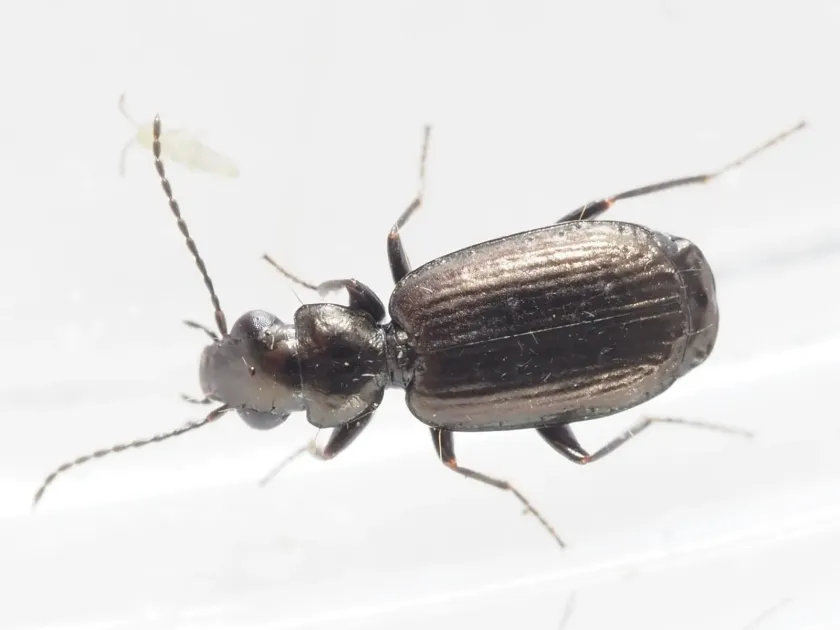
Description
How to identify
The ground beetle (genus Syntomus) represents a group of small carabid beetles (family Carabidae) that are commonly found in agricultural landscapes. Adults are generally 3 to 5 mm long, with a slender, elongated body, typically colored dark brown or black, often with a subtle metallic sheen.
These beetles are recognized by their extreme agility and speed when moving across the soil surface or climbing plant stems. Their long, filiform antennae and well-developed legs are characteristic of their active lifestyle as both predators and occasional plant consumers.
The larvae are campodeiform, featuring robust bodies and functional legs designed for movement through the upper soil horizon. They possess a well-developed chewing mouthpart system, which allows them to feed on young plant tissues or organic matter found in the root zone.
Due to their small size and tendency to inhabit dense vegetation or soil cracks, they are often overlooked during routine field inspections. They are most active during low-light conditions, such as early morning or dusk.
Agronomists often identify their presence through standardized soil sampling or the use of pitfall traps. Accurate identification is essential, as not all carabids are pests; some are beneficial predators of other harmful insects.
What it damages
The primary economic damage caused by Syntomus occurs during the germination and seedling stages of cereal crops. Both adults and larvae can feed on the tender tissues of young plants, specifically targeting the root collar and lower stems.
Feeding injury results in stunted growth, yellowing of leaves, and, in severe cases, the death of young plants. This leads to gaps in the crop stand, reducing the overall plant density and yield potential of the field.
While they are primarily associated with cereals, these beetles can also infest technical crops and perennial grasses. The damage is often more pronounced in dry conditions, as the insects may utilize plant tissues as a secondary water source.
Mechanical damage caused by feeding provides an entry point for various phytopathogenic fungi and bacteria, which can lead to secondary infections, further weakening the plant's immune system and growth capabilities.
Even at moderate infestation levels, the stress induced by these insects can disrupt the plant's development during its most vulnerable phase, making the crop less resilient to environmental stressors throughout the growing season.
When it appears
The activity cycle of Syntomus typically begins in early spring, once soil temperatures allow for insect movement. This timing coincides with the emergence of spring cereals, posing a significant risk to young stands.
The lifecycle involves four distinct stages: egg, larva, pupa, and adult. The overwintering stage usually consists of adults sheltering in the topsoil, under crop residues, or within soil crevices, where they are protected from winter temperature fluctuations.
Adult flight activity typically peaks in late spring and early summer, during which time egg-laying occurs. The resulting larvae remain in the soil, actively feeding and developing throughout the warmer months until they pupate.
While many species follow an annual cycle, environmental factors like high heat and drought can influence the duration of each development stage, sometimes accelerating the population growth in specific regions.
In the autumn, adults often show a surge in activity as they prepare for winter hibernation. Consequently, late-planted winter crops can also be at risk if the beetle population density remains high during the pre-winter growth phase.
Signs of infestation
One of the first signs of infestation is the appearance of small, shallow cavities or irregular lesions on the stems of seedlings at or just below the soil line. These injury sites are often clearly visible upon close inspection.
Affected fields may show patchy, thinned areas where seedlings appear to have withered. If the root system has been attacked, plants lose their turgidity and can be easily pulled from the soil, displaying signs of root tissue destruction.
Adults can often be found hiding under soil clumps, stones, or debris near the damaged plants. In moist conditions, they may be found moving rapidly on the soil surface near the base of the crop.
When larval pressure is significant, the ground around the affected plants may show small entry holes leading to the root zone. Such damage often leads to uneven ripening and poor establishment of the crop row.
Bird activity, specifically birds scratching at the soil surface within thinning cereal patches, is a common indicator that a large population of soil-dwelling insects, including ground beetles, is present.
Control measures
Effective management of the ground beetle requires an integrated approach that focuses on reducing population buildup through sound agronomic practices. Crop rotation is essential, specifically avoiding continuous cereal planting.
Mechanical tillage is a highly effective control measure. Autumn plowing and proper seedbed preparation disrupt the beetles' habitat and expose overwintering stages to natural enemies and harsh weather conditions.
Using seed treated with systemic insecticides is the most effective way to protect seedlings during the critical germination and emergence phases. This preventative measure ensures the plant is protected when it is most vulnerable to feeding injury.
- Maintaining optimal planting depths and dates to promote rapid emergence.
- Controlling weeds that provide alternative hosts for the beetle.
- Applying phosphorus and potassium fertilizers to boost seedling vigor.
- Targeted application of insecticides if monitoring indicates the economic threshold is exceeded.
When chemical control is necessary, products registered for the target crop should be applied following local regulations. The selection of insecticides should consider the specific growth stage of the crop and the environmental impact on beneficial organisms.
Taxonomy
- Latin name
- Syntomus
- Order
- Coleoptera (beetles)
- Family
- Carabidae
- EPPO code
- SYNSSP
Discussion
No discussions yet — be the first.