
Common Darter
Sympetrum vulgatum
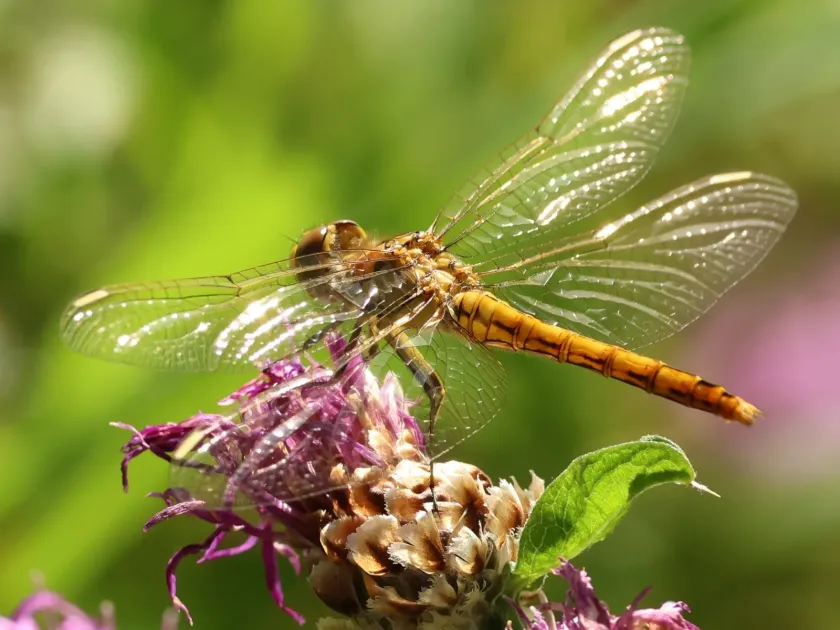
Description
How to identify
The Common Darter (Sympetrum vulgatum) is a dragonfly species belonging to the order Odonata and the family Libellulidae. It is a common insect in temperate zones of Europe and Asia.
Adult dragonflies have a body length of approximately 35-40 mm. They are typically reddish-brown in color, with a characteristic black stripe across the forehead that distinguishes them from similar species.
The larvae, known as naiads, are aquatic predators. They possess a specialized labium for capturing prey and live submerged in various water bodies for several months to years.
The life cycle undergoes incomplete metamorphosis, consisting of three main stages: egg, larva, and adult. Adults are strong fliers and are typically observed near water sources.
These insects are highly active during warm summer months, often perching on plant stems or rocks while scanning for potential prey in the air.
What it damages
The Common Darter is not a plant pest. It does not feed on crops, foliage, roots, or any part of agricultural plants. There is no damage associated with this insect species.
In contrast, this insect is highly beneficial to the agricultural ecosystem. It serves as an active predator that hunts flying insects, including pests such as mosquitoes and small flies.
By consuming large numbers of insects, Common Darters help maintain the natural balance and reduce the population of potential nuisance insects on the farm.
Labeling this species as a pest is scientifically inaccurate. It acts as an important entomophagous organism that supports sustainable pest management practices.
Dragonflies are considered indicators of ecosystem health. Their presence confirms a lack of excessive pesticide application and a relatively stable environment.
Control measures
There are no control measures required for the Common Darter because it is a beneficial predator. Efforts should be directed toward protecting its habitat rather than its removal.
Farmers and gardeners are encouraged to maintain small ponds or water sources to support the larval stage of these insects. This fosters a healthy balance on the land.
Selective pesticide use is essential to avoid harming these beneficial predators. Avoiding broad-spectrum chemicals helps preserve the dragonfly population.
Integrating biological pest control means encouraging the presence of natural predators like dragonflies. They contribute to natural insect population suppression.
- Protecting water habitats from industrial or chemical contamination.
- Implementing Integrated Pest Management (IPM) to preserve beneficials.
Taxonomy
- Latin name
- Sympetrum vulgatum
- Family
- Libellulidae
- EPPO code
- SYMEVU
Discussion
No discussions yet — be the first.