
Nomad dragonfly
Sympetrum fonscolombei
Description
How to identify
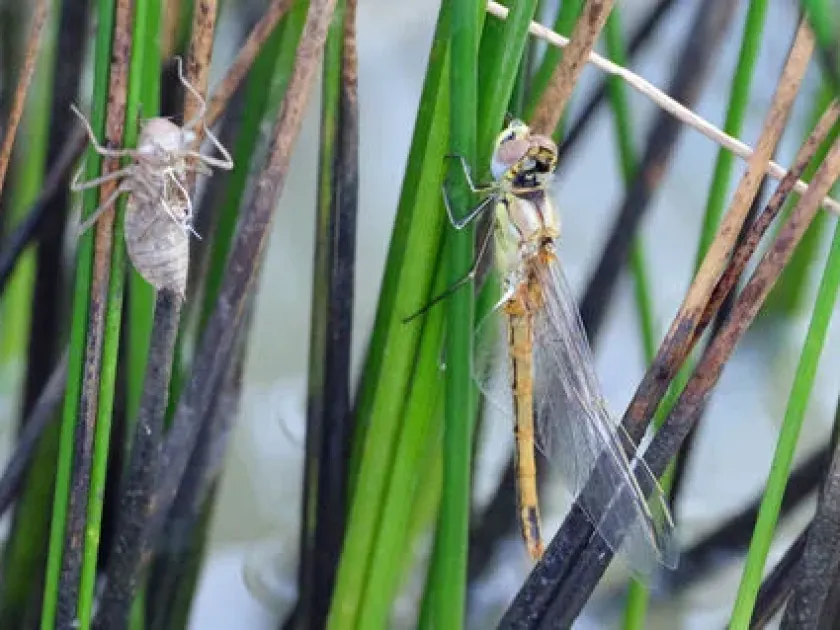
The Nomad dragonfly (Sympetrum fonscolombei) is a species of the Libellulidae family, known for its remarkable long-distance migratory behavior across various continents.
Adult dragonflies are characterized by a yellowish-orange or reddish body, with transparent wings that feature distinctively red veins and yellow-tinted bases.
The larvae are aquatic predators that inhabit the bottom of standing or slow-moving water bodies, where they actively hunt for small invertebrates and mosquito larvae.
The species has a wide geographic range and is highly adaptive, allowing it to colonize new regions that may be far from its breeding grounds due to its strong flight capabilities.
Identification is based on its specific flight pattern, the coloration of the pterostigma, and the overall habitus typical for the genus Sympetrum.
What it damages
It is crucial to emphasize that the Nomad dragonfly is not a plant pest. It is a highly beneficial insect that serves as a predator in agricultural landscapes.
Both the aquatic larvae and the winged adults feed on various smaller insects, including those that are considered harmful to agricultural and horticultural crops.
There are no recorded instances of this species causing damage to leaves, stems, roots, or fruit, as it possesses no physiological mechanism for feeding on plant tissues.
In fact, their presence indicates a healthy ecosystem where natural pest control mechanisms are functioning properly without excessive human interference.
Farmers should consider these dragonflies as allies that help maintain the population density of flying pests within their fields.
When it appears
In temperate climates, adult activity usually spans from late spring through the summer and early autumn, depending on migratory arrival times and local breeding success.
The larval stage is dependent on water temperatures, typically requiring warm conditions to progress from egg to final emergence as an adult dragonfly.
The timing of appearance is heavily influenced by regional weather patterns, as migrations can occur over vast distances in response to climatic shifts.
Breeding and oviposition take place in warm water bodies, where females deposit eggs, ensuring the next generation survives in stable aquatic environments.
Multiple generations may be produced in a single season within warmer climates, allowing for a rapid increase in local dragonfly populations.
Control measures
Since the Nomad dragonfly is a beneficial predator, no control measures should be taken. Any attempt to eliminate them would be ecologically counterproductive.
Sustainable agricultural practices suggest minimizing the use of broad-spectrum insecticides, as these chemicals can harm beneficial dragonfly populations along with target pests.
Maintaining clean water sources and diverse aquatic vegetation near agricultural plots is recommended to support dragonfly habitats and promote natural pest suppression.
Integrated Pest Management (IPM) strategies actively discourage the use of pesticides that would negatively impact predatory insects such as dragonflies.
- Avoid non-selective insecticide applications near water.
- Preserve wetlands and ponds adjacent to farmlands.
- Promote biodiversity to encourage natural predators.
Taxonomy
- Latin name
- Sympetrum fonscolombei
- Family
- Libellulidae
- EPPO code
- SYMEFO
Discussion
No discussions yet — be the first.