
Black Darter
Sympetrum danae
Description
How to identify
The Black Darter (Sympetrum danae) belongs to the Odonata order and the Libellulidae family. It is a distinctive small dragonfly species recognized by its unique coloration.
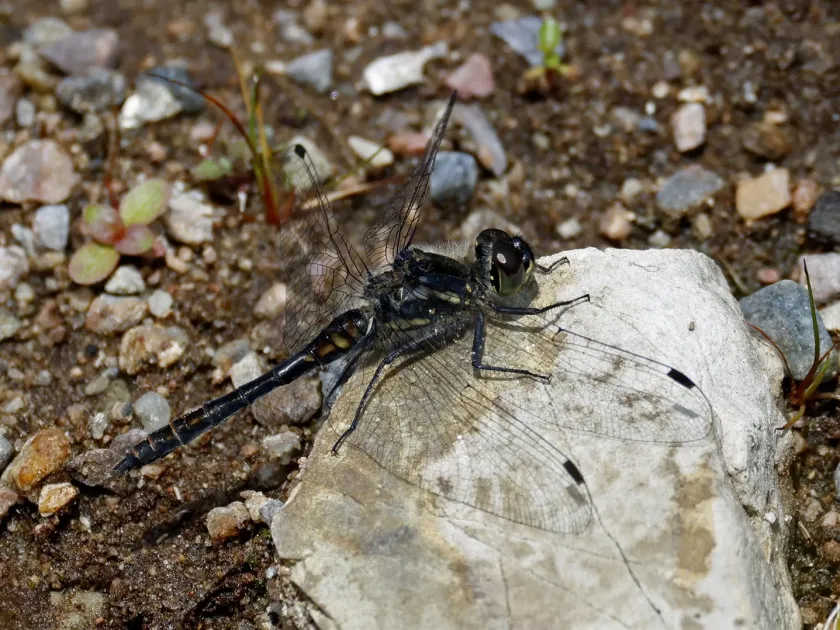
Mature males are almost entirely black, which distinguishes them from other dragonfly species. Females and younger individuals exhibit yellow and black patterns, which darken as they age.
The wingspan typically measures between 50 and 60 millimeters. The wings are transparent with dark venation and a prominent pterostigma, giving them a sleek appearance.
Physically, they are robust insects with large compound eyes that allow for excellent vision while hunting mid-flight. They are often seen perched on low vegetation near water bodies.
Their flight pattern is agile, allowing them to effectively navigate both marshy areas and open fields in search of prey or mates.
What it damages
It is important to clarify that the Black Darter is not a pest. It does not cause any damage to crops, vegetables, or ornamental plants in agricultural settings.
This species functions strictly as a predator. Both in their larval and adult stages, they consume other insects, contributing to the natural balance of the environment.
Larvae living in water prey upon small aquatic invertebrates, including mosquito larvae, which helps control pest populations in moist areas.
Adults capture flying insects in the air, effectively reducing the number of midges and small flies that might otherwise bother livestock or farm workers.
Presence of the Black Darter is an indicator of an ecologically healthy farm, as they require clean water sources to complete their life cycle.
When it appears
The flight period for adult Black Darters occurs late in the season, typically from July through October, making them one of the later-appearing dragonfly species.
The life cycle is closely linked to water, where females deposit their eggs. Larvae develop submerged in vegetation and are capable of overwintering in the sediment.
Emergence of the adult dragonfly from the larval stage takes place near water bodies, where they transition to their aerial life after undergoing several molts.
Warm, sunny days are preferred for flight and hunting. As temperatures drop in late autumn, their activity levels decrease, though they remain hardy.
Throughout their life, they remain within the vicinity of their natal waters, providing a constant presence that helps manage insect populations.
Control measures
No control measures are necessary for the Black Darter. As a beneficial predator, it should be encouraged and protected within agricultural landscapes.
Reducing the use of broad-spectrum pesticides is highly recommended, as these chemicals can harm dragonfly populations and disrupt natural pest control.
Maintaining riparian zones and natural water sources helps provide the necessary habitat for this species to thrive and assist in biological insect management.
Integrated Pest Management (IPM) practices should be employed to ensure that chemical applications are minimal and targeted, preserving the biodiversity of the farm.
Promoting the Black Darter as a natural ally is a key strategy for sustainable agriculture, ensuring that natural predators are working alongside farmers.
Taxonomy
- Latin name
- Sympetrum danae
- Family
- Libellulidae
- EPPO code
- SYMEDA
Discussion
No discussions yet — be the first.