
Symmoca
Symmoca
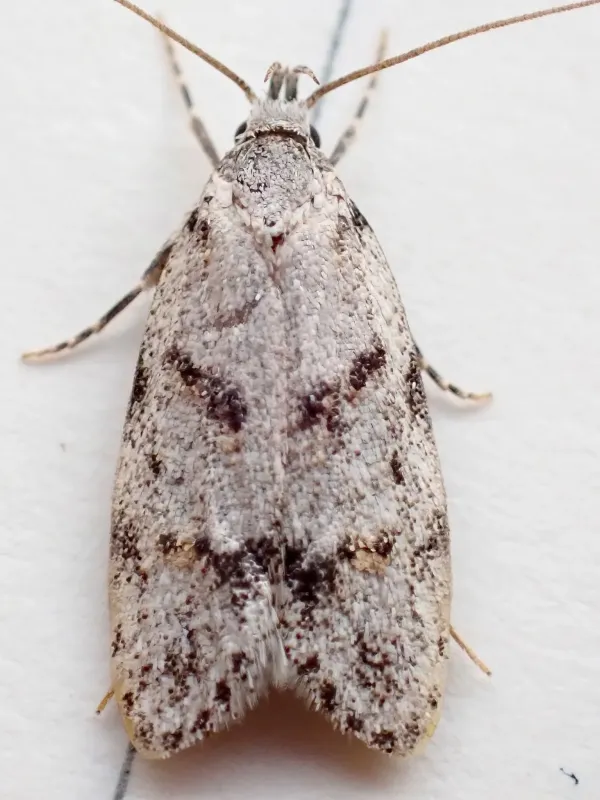
Description
How to identify
The genus Symmoca belongs to the order Lepidoptera, family Autostichidae. These are small moth-like insects that typically display cryptic coloration to blend into their environment.
Adult moths feature narrow wings covered in scales, usually in shades of gray, brown, or mottled patterns, providing excellent camouflage against tree bark or dry vegetation.
The larvae possess well-developed chewing mouthparts adapted for feeding on various plant tissues, and their body morphology is characteristic of gelechioid moths.
Positive identification of Symmoca species is complex and often requires detailed examination of genitalia under a microscope due to high morphological similarity between species.
These insects thrive in arid and semi-arid regions, where they have evolved to withstand significant temperature fluctuations and prolonged dry periods.
What it damages
The pest primarily affects various herbaceous plants, shrubs, and occasionally trees that are already suffering from environmental stress or poor health.
Larvae often feed on decaying organic matter, but under high infestation levels, they can switch to healthy leaves, buds, and young shoots of various crops.
Damage symptoms include skeletonized leaves, notched leaf margins, and sometimes burrowing into stems, which significantly stresses the host plant.
Economic damage is generally sporadic but can be problematic in greenhouse conditions or during periods of mass outbreaks in agricultural fields.
The feeding activity creates entry points for secondary pathogens, such as fungi and bacteria, which can exacerbate the overall damage to the crop.
When it appears
Activity generally begins in late spring, continuing throughout the summer months, with development rates heavily influenced by local weather patterns.
Depending on the climatic zone, the pest may produce multiple generations per season, allowing its population to build up rapidly during favorable warm conditions.
Pupation occurs within sturdy cocoons that are typically attached to the host plant or hidden in soil debris, providing protection against environmental hazards.
Overwintering typically takes place in the larval or pupal stage, with the insects remaining in diapause within protected crevices, plant stems, or soil.
Adult moths are nocturnal or crepuscular, meaning they are most active during dusk and nighttime hours, which facilitates their survival in hot climates.
Signs of infestation
Initial signs of an infestation include the presence of small larval frass on the leaf surface or around the base of the plant stem.
- Fine silken webbing used by larvae to pull leaves together for shelter.
- Small, irregular holes or "windows" in the leaf tissue where the epidermis remains intact.
- Stunted growth or wilting of terminal shoots caused by localized feeding.
- Presence of cocoons tucked away in leaf axils or under debris.
Careful inspection of the underside of leaves or within curled foliage can often reveal the presence of larvae before significant damage occurs.
Control measures
Integrated Pest Management (IPM) is essential, starting with good agricultural hygiene, such as the removal of crop residues that serve as overwintering sites.
Deep plowing or soil cultivation in autumn is highly effective at destroying pupae and larvae overwintering in the soil surface.
Biological control using Bacillus thuringiensis sprays has proven successful in targeting early larval stages while minimizing impact on beneficial insects.
Chemical insecticides should only be applied after monitoring confirms that the infestation level exceeds the economic threshold for the specific crop.
Using light traps to monitor adult moth activity is a recommended practice to time control measures accurately and prevent large-scale egg laying.
Taxonomy
- Latin name
- Symmoca
- Order
- Lepidoptera (butterflies)
- Family
- Autostichidae
- EPPO code
- ZYMMSP
Discussion
No discussions yet — be the first.