
Autosticha
Autosticha
Description
How to identify
Autosticha is a genus of moths belonging to the family Autostichidae within the order Lepidoptera. These small moths often exhibit cryptic behavior during their adult stage, making them difficult to detect in field environments.
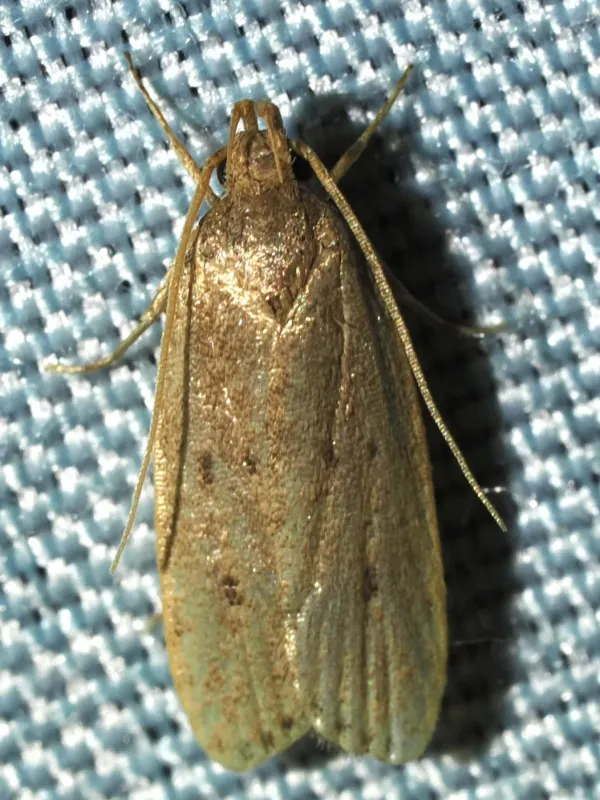
Adult specimens typically feature inconspicuous coloration, usually in shades of gray or brown, providing excellent camouflage against tree bark or dry plant debris. When at rest, their wings are folded in a roof-like manner.
The larvae (caterpillars) of Autosticha possess a cylindrical body and well-developed chewing mouthparts. The coloration of the caterpillars generally varies from light green to brownish, often with longitudinal stripes to provide camouflage on leaf surfaces or inside stems.
Identification of specific species within the Autosticha genus requires detailed examination of genitalia under a microscope, as the external characteristics of many species are quite similar and prone to intraspecific variation.
The insect undergoes complete metamorphosis: egg, larva, pupa, and adult. Each stage is associated with specific ecological niches where the pest finds protection from natural predators and adverse environmental factors.
What it damages
Autosticha is a significant pest for many agricultural and ornamental crops, including fruit trees, berry bushes, and certain vegetable species. Its wide range of host plants makes this genus potentially important for agroecosystems.
The larvae primarily damage the vegetative organs of plants: leaves, buds, and young shoots. In some cases, leaf mining occurs, where the larva tunnels within the leaf blade, feeding on the parenchyma.
Active larval feeding leads to a substantial reduction in the photosynthetic leaf surface area, directly impacting photosynthesis and overall plant development. Damaged tissues are frequently susceptible to secondary fungal and bacterial infections.
During mass outbreaks, Autosticha can cause premature leaf fall, significantly weakening the immunity of perennial crops. In nurseries, bud damage can lead to the deformation of skeletal branches and the loss of the commercial appearance of seedlings.
Fruit crops suffer from reduced yields due to metabolic disruptions within the plant. Severe infestation of young shoots leads to stunted growth and can result in plant death under conditions of acute nutrient deficiency.
When it appears
The biology of Autosticha is closely tied to the regional temperature regime. In temperate latitudes, the adult flight typically occurs during the spring-summer period, when sustained positive temperatures are established.
Insects most often overwinter as pupae or mature larvae, residing in cocoons within bark crevices, plant debris, or the top layer of soil, which allows them to successfully survive low temperatures.
Moth emergence begins when the average daily air temperature reaches 15–18 degrees Celsius. Mass flight coincides with the period of bud burst and active growth of young leaves, which serve as the primary food source for first-generation larvae.
The number of generations per season depends on climatic conditions: in warmer southern regions, the development of two or three generations is possible, which significantly increases the pest's harmfulness during a single growing season.
Towards autumn, development slows down, and insects enter diapause. Favorable conditions in late summer promote the accumulation of sufficient reserve substances for the successful overwintering of populations.
Signs of infestation
The first visual sign of Autosticha presence is the appearance of characteristic "windows" or irregular holes in leaves, the edges of which eventually dry out and curl, giving the leaf an untidy appearance.
The presence of webbing in curled leaves or around buds is a sure sign of caterpillar activity. They use silken threads to strengthen their shelter and prevent falling during strong winds.
With a leaf-mining feeding pattern, sinuous or blotch-like light tunnels are clearly visible on the leaf surface. When viewed against the light, a larva or its excrement can often be detected inside such spots.
Stunted growth of young shoots and yellowing of specific leaf blade sections indicate a disruption of normal tissue nutrition due to pest activity.
The presence of large quantities of small black dots (larval excrement) on the underside of leaves or on the soil surface beneath the tree canopy also serves as an indicator of high Autosticha population density.
Control measures
Agricultural control methods include the mandatory removal of fallen leaves and plant debris from orchards, where pests overwinter. Autumn cultivation of the soil around the tree trunk helps destroy a significant portion of the pupae.
The use of sticky bands on the trunks of fruit trees helps capture caterpillars as they move along the tree. Regular pruning and burning of damaged shoots allow for the reduction of the population size at early stages.
Biological control includes the application of preparations based on Bacillus thuringiensis, which effectively suppress larval development without harming beneficial entomophages or the environment.
In cases of high pest density, the application of systemic or contact-stomach insecticides, approved for use on specific crops, is justified, provided that pre-harvest intervals are strictly observed.
The use of pheromone traps allows for precise tracking of adult flight dynamics, which enables protective treatments to be conducted during the most vulnerable phases of the pest's development, minimizing chemical stress on the agroecosystem.
Taxonomy
- Latin name
- Autosticha
- Order
- Lepidoptera (butterflies)
- Family
- Autostichidae
- EPPO code
- AUTISP
Discussion
No discussions yet — be the first.