
Oegoconia caradjai
Oegoconia caradjai
Description
How to identify
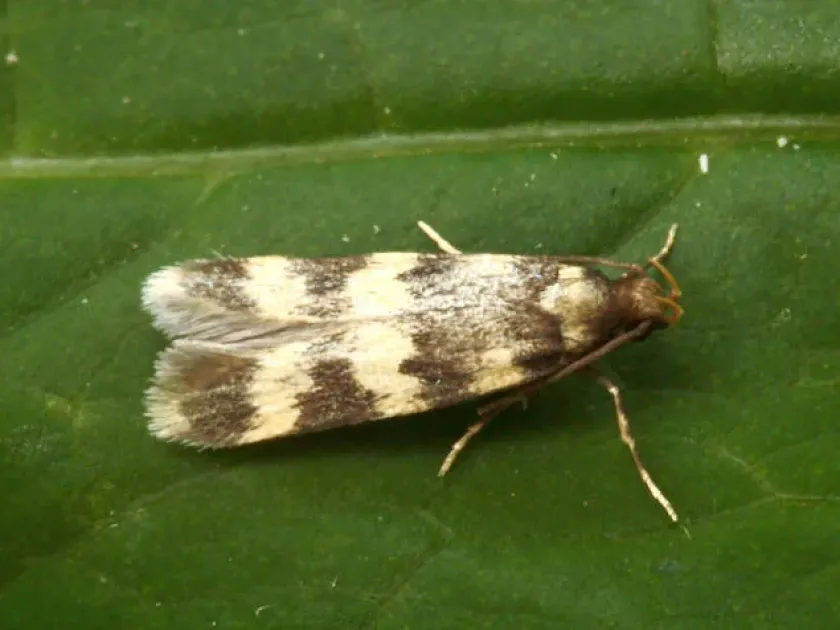
Oegoconia caradjai is a small moth species belonging to the family Autostichidae. These moths are characterized by their modest appearance and cryptic coloration, which blends well with tree bark.
The adult moth features narrow wings with a dark and light pattern, typically spanning about 12–15 millimeters, which allows them to remain hidden during the day.
The larvae are typical of the family, possessing a cylindrical body and a well-developed chewing mouthpart designed for consuming organic matter.
Morphological identification is often difficult due to the similarity between Oegoconia caradjai and other related species, frequently requiring genitalic examination.
These insects are primarily nocturnal, showing most of their activity under cover of darkness, which makes monitoring quite challenging for gardeners.
What it damages
While primarily detritivorous, the larvae of Oegoconia caradjai can become pests when their primary food source, leaf litter, is scarce or when populations are dense.
In such cases, they may feed on buds, tender young leaves, and the bark of trees, causing stunted growth and stress to the host plant.
The mechanical damage caused by larval feeding often facilitates the entry of secondary pathogens, such as fungi or bacteria, into the plant tissues.
Nurseries are particularly at risk, as larvae can damage the root collars and stems of young saplings, potentially leading to plant mortality.
The extent of the damage is usually correlated with the accumulation of organic debris, which provides both a food source and a shelter for the larvae.
When it appears
The adult flight period typically occurs during the summer months, with peak activity observed between June and July in temperate climates.
The species generally completes one generation per year, although favorable environmental conditions may allow for a partial second generation.
Overwintering occurs as a larva, often protected within dense cocoons hidden inside tree crevices or among accumulated dry organic debris.
Activity begins in early spring as temperatures rise, with larvae emerging from their winter refuges to resume feeding on available vegetation.
Weather patterns significantly influence population dynamics, as dry springs tend to limit the availability of moisture necessary for larval development.
Signs of infestation
Signs of infestation include the presence of silken webbing on leaf litter or tree bark, where larvae build protective nests.
Small dark granular excrement found near the base of branches or in leaf crevices is a reliable indicator of active larval presence.
Irregular feeding marks on the edges of leaves, often described as «ragged edges,» are characteristic signs of mature larval activity.
Adult moths are strongly attracted to artificial light sources, making light traps a useful tool for confirming the presence of the pest in the area.
A gradual decline in the health of specific plant sections, combined with minor tissue damage, often signals that this moth has established a colony.
Control measures
The most effective management strategy is cultural: maintaining garden sanitation by removing fallen leaves and decaying wood is essential to limit food sources.
Regular cultivation of the soil around the base of trees helps disrupt the overwintering stages of the larvae, effectively reducing the spring population.
If population levels exceed economic thresholds, authorized insecticides targeted at larvae can be applied in accordance with regional safety regulations.
Integrated Pest Management (IPM) practices, including the use of pheromone traps, provide a non-invasive way to monitor the moth population throughout the season.
- Sanitary pruning of dead or diseased branches.
- Autumn soil tillage in orchards.
- Application of biological control agents like Bacillus thuringiensis.
Taxonomy
- Latin name
- Oegoconia caradjai
- Order
- Lepidoptera (butterflies)
- Family
- Autostichidae
- EPPO code
- OEGOCA
Discussion
No discussions yet — be the first.