
Oegoconia
Oegoconia
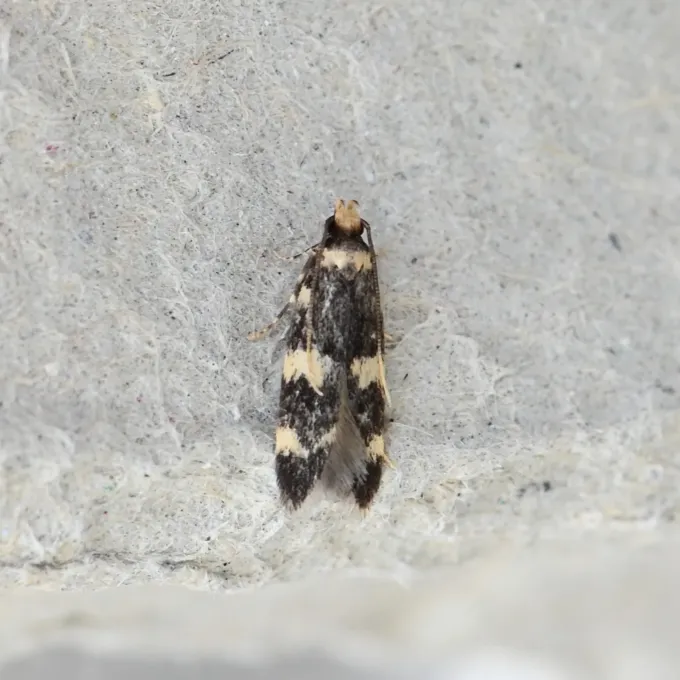
Description
How to identify
The genus Oegoconia belongs to the family Cosmopterigidae, a group of small, cryptic moths frequently found in association with stored plant products.
Adult moths are characterized by narrow, elongated wings covered in scales, which serve as excellent camouflage against dusty or wooden storage surfaces.
The larvae are small and active, possessing chewing mouthparts that allow them to feed efficiently on a variety of organic substrates found in warehouses.
Identifying the exact species often requires professional taxonomic examination, as many representatives of the genus look extremely similar to the naked eye.
These moths are primarily nocturnal, spending the daylight hours in cracks, crevices, or dark corners, which often hides their presence from standard inspections.
What it damages
The primary damage is caused by the larval stage, which feeds on dried plant materials, seeds, grain waste, and processed animal feeds.
Oegoconia larvae can act as secondary pests, thriving in the debris and dust that accumulate in neglected areas of grain storage facilities.
Feeding activities involve creating silken webs that mat together grain particles or feed debris, which can lead to clumping and localized heating of the stored stock.
Beyond direct consumption, the infestation leads to contamination with frass and webbing, significantly lowering the market value and quality of the stored goods.
If left unmanaged, these infestations provide a substrate for secondary mold growth, potentially leading to further deterioration of the stored commodities.
When it appears
In temperature-controlled storage environments, Oegoconia can maintain continuous development throughout the year, as they are well-adapted to stable indoor conditions.
Peak populations are usually observed during warmer seasons when rising ambient temperatures naturally accelerate the metabolic and reproductive cycles of the moths.
Winter conditions can suppress reproduction, but in heated warehouses, the life cycle remains largely unaffected, allowing for constant pressure on stored stocks.
The life cycle duration is heavily influenced by environmental humidity; higher moisture levels generally correlate with faster development and higher survival rates for larvae.
Adult activity increases during the evening and night hours, when moths emerge from their hiding spots to mate and lay eggs on suitable food sources.
Signs of infestation
The presence of adult moths fluttering near walls or storage containers, especially when disturbed or exposed to light, is the most common indicator of an infestation.
Fine silk webbing found within stored grain or on the surface of feed bags is a clear sign that larvae are active and feeding within the bulk.
The accumulation of larval frass—tiny, dark, granular waste—within stored items or in the dust on the floor indicates established breeding sites.
A musty or moldy odor emanating from the storage area is often an indirect sign of an active infestation that has altered the moisture content of the grain.
Small exit holes or damage to seed husks and packaging materials serve as direct physical evidence of larval infestation and development.
Control measures
Strict sanitation practices, such as the regular removal of grain dust, spillage, and debris, are the most effective way to prevent Oegoconia outbreaks.
Maintaining a dry environment with humidity levels below 60% significantly inhibits larval development and overall population growth.
Mechanical exclusion through the sealing of cracks and crevices in warehouse infrastructure reduces the number of suitable sites for pupation and egg-laying.
In cases of high infestation levels, professional fumigation of the warehouse or affected commodities is necessary to ensure the eradication of all life stages.
- Use of pheromone-based traps to monitor population levels.
- Regular cleaning of machinery and storage handling equipment.
- Inspecting incoming goods for signs of existing contamination.
Taxonomy
- Latin name
- Oegoconia
- Order
- Lepidoptera (butterflies)
- Family
- Autostichidae
- EPPO code
- OEGOSP
Discussion
No discussions yet — be the first.