
Bornean bearded pig
Sus barbatus
Description
How to identify
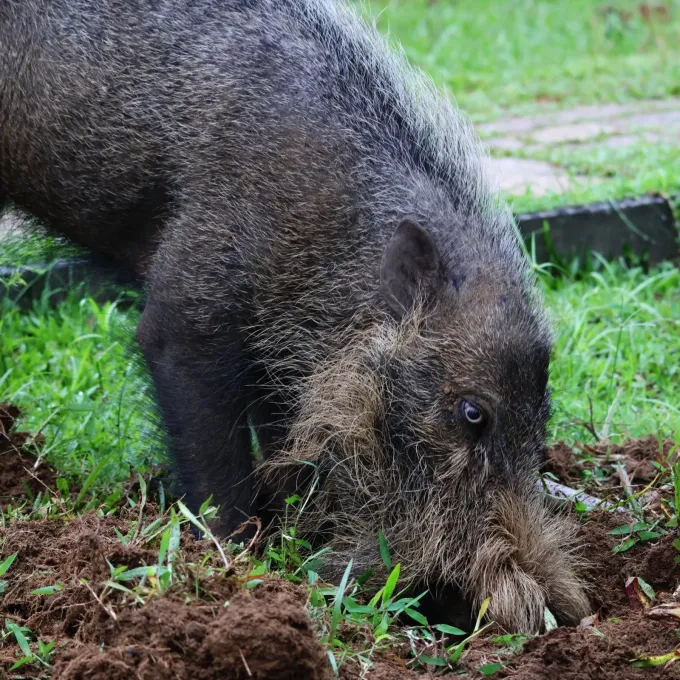
The Bornean bearded pig (Sus barbatus) is a large suid species characterized by the prominent, hair-like bristles on its snout, which give it a beard-like appearance.
Adult pigs typically weigh between 70 and 150 kilograms and possess a robust build, allowing them to traverse dense forests and agricultural landscapes with ease.
These animals are highly social, often gathering in large herds that can cause extensive and rapid destruction when they enter cultivated farmland.
They exhibit a high reproductive rate, which allows their populations to recover quickly, making long-term control a significant challenge for farmers in their range.
Their nocturnal nature makes them elusive, as they spend daylight hours in cover and emerge at night to feed, often going undetected until significant damage occurs.
What it damages
The species is notorious for causing massive damage to oil palm plantations, where it digs up and consumes young saplings, effectively killing the crop at its roots.
Root crops such as cassava and sweet potatoes are also frequently targeted; the pigs excavate the soil, consuming the tubers and leaving the field decimated.
Mechanical damage to the soil structure is severe, as the trampling of large herds leads to soil compaction, which reduces drainage and overall soil health for future planting.
Agricultural infrastructure, including irrigation channels, dykes, and fencing, is frequently damaged by the pigs as they move across the landscape in search of food.
In many regions, they are considered a major limiting factor for agricultural expansion due to the risk of total crop loss during the harvest period.
When it appears
Activity levels fluctuate based on the availability of natural forest fruits, with pigs turning to agricultural crops when these resources become scarce.
Seasonal migration patterns are often triggered by the dry season, forcing herds to move toward perennial crops or areas with consistent water availability.
The harvest phase of commercial crops acts as a magnet, drawing pigs into farmlands and leading to intensive feeding events that can last for several weeks.
In some cases, the pigs demonstrate an ability to track crop maturation cycles, timing their raids to coincide with the periods when crops are most palatable.
Sudden surges in pest activity often correlate with environmental changes in the surrounding forest, which push populations into cultivated human-altered landscapes.
Signs of infestation
Clear evidence of a herd's presence includes deep hoof prints in the soft or cultivated soil, which remain visible for days after a raid.
Extensive digging and churning of the topsoil, along with large swathes of crushed and broken crops, are tell-tale signs that a group of pigs has passed through.
Fencing damage is common, including holes forced at the bottom or hair caught on wire, indicating the entry points used by the animals to access the fields.
The presence of droppings and distinctive trails leading from nearby forests directly into the plantation confirms the animals' use of the area for foraging.
In orchards and palm groves, the loss of lower-tier fruit and scarred tree bark provides visual confirmation of the pigs feeding within the canopy reach.
Control measures
The most effective strategy involves the installation of robust, buried mesh fencing that prevents the pigs from digging underneath or breaking through the barrier.
Electric fencing serves as a powerful deterrent, provided that it is maintained at a sufficient voltage to discourage contact and keep the animals out.
Non-lethal acoustic and visual deterrents, such as motion-activated strobe lights or noise-makers, can be used to disrupt feeding patterns during the night.
- Implementing regular field patrols during the peak crop maturation season.
- Using natural scent-based repellents along the property perimeter.
- Maintaining a clean buffer zone between forest edges and crop rows.
- Collaborating with local wildlife management for controlled herd monitoring.
An integrated pest management approach that combines sturdy physical barriers with deterrent technology is the most reliable way to mitigate economic loss.
Taxonomy
- Latin name
- Sus barbatus
- Family
- Suidae
- EPPO code
- SUXXBA
Discussion
No discussions yet — be the first.