
Alfalfa beetle
Subcoccinella
Description
How to identify
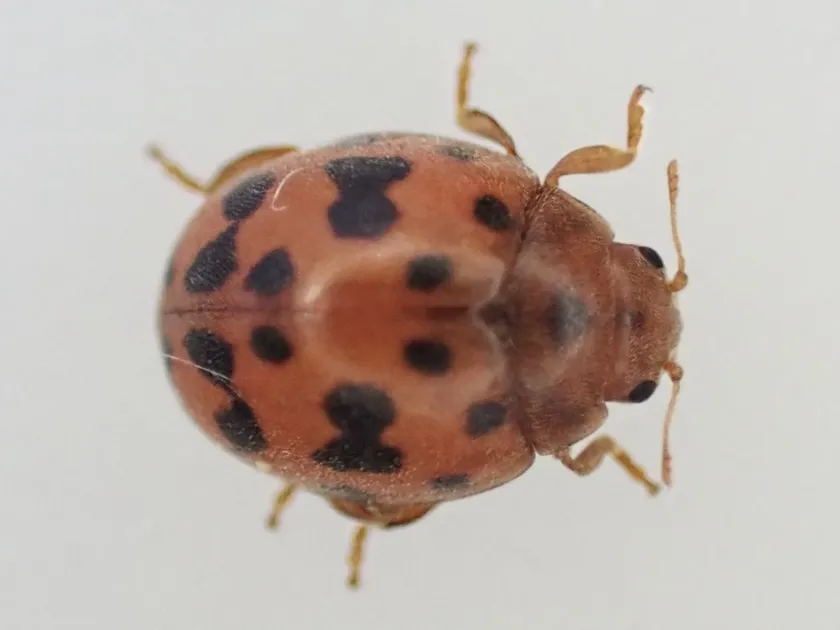
The alfalfa beetle (Latin Subcoccinella 24-punctata) is a member of the ladybug family (Coccinellidae). Unlike its predatory relatives, this species is a specialist herbivore. Adult beetles measure about 3–4 mm in length and are covered in short, dense hairs.
The elytra, or wing covers, are typically reddish-brown or orange, marked with up to 24 small black spots. The larvae are spindle-shaped, yellow-green in color, and distinctly recognizable by the presence of numerous branched spines covering their bodies.
What it damages
The primary hosts for this pest include various perennial legumes. Alfalfa, clover, sainfoin, and sweet clover are the most frequently attacked crops, suffering from both adult and larval feeding.
While alfalfa is the preferred host, large populations can migrate to nearby fields of soybeans, beans, or even sugar beets, causing significant foliage loss and weakening the overall plant vigor.
When it appears
Adult beetles overwinter in plant debris, under leaf litter, or within the upper soil layer near field margins and shelterbelts. They emerge in the spring as soon as temperatures rise, typically coinciding with the initial growth of alfalfa.
The lifecycle consists of egg, larval, pupal, and adult stages. Depending on local climatic conditions, the pest may produce one or two generations per year, with the highest level of crop damage observed during the summer months.
Signs of infestation
The most characteristic sign of infestation is skeletonized foliage. Both adults and larvae scrape away the leaf epidermis and parenchyma, leaving the veins intact, which results in a distinct lacy or net-like appearance on the leaves.
In severe cases, the foliage turns brown, shrivels, and falls off prematurely. This damage significantly reduces the photosynthesis rate of the crop, directly impacting the hay yield and protein content of the forage.
Control measures
Good agricultural practices are the first line of defense. Regularly scheduled harvesting of alfalfa at the early flowering stage effectively destroys larvae that are still feeding on the foliage.
Maintaining clean fields by removing weeds that serve as auxiliary hosts is also recommended. If infestation levels exceed the economic threshold, targeted insecticide applications may be necessary to minimize damage to the crop.
Taxonomy
- Latin name
- Subcoccinella
- Order
- Coleoptera (beetles)
- Family
- Coccinellidae
- EPPO code
- SUBCSP
Discussion
No discussions yet — be the first.