
Adalia
Adalia
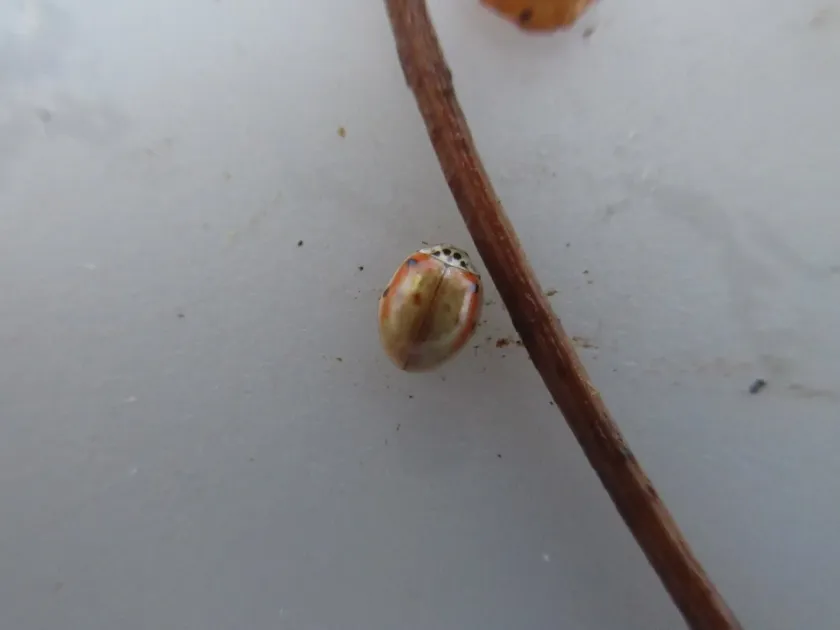
Description
How to identify
The genus Adalia belongs to the family Coccinellidae (ladybeetles). The most common species is Adalia bipunctata, known as the two-spotted ladybeetle.
Adults are small, dome-shaped beetles, typically 3.5 to 5 mm long. They are generally red or orange with two prominent black spots on their wing covers.
Larvae are elongated and dark-colored, often featuring orange or yellow spots. They are highly mobile and actively crawl across foliage in search of prey.
Pupae are often attached to the undersides of leaves or stems. They are stationary and typically dark, blending in with the plant environment.
These insects are strictly predators and are classified as highly beneficial organisms in agricultural and horticultural ecosystems.
What it damages
Adalia species are not plant pests; they do not consume plant material, damage tissues, or reduce crop yield through herbivory.
They act as biological control agents, preying upon aphids, mites, and scale insects, which are the real threats to plant health.
A single larva can consume hundreds of aphids during its developmental stages, making it a critical player in maintaining a healthy agroecosystem.
Adults also contribute significantly to the suppression of pest populations, preventing localized outbreaks of sucking insects.
Farmers and gardeners should encourage the presence of Adalia as a natural and free method of pest management.
When it appears
Activity usually begins in early spring as temperatures rise and aphid colonies start to develop on new plant growth.
The peak period of activity occurs during the summer months when both pest numbers and ladybeetle activity are at their highest.
Adalia overwinter as adults, finding shelter in bark crevices, leaf litter, hollow stems, or man-made structures.
After emerging from diapause in the spring, they search for food and mating partners to begin the new reproductive cycle.
Depending on local climate conditions, they may complete multiple generations per season, ensuring a sustained pressure on pest populations.
Control measures
There is no need to control Adalia. Instead, agricultural practices should focus on conservation to maintain their populations.
Broad-spectrum insecticides are detrimental to these beneficial predators and should be avoided to prevent secondary pest outbreaks.
Implementing integrated pest management (IPM) strategies helps preserve these natural enemies while controlling actual crop pests effectively.
Providing refuges and floral resources can significantly boost the population density of ladybeetles on a farm or garden.
- Minimize pesticide application during peak predator activity.
- Maintain perennial buffer strips and hedgerows for winter hibernation.
- Use selective bio-pesticides when control of aphids becomes necessary.
Taxonomy
- Latin name
- Adalia
- Order
- Coleoptera (beetles)
- Family
- Coccinellidae
- EPPO code
- ADALSP
Discussion
No discussions yet — be the first.