
Two-spot ladybird
Adalia bipunctata
Description
How to identify
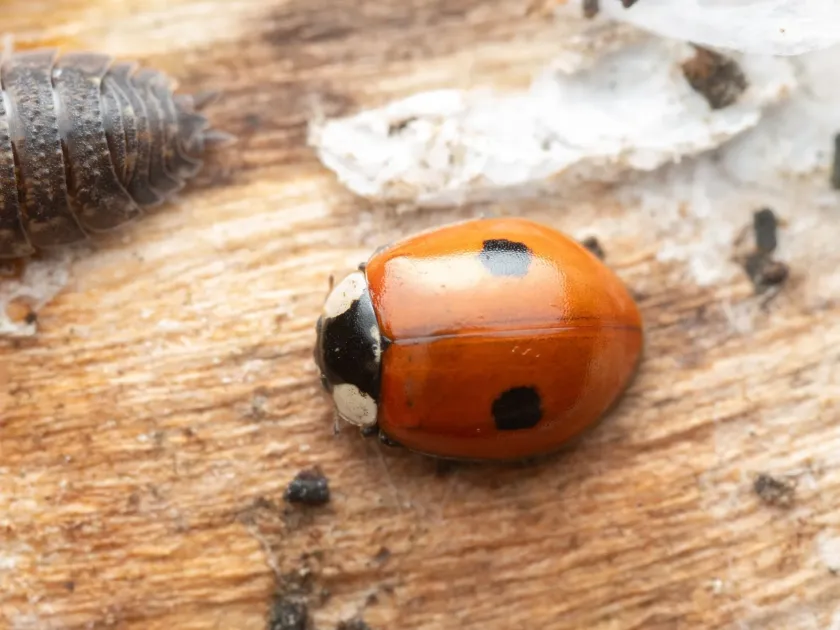
The two-spot ladybird (Adalia bipunctata) is a beetle belonging to the order Coleoptera and the family Coccinellidae. Adults are typically 3.5 to 5 mm long, characterized by their bright red elytra featuring two distinct black spots, though melanistic (black) variants also exist.
The pronotum is black with white lateral markings, which is a key identification feature. The body shape is hemispherical and convex, typical for most ladybird species found in temperate climates.
Larvae are elongated, dark gray to black in color, with distinct yellow or orange markings along the sides. Their bodies are covered in small tubercles and bristles, giving them a rugged appearance that allows them to move effectively on vegetation.
Eggs are oval and yellow-orange. They are laid in clusters, usually on the underside of leaves, in areas where prey such as aphids is abundant, ensuring immediate access to food upon hatching.
While fundamentally recognized as a predator, this species exhibits high adaptability. In environments where prey density is low, their behavior may shift, leading to interactions with plant tissues that categorize them as temporary pests.
What it damages
Damage typically occurs when aphid populations crash or are insufficient. Under such stress, Adalia bipunctata may turn to plant tissues, including young shoots, leaves, and buds, to supplement their diet.
In greenhouses or high-density agricultural areas, feeding activity can cause visible necrosis and tissue deformation. Small punctures or irregular feeding marks on foliage reduce the photosynthetic area of the plant.
Fruit damage is another significant concern. Ladybirds can feed on the surface of stone or pome fruits, leaving small wounds that serve as entry points for secondary fungal infections, thus compromising fruit quality.
Seedlings and young vegetables are particularly vulnerable to such damage. The physiological stress caused by multiple feeding sites can lead to stunted growth and reduced yields in sensitive horticultural crops.
It is crucial for agronomists to differentiate between damage caused by ladybirds and primary pests. Often, the presence of the beetle is merely a symptom of a collapsing prey cycle rather than the primary infestation problem.
When it appears
Adult beetles emerge from hibernation in early spring as temperatures consistently rise above 10 degrees Celsius. They seek out early colonies of aphids to fuel their reproductive cycle.
The period of peak activity occurs during mid-summer, when aphid populations are at their highest. During this time, the life cycle progresses rapidly, with multiple generations possible in a single season.
As summer draws to a close, beetles prepare for winter diapause. They seek sheltered sites such as leaf litter, tree bark cracks, or building crevices where they aggregate in large numbers to survive the cold.
The total development time from egg to adult takes approximately three to four weeks under favorable conditions. Temperature is the primary driver of development speed throughout the growing season.
Survival over the winter period is essential for maintaining population levels. Successful overwintering depends on the energy reserves built up by the last generation of adults before autumn temperatures drop.
Signs of infestation
The presence of adult beetles in high densities on plant surfaces or structures is the most obvious sign. In large numbers, they may cluster on fruits, creating unsightly blemishes through feeding activity.
Visible feeding wounds on young fruit skin, which often appear as small, shallow pits, are key indicators. These wounds may eventually crust over but often leave behind necrotic tissue.
Clusters of bright yellow eggs on the underside of leaves serve as a warning. Finding these indicates that a new generation of larvae will soon appear and begin consuming local plant tissues.
Larval stages present on plants without visible aphid colonies suggest a food shortage. Observing larvae moving along the stems and leaves is a strong indicator of their search for alternative food sources.
Exuviae, or discarded larval skins, left on leaf surfaces indicate that the population has been active for several weeks and that larval development has successfully occurred in that area.
Control measures
The most effective strategy is the maintenance of aphid populations at a sustainable level. By ensuring the ladybird's primary food source is available, the risk of damage to crops is significantly mitigated.
Mechanical removal is viable for small-scale operations or garden settings. Shaking plants in the early morning can dislodge adults before they become active and move to new feeding sites.
Chemical control should be avoided whenever possible, as ladybirds are highly sensitive to broad-spectrum insecticides. Indiscriminate spraying often kills the predator population, leading to a resurgence of other pests.
Strategic planting of companion crops like dill, fennel, and other umbellifers around the perimeter of fields can act as an attractant, keeping ladybirds away from primary vegetable crops.
In controlled environment agriculture, monitoring temperature and humidity can influence beetle behavior. Ensuring optimal conditions for secondary prey management is the preferred biological approach to preventing damage.
Taxonomy
- Latin name
- Adalia bipunctata
- Order
- Coleoptera (beetles)
- Family
- Coccinellidae
- EPPO code
- ADALBI
Discussion
No discussions yet — be the first.