
Ten-spotted ladybird
Adalia decempunctata
Description
How to identify
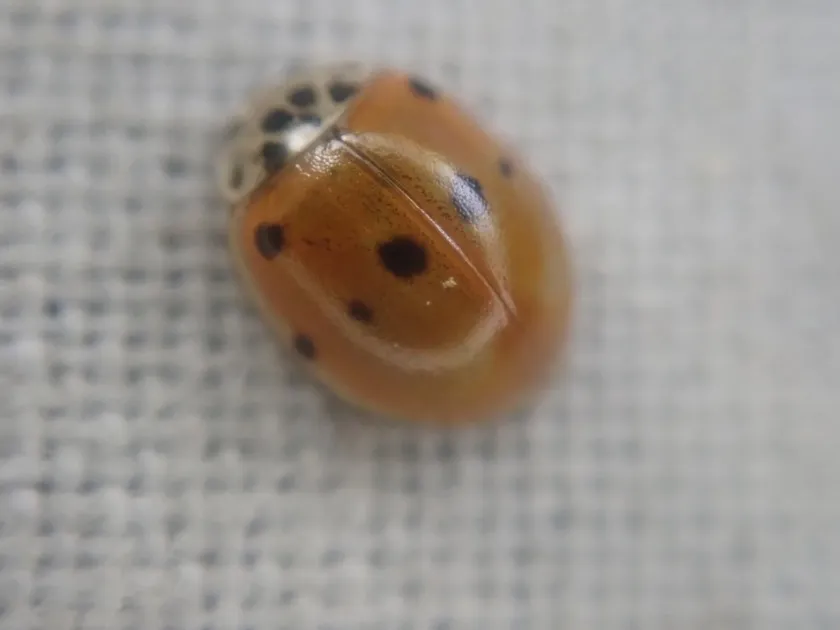
The ten-spotted ladybird (Adalia decempunctata) is a small beetle belonging to the family Coccinellidae within the order Coleoptera. Adult beetles typically measure between 3.5 and 4.5 mm in length.
This species is well-known for its extreme color variability, making identification challenging for non-specialists. The elytra can range from cream and yellow to orange, red, or dark brown.
The number of black spots on the wing covers is highly inconsistent, ranging from zero to ten, and these spots often fuse together to form complex patterns or stripes.
The larvae possess an elongated, dark-colored body decorated with distinct orange or yellow markings on their segments, a trait characteristic of many ladybird species.
Eggs are deposited in small clusters on the underside of leaves; they are oval-shaped and exhibit a bright yellow or orange hue.
What it damages
While primarily considered a beneficial predator that feeds on aphids, Adalia decempunctata can occasionally cause damage to cultivated plants under specific conditions.
When natural food sources like aphids are scarce or unavailable, adults may turn to plant tissues, causing minor epidermal damage to young leaves.
In ornamental horticulture, this feeding behavior can lead to visible scarring on leaves and buds, thereby reducing the aesthetic quality of the plants.
Large-scale damage is rare, and the species is generally valued in agricultural systems for its role in controlling aphid populations naturally.
Crops potentially susceptible to minor damage include greenhouse vegetables, flowering plants, and young orchard saplings during early growth stages.
When it appears
The life cycle of the ten-spotted ladybird follows a complete metamorphosis, including egg, larval, pupal, and adult stages.
In temperate climates, the species typically undergoes one or two generations per year, synchronized with the presence of host prey.
Adults overwinter in sheltered locations, such as leaf litter, tree bark crevices, or protected garden structures, to survive the cold winter months.
Emergence in spring is timed with the initial growth of plants and the subsequent appearance of early-season aphid colonies.
Peak activity and reproductive phases occur during the summer months when prey populations are most abundant on various host plants.
Signs of infestation
The primary indication of their presence is the observation of adults on plant stems and foliage, particularly near active aphid clusters.
Damage signs include small, irregular holes or rasped patches on the leaf surface, which are indicators that adults have shifted their feeding habits.
Egg batches on the undersides of leaves provide an early warning of future population growth and potential larval activity.
The presence of larvae actively hunting among prey colonies is a common sight throughout the growing season.
- Surface scarring on young, tender foliage.
- Presence of diverse color-patterned beetles on buds.
- Small yellow egg clusters on lower leaf surfaces.
- Larval activity near aphid-infested stems.
Control measures
Management strategies should prioritize the conservation of this beneficial insect, as it serves as a natural pest controller in most agricultural settings.
Broad-spectrum insecticides should be avoided to prevent collateral damage to these natural predators, which could trigger secondary outbreaks of other pests.
Cultural practices, such as clearing debris in the autumn, can reduce overwintering sites, though this must be balanced with the need to protect overwintering beneficial insects.
Monitoring is crucial; if damage thresholds are exceeded, targeted and ecologically friendly interventions should be selected over harsh chemical treatments.
Maintaining high plant diversity around farms and gardens helps support stable populations of these ladybirds, ensuring long-term aphid control.
Taxonomy
- Latin name
- Adalia decempunctata
- Order
- Coleoptera (beetles)
- Family
- Coccinellidae
- EPPO code
- COCIDE
Discussion
No discussions yet — be the first.