
Fifteen-spotted lady beetle
Anatis quinquedecimpunctata
Description
How to identify
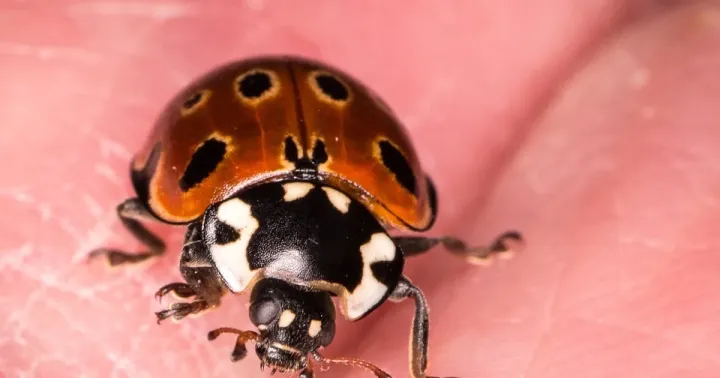
The fifteen-spotted lady beetle (Anatis quinquedecimpunctata) is a member of the Coccinellidae family within the Coleoptera order. Unlike most ladybugs which are beneficial predators, this species is known for its herbivorous feeding habits.
Adult beetles typically measure between 7 and 9 mm in length. Their elytra vary in color from yellowish-tan to reddish-brown, decorated with a distinct pattern of fifteen black spots, which is the primary feature for identification.
The body shape is oval and convex with a shiny surface. The pronotum is usually light-colored with specific dark markings, often resembling an 'M' shape, which aids experts in distinguishing it from other lady beetle species.
Larvae go through several developmental stages. They have elongated bodies covered in small spines or waxy projections, allowing them to remain camouflaged on the leaves while they feed on plant tissues.
Females lay eggs in small clusters on the underside of leaves. These clutches are often protected by a specialized secretion that shields the eggs from desiccation and environmental stress during the incubation period.
What it damages
Damage is caused by both adults and larvae. Unlike predatory lady beetles, this species feeds on plant foliage, causing significant injury to the leaves of various deciduous tree species in gardens and forests.
The host plants often include willows, poplars, birches, and several fruit-bearing trees. When infestations are heavy, the beetle can cause significant leaf loss, which impacts the plant's health.
Damage manifests as skeletonized leaves or irregular holes chewed through the leaf blade, which disrupts the tree's photosynthetic activity and reduces the overall vigor of the host plant.
Persistent feeding leads to the weakening of the tree, making it more susceptible to opportunistic fungal infections, bacterial diseases, and further stress from environmental factors during the growing season.
In nursery settings, young saplings are particularly at risk. Extensive defoliation can lead to stunted growth, distorted branch development, and reduced survival rates for newly planted trees.
Signs of infestation
The first sign of an infestation is the presence of adult beetles on the foliage, typically appearing in late spring. Checking the undersides of leaves is crucial for detecting egg clusters.
Visual evidence of feeding, such as jagged leaf edges or circular holes throughout the leaf surface, indicates the presence of larvae. If such patterns are observed, a thorough inspection of the canopy is recommended.
The presence of frass (insect excrement) on the leaves or falling from the branches is another indicator of active feeding. Accumulated frass often signals a high population density in the affected area.
Premature yellowing and leaf drop in mid-summer are warning signs that the tree has been under stress from prolonged feeding by the beetles. Healthy trees should remain green well into the late season.
Bird activity can also be a sign of a pest outbreak. An unusual concentration of insectivorous birds in a specific tree canopy often indicates that they are feeding on a high population of beetles or larvae.
Control measures
Monitoring is the primary defense strategy. For small gardens, hand-picking adult beetles and removing infested leaves with egg clutches is a highly effective, eco-friendly method to keep populations low.
Biological control options include the use of entomopathogenic fungi, which specifically target the larvae. These biological agents effectively reduce populations while sparing non-target beneficial insects in the ecosystem.
In cases of severe infestation, systemic or contact insecticides may be necessary. It is important to apply these treatments outside of the flowering period to avoid harming pollinators and other beneficial species.
Encouraging natural predators such as parasitic wasps or predatory bugs can help maintain a natural balance, preventing the fifteen-spotted lady beetle from reaching outbreak levels in the long term.
- Prune tree crowns to improve airflow and light penetration, reducing favorable conditions for pests.
- Maintain clear soil around tree bases to disrupt the lifecycle of the beetle.
- Use light traps during the peak adult activity season to reduce the population.
- Ensure trees receive adequate irrigation and nutrients to boost their natural resistance.
Taxonomy
- Latin name
- Anatis quinquedecimpunctata
- Order
- Coleoptera (beetles)
- Family
- Coccinellidae
- EPPO code
- ANATFC
Discussion
No discussions yet — be the first.