
Stygia
Stygia
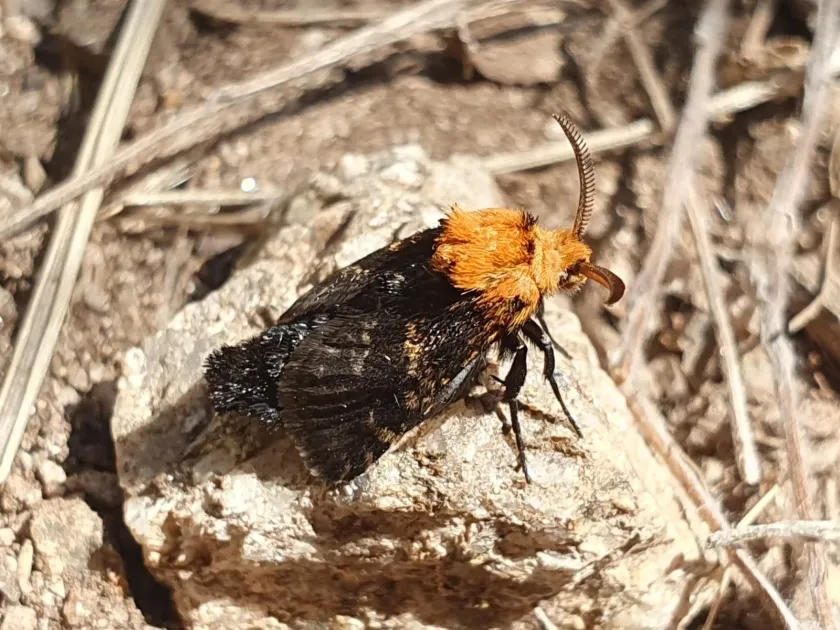
Description
How to identify
Stygia belongs to the family Cossidae (carpenter moths) of the order Lepidoptera. This insect has a specific appearance typical of this family, with a dense body and narrow wings covered in scales.
Adults exhibit calm behavior, and their coloration often mimics tree bark or dry soil, making them inconspicuous during daylight hours. Identification of the species often requires entomological expertise due to the morphological similarity with other related carpenter moth species.
Stygia larvae have powerful chewing mouthparts adapted for tunneling through the woody tissues of plants. The body of the larva is covered with sparse hairs and has well-developed thoracic legs.
The systematic position of the species allows it to be classified as a dangerous pest capable of causing significant damage over a long period of its life cycle. Pupation occurs directly inside the tunnels created by the larva.
To accurately determine the presence of the pest in an orchard or field, agronomists use pheromone traps that effectively attract males during the flight period of the imago.
What it damages
The main damage is caused by the larval stage, which leads a concealed life, feeding on the wood, stems, and roots of crops. Perennial plantings, including fruit trees and vineyards, suffer the most.
Damage to the inner layers of the stem disrupts the normal flow of sap and nutrient supply, which leads to a gradual suppression of the plant's vital functions. In cases of severe infestation, the death of individual branches or the entire plant is possible.
The pest often selects weakened specimens, but at high population densities, it can infest even healthy and robust plants, creating conditions for the development of fungal and bacterial diseases through the damaged tissues.
Crops lose their economic value, and the wood inside the stems turns into dust, making the plants extremely vulnerable to strong winds or the weight of their own harvest.
Economic damage consists not only of lost yield but also of the need for expensive treatments or the complete replacement of damaged plantings on the plot.
When it appears
The activity of adult Stygia is observed mainly in the summer period, when favorable temperature conditions for mating and oviposition occur.
The development of generations can span several years, which complicates the fight against the pest, as different stages of the insect may be present in the plant simultaneously at any time of the year.
In spring, with the beginning of sap flow, larvae become most active and increase the intensity of tunnel construction, which coincides with the phase of intensive growth of crops.
In autumn, when temperatures drop, the larvae prepare for overwintering, digging deeper into the wood, where they are protected from unfavorable external environmental factors.
Monitoring of imago flights should start as early as late spring and continue until mid-summer to notice the start of the infestation in time and take prompt protective measures.
Signs of infestation
The main sign of infestation is the presence of holes in the bark or stems from which larval excrement protrudes, resembling fine sawdust or wood shavings.
Premature yellowing and wilting of leaves on affected branches are observed, which are often mistakenly attributed to lack of moisture or disease.
A characteristic symptom is gumosis or the secretion of sap from the sites of bark damage, which serves as an indicator of the deep penetration of the larvae into the tissues.
- Holes in trunks and branches.
- Accumulations of wood flour at the base of the trunk.
- Withering of individual structural branches.
- Deformation of shoots at the site of feeding.
By cutting into a damaged shoot or inspecting under the bark, one can find tunnels filled with the pest's waste products, which is 100% confirmation of the presence of Stygia.
Control measures
The first stage of control is the agrotechnical method: regular sanitary pruning and the destruction of heavily damaged branches where larval colonies are localized.
To prevent the spread of the pest, it is recommended to seal mechanical damage to the bark with garden paint or specialized coatings to block access for egg-laying.
The use of pheromone traps helps to reduce the number of males, thereby disrupting the reproductive cycle and decreasing the probability of fertilized eggs being laid on the crops.
In cases of massive infestation, systemic insecticides are used, which penetrate plant tissues and affect the hidden larvae during their feeding on the wood.
An important element of protection is maintaining the overall immunity of plants through balanced fertilization and correct irrigation, which increases the resistance of crops to pests.
Taxonomy
- Latin name
- Stygia
- Order
- Lepidoptera (butterflies)
- Family
- Cossidae
- EPPO code
- STGISP
Discussion
No discussions yet — be the first.