
Stomorhina lunata
Stomorhina lunata
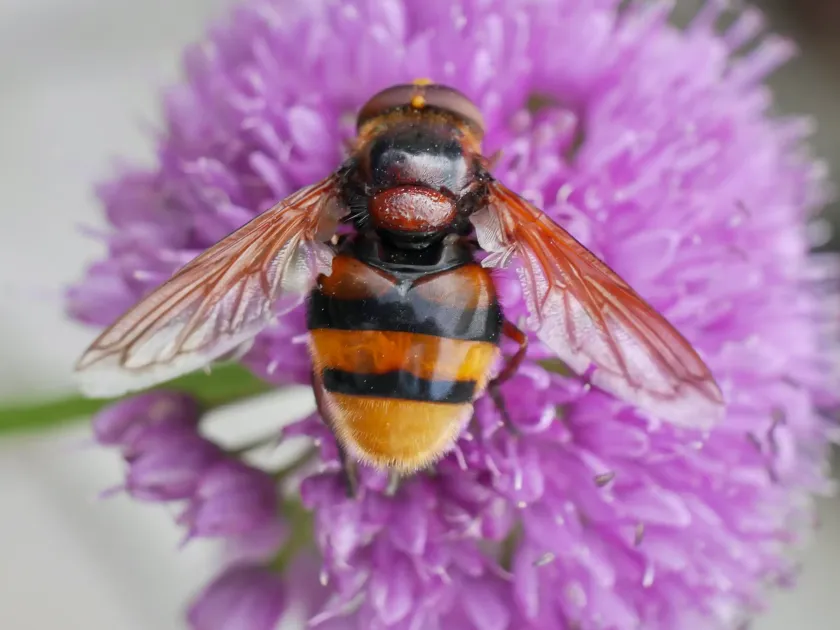
Description
How to identify
Stomorhina lunata is a fly species belonging to the family Calliphoridae. These insects are often mistaken for common house flies or bluebottle flies, but they possess specific morphological features such as a metallic luster and a distinct pattern on the abdomen.
The species is well-known for its biology as a facultative parasitoid of locust egg pods. Adult flies are often found in areas where locust populations are high, as this is where they locate their hosts for reproduction.
Adults are medium-sized flies, typically reaching 7 to 10 millimeters in length. They have a characteristic mouthpart structure designed for feeding on nectar, making them frequent visitors to flowering plants in agricultural fields.
Identification in the field is usually conducted by entomologists observing the wings' venation and the specific abdominal markings. These flies are highly active during warm, sunny days when they engage in mating and host-searching behavior.
Unlike common nuisance flies, Stomorhina lunata focuses its activity on soil-dwelling insects. This behavioral specialization makes them unique subjects for both ecological research and agricultural monitoring programs.
What it damages
The primary damage caused by Stomorhina lunata is not direct feeding on crops, but rather the potential for interfering with pollination or contaminating flowering plant tissues when populations reach high densities.
However, since they are parasitoids of locust eggs, they can also be considered beneficial. In many agricultural regions, they serve as a natural biological control agent that limits the growth of locust populations.
Direct economic loss occurs if the adults damage flowers of sensitive seed crops while feeding. Their presence can also lead to cosmetic contamination, affecting the quality of crops destined for fresh market sales.
Agricultural damage is often indirect, as the presence of large swarms can indicate an underlying issue with locust activity, forcing farmers to increase monitoring efforts in the affected area.
The economic impact is generally low, and management should prioritize long-term ecological balance rather than immediate extermination, unless damage thresholds are clearly exceeded.
When it appears
The activity of adult Stomorhina lunata typically peaks during mid-summer, coinciding with the egg-laying period of locust species. They are most active in warm weather with moderate humidity levels.
The lifecycle includes several stages: eggs are deposited in the soil, followed by larval development inside the host, pupation, and the emergence of the adult fly. Multiple generations can occur per season depending on environmental factors.
Temperature is the main driver of their development. Optimal growth occurs between 22 and 28 degrees Celsius. In drought conditions, adult activity decreases, and they may seek shelter in cooler microclimates.
Winter is spent in the pupal stage, buried within the soil. As the ground warms up in the spring, the pupae complete their development and the new generation of adults emerges to begin the cycle again.
Field monitoring is essential to track the timing of emergence. Sticky traps and sweep-net samples are effective tools for detecting the onset of the peak population period.
Control measures
Since Stomorhina lunata often acts as a natural enemy of agricultural pests, chemical control is rarely recommended unless necessary. Integrated Pest Management (IPM) is the preferred approach.
Mechanical control through deep autumn plowing is highly effective, as it destroys the overwintering pupae hidden in the soil, preventing them from emerging the following year.
Reducing the number of flowering weeds around the perimeter of the fields helps discourage the flies from staying in the area, as it limits their primary source of adult nutrition.
Biological control using entomopathogenic fungi or selective biopesticides may be considered if populations pose a genuine threat to seed production or if they interfere with commercial operations.
Farmers should avoid broad-spectrum insecticide sprays that target all insects, as this would eliminate the parasitoid, potentially leading to a massive, unchecked outbreak of locusts later in the season.
Taxonomy
- Latin name
- Stomorhina lunata
- Order
- Diptera (flies)
- Family
- Calliphoridae
- EPPO code
- STMRLU
Discussion
No discussions yet — be the first.