
Blue blow fly
Calliphora albifrontalis
Description
How to identify
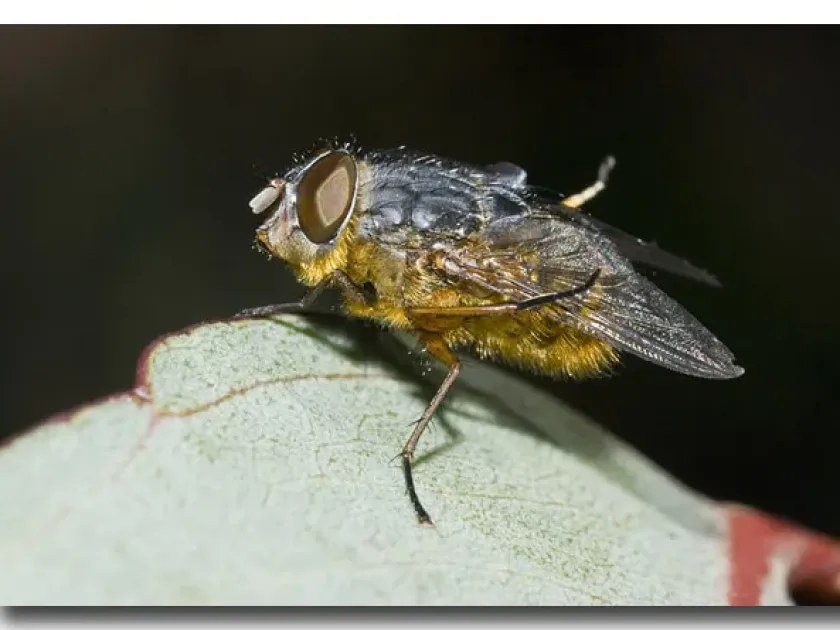
The blue blow fly belongs to the Calliphoridae family. The species Calliphora albifrontalis is characterized by its metallic blue or blue-green sheen on the abdomen.
Adult flies typically measure 8–12 mm in length. The head has a distinct structure, and the eyes of males are set closer together than those of females, serving as a primary identification mark.
The wings are transparent with typical wing venation for this family. The thorax is covered in dense bristles, aiding the fly in stabilizing itself on various textures and surfaces.
The larvae are cone-shaped, legless, and headless, developing primarily within protein-rich organic substrates. Pupae develop inside a hardened, dark puparium for protection.
The life cycle is highly temperature-dependent, with flies showing peak activity and rapid reproduction rates during warm weather conditions.
What it damages
While primarily recognized as a sanitation agent, this species can act as a pest by spoiling animal-based products. In agriculture, it can impact meat processing and fish storage.
The main threat is the contamination of food in warehouses, markets, or initial processing facilities, where flies deposit eggs on organic residues.
Indirect damage involves the mechanical transmission of pathogenic bacteria and disease agents to food and animal feed, significantly reducing sanitary quality and safety.
In massive outbreaks, flies can threaten livestock by causing significant stress and facilitating myiasis in animal wounds, which requires veterinary attention.
Field crops sustain little direct damage as the species development is intrinsically linked to protein decay processes rather than plant tissues.
When it appears
Activity begins as the ground warms up, typically in late spring, when ambient temperatures consistently rise above 10–12 degrees Celsius.
Population density peaks in mid-summer, as higher temperatures accelerate larval metabolism and shorten the generation time for the entire population.
As autumn approaches, activity declines. When temperatures drop, adults seek shelter in basements or agricultural outbuildings to overwinter.
In hot periods, the development time for one generation can be less than two weeks, allowing for multiple generations within a single season.
In climate-controlled storage facilities with elevated temperatures, reproduction can persist year-round provided there is access to a suitable food source.
Signs of infestation
The primary sign of infestation is the presence of whitish egg clusters on protein-rich surfaces, which quickly develop into active larval masses.
A second indicator is a distinct odor of decay in storage areas, accompanied by the audible buzzing of adult flies hovering near the contaminated items.
The presence of empty puparial shells (dark brown capsules) indicates that the development cycle is complete and a new generation of adults has emerged.
For livestock, signs of infestation include ulcerated wounds containing moving larvae, which necessitate immediate clinical or veterinary intervention.
Visible sticky spots or fly excrement on windows and walls in storage facilities are indicative of a high population density within the structure.
Control measures
Strict sanitary hygiene is the primary control measure: regular deep cleaning of facilities, waste disposal in sealed containers, and the installation of mesh screens.
To control adults, use insecticide aerosols, thermal foggers, adhesive ribbons, and electric light traps in production and processing zones.
Biological management includes limiting access to protein sources through proper waste management and protecting vulnerable products from open exposure.
Disinfecting surfaces where eggs may have been deposited helps disrupt the reproductive cycle and eliminates future larval development sites.
- Conduct regular inspections of storage areas for larvae.
- Apply insecticides containing pyrethroids as needed.
- Ensure warehouses and storage silos are properly sealed.
Taxonomy
- Latin name
- Calliphora albifrontalis
- Order
- Diptera (flies)
- Family
- Calliphoridae
- EPPO code
- CALLAL
Discussion
No discussions yet — be the first.