
Brown blowfly
Calliphora stygia
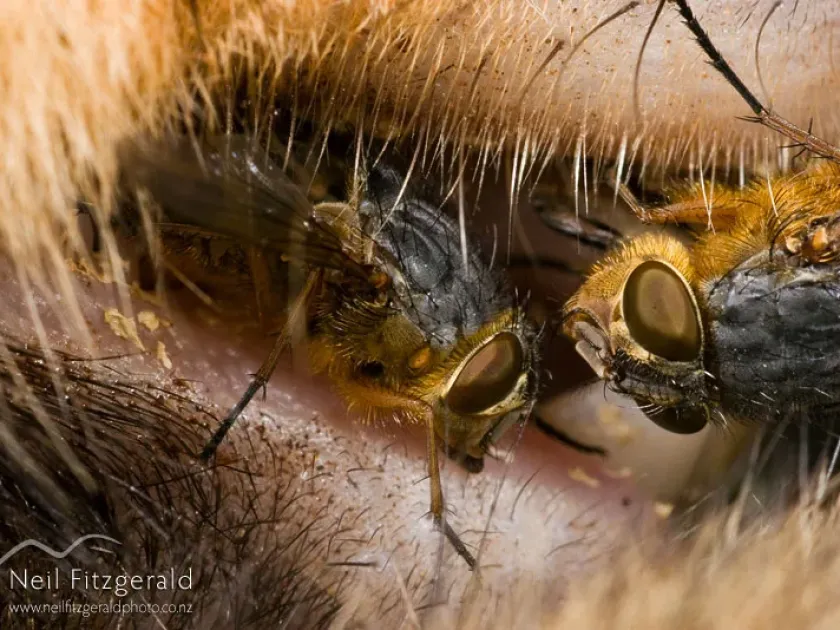
Description
How to identify
The brown blowfly (Calliphora stygia) is a member of the Calliphoridae family within the Diptera order. Unlike common metallic blue or green bottle flies, this species is characterized by its distinct brownish-bronze appearance, which serves as a primary field identification feature.
Adult flies possess a highly developed sponging mouthpart and large compound eyes. The body is heavily covered in bristles, and the wings are translucent with a typical venation pattern. The life cycle consists of complete metamorphosis: egg, larva, pupa, and adult.
Larval development is highly dependent on the availability of a suitable organic medium. Under optimal temperature conditions, the life cycle can be completed quite rapidly, leading to multiple generations in a single growing season.
Overwintering typically occurs as pupae in the soil or protected crevices of structures. Adults emerge in spring when temperatures become consistently warm, beginning the cycle of feeding and reproduction.
Correct identification is essential for management. Monitoring adults with traps can provide data on population peaks, allowing growers to time their control interventions more accurately throughout the season.
What it damages
While often viewed as a sanitary pest, Calliphora stygia is a significant agricultural concern, especially for orchards and fruit production. They are attracted to damaged, overripe, or decaying fruit, where they lay their eggs.
Once the larvae hatch, they tunnel into the fruit flesh, causing rapid decomposition. This damage results in severe losses of marketable produce, as the presence of larvae renders the fruit completely unsalable.
In addition to direct feeding damage, blowflies act as mechanical vectors for numerous plant pathogens. They introduce bacteria and fungal spores into fruit tissue, which lead to secondary infections and rapid rot.
The pest poses a particular risk to commercial operations during the harvest and post-harvest phase. If infested fruit is stored alongside healthy produce, the entire harvest can be compromised within a short period.
Weather-related fruit damage, such as splits caused by heavy rain or bird pecking, creates entry points that make even healthy crops vulnerable to blowfly infestation, significantly increasing the potential for crop loss.
Control measures
The foundation of brown blowfly management is sanitation. Removing fallen fruit and decomposing organic debris eliminates the primary breeding and feeding sites, which is often sufficient to keep populations at manageable levels.
Physical exclusion is highly effective for storage and processing facilities. Installing fine-mesh screens on windows and doors ensures that adult flies cannot access the harvested crop, preventing cross-contamination.
Monitoring and trapping using food-based attractants are recommended for integrated pest management programs. These traps help reduce the number of adults in the vicinity of production areas while providing crucial monitoring data.
Chemical control should be used judiciously, prioritizing products with short pre-harvest intervals to ensure food safety. It is important to target adult flies before they reach peak reproductive maturity to break the life cycle.
Adopting an integrated approach—combining orchard hygiene, physical exclusion, and targeted trapping—minimizes the need for broad-spectrum insecticides and contributes to more sustainable agricultural practices.
Taxonomy
- Latin name
- Calliphora stygia
- Order
- Diptera (flies)
- Family
- Calliphoridae
- EPPO code
- CALLST
Discussion
No discussions yet — be the first.