
Stomis pumicatus
Stomis pumicatus
Description
How to identify
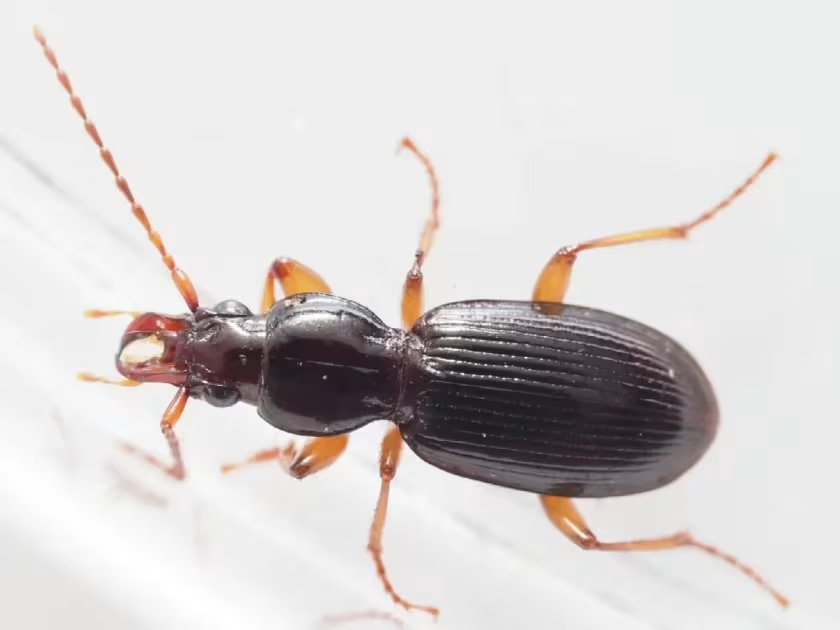
Stomis pumicatus is a species of ground beetle belonging to the Carabidae family. These insects are typically found in moist soil environments, often residing beneath leaf litter or in soil cracks. They possess an elongated body and well-developed mandibles.
The adult beetle is distinguished by its dark, almost black coloration and distinct punctures on the elytra. The elongated prothorax is a key morphological feature that helps in the accurate identification of this species during field monitoring.
These beetles are primarily nocturnal, preferring to hide in the topsoil or under organic debris during the day. They emerge at night to forage, making them difficult to spot during routine daytime inspections of fields.
Their biology is closely linked to soil moisture levels. They thrive in areas with abundant organic matter, which provides both shelter and a favorable microclimate for their activity and reproductive cycle.
The larvae are campodeiform and share the predatory habits of the adults. While they are often considered beneficial as predators, they can turn into pests under conditions where their preferred prey is scarce.
What it damages
Damage caused by Stomis pumicatus usually occurs when natural food sources for the beetles are insufficient. In such scenarios, they shift their diet to the vegetative parts of crops, causing significant agricultural concern.
Young seedlings of vegetable and field crops are the most vulnerable. Beetles tend to feed on tender stems near the soil surface, which can lead to thin stands and poor crop establishment.
The feeding damage to the root collar is particularly detrimental to young transplants. These mechanical injuries create entry points for soil-borne pathogens, potentially leading to plant rot and further crop loss.
In greenhouse settings or areas with high humidity, the damage can be intensive and localized. Because the injuries occur at the base of the plant, they are often overlooked until the plants begin to wilt.
While not a primary specialist pest, the combined pressure of Stomis pumicatus populations and other soil insects can significantly reduce overall yield, especially in vulnerable early-growth stages.
When it appears
The activity of Stomis pumicatus begins in early spring as soon as soil temperatures rise. Adults emerge from diapause and actively forage to build up energy reserves for reproduction.
Peak activity occurs during humid spring months. This timing coincides with the emergence of many crops, making it a critical window where seedlings are highly susceptible to damage from foraging beetles.
During the heat of the summer, as the topsoil dries out, these beetles move into deeper soil horizons to find moisture. Their surface activity decreases significantly until cooler, more humid conditions return.
Autumn marks a secondary period of activity as the beetles prepare for overwintering. They feed on organic residues and look for suitable soil habitats to survive the cold season.
The life cycle involves complete metamorphosis, including egg, larva, pupa, and adult stages. Most of the population spends the majority of their life cycle within the soil profile, ensuring survival across varying weather conditions.
Signs of infestation
The presence of Stomis pumicatus is indicated by gnawed areas on young plant stems near the soil level. These marks often look like small, ragged holes or shallow notches at the base of the plant.
Soil-dwelling traps (such as pitfall traps) are the most reliable diagnostic method. Placing cups flush with the soil surface allows for an accurate assessment of population density in a given field.
Affected plants often show sudden wilting or collapse, even if no obvious disease is visible. A close examination of the root collar and surrounding soil is necessary to confirm the beetle's activity.
The discovery of larvae during deep soil cultivation is a strong indicator of an established population. Persistent damage across a field indicates that the population threshold has likely been exceeded.
Monitoring should be conducted especially in early spring or after heavy rainfall, as these conditions stimulate the beetles to come to the surface, making them easier to trap and identify.
Control measures
Management of Stomis pumicatus should focus on integrated pest management practices. Maintaining field cleanliness by removing weeds eliminates the essential shelter required by these beetles.
- Deep autumn plowing to disturb overwintering sites.
- Crop rotation to break the beetle's life cycle.
- Using row covers or physical barriers for high-value seedlings.
- Applying soil-incorporated insecticides only when thresholds are exceeded.
Monitoring with pitfall traps is essential for timing interventions accurately. By knowing when populations are peaking, growers can use targeted approaches rather than broad-spectrum applications.
Biological control, specifically the use of entomopathogenic fungi, is an effective way to manage larvae within the soil. These methods are environmentally friendly and target the pests directly without harming beneficial soil fauna.
Chemical control should be considered a last resort. Granulated soil insecticides are preferred when necessary, as they can be applied specifically to the root zone to prevent damage to the stems of young plants.
Taxonomy
- Latin name
- Stomis pumicatus
- Order
- Coleoptera (beetles)
- Family
- Carabidae
- EPPO code
- STOIPU
Discussion
No discussions yet — be the first.