
Stomis
Stomis
Description
How to identify
Stomis is a genus of ground beetles (Carabidae) that are generally predatory but can occasionally become pests in agricultural systems when their natural prey is scarce.
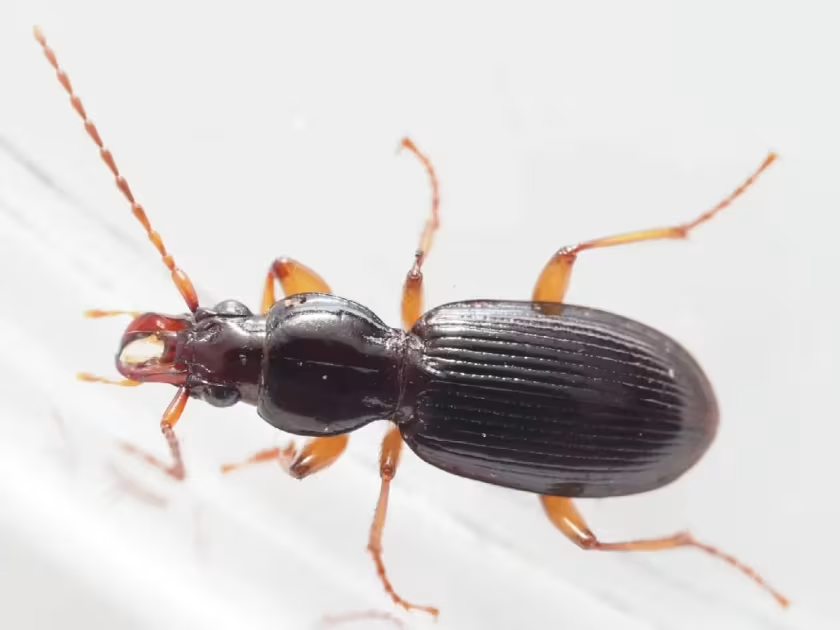
Adult beetles have an elongated body, typically dark brown or black in color, often with a metallic sheen. They are easily identified by their unusually large and elongated mandibles.
These insects are strictly nocturnal, spending their days in soil crevices, under debris, or underneath soil clods to avoid desiccation and predators.
The larvae are campodeiform, meaning they are mobile with well-developed legs, and they dwell primarily within the top layers of the soil profile.
Population density is heavily dependent on soil moisture and the availability of shelter; therefore, fields with high residue cover are more susceptible to colonization.
What it damages
While primarily entomophagous, Stomis species can exhibit phytophagous behavior, especially when high population densities coincide with early crop emergence.
They primarily damage cereal crops during the germination and seedling stages by gnawing on the root collar and young stems below the soil surface.
Infestations often lead to patchy crop stands, as the beetles can destroy large numbers of seeds or young seedlings in a short period.
Technical crops like sugar beets and sunflowers are also at risk, as larvae can feed on the tender root systems, causing stunted growth or plant death.
Damage is typically more severe at the margins of fields, particularly those bordering uncultivated areas or permanent grasslands.
When it appears
Activity begins in early spring as soon as the soil thaws, with overwintering adults emerging to feed and initiate their reproductive cycle.
Larval activity peaks during the late spring and early summer, which is the most critical period for emerging row crops and cereal seedlings.
Adults are most active at night, which is when they conduct their foraging and mating activities, making daytime scouting difficult.
A second, smaller peak in activity may occur in late summer as the new generation of adults reaches maturity before entering winter dormancy.
The insects overwinter in the adult stage, burrowing into the soil at depths of 15 to 20 cm or seeking shelter beneath dense organic mulch.
Signs of infestation
The primary symptom of infestation is the appearance of thin or missing rows in the field, often characterized by plants that have been chewed at the base.
Field scouting should involve digging into the soil near damaged plants to confirm the presence of either the larvae or the adult beetles.
Affected plants often appear yellowed, withered, or stunted, showing clear signs of secondary root system failure or stem disruption.
High beetle activity is often correlated with areas of the field that have poor drainage or excessive vegetation cover throughout the season.
Early identification is essential, as the damage can spread rapidly if the pest population reaches a high density before the crop passes the susceptible stage.
Control measures
Deep primary tillage is the most effective cultural method for disrupting the life cycle and destroying the overwintering habitats of Stomis beetles.
Crop rotation is vital; moving away from crops that favor the accumulation of ground beetles can significantly reduce the potential for damage.
Using systemic insecticidal seed treatments provides a crucial protective layer, safeguarding young roots from early-season soil pest feeding.
Maintaining clean fields and effectively managing weeds and crop residues reduces the favorable microclimate that these beetles require to thrive.
If thresholds are exceeded, targeted applications of soil insecticides or edge treatments can effectively mitigate damage without the need for whole-field spraying.
Taxonomy
- Latin name
- Stomis
- Order
- Coleoptera (beetles)
- Family
- Carabidae
- EPPO code
- STOISP
Discussion
No discussions yet — be the first.