
Stenonema fuscum
Stenonema fuscum
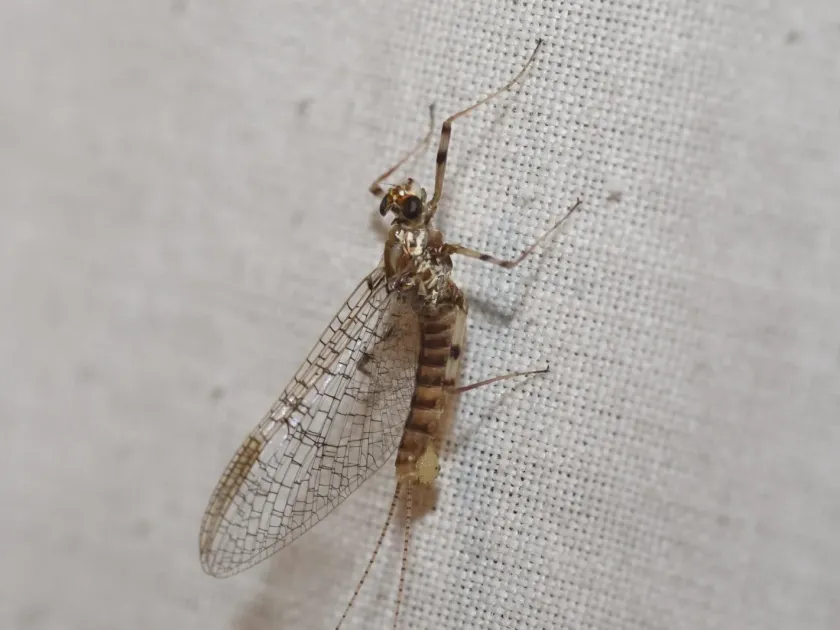
Description
How to identify
Stenonema fuscum is a species of mayfly belonging to the family Heptageniidae. Adult insects are characterized by long tails and distinct wing structures.
The larval stage lives in aquatic environments, featuring a flattened body designed to cling to stones in fast-flowing streams and rivers.
Adults are short-lived and focus primarily on reproduction. They typically show brown coloration, aiding camouflage near natural environments.
The eyes of the males are often large and divided, which is a key trait used for identifying the species during monitoring.
As a mayfly species, they are highly sensitive to water quality, meaning their presence often indicates relatively clean aquatic ecosystems.
What it damages
Stenonema fuscum does not feed on crops directly, but their mass emergence can significantly impact irrigation infrastructures in agricultural areas.
The primary damage occurs when vast numbers of insects and their molted skins clog irrigation filters, pumps, and spray nozzles.
In regions adjacent to rivers, large populations can become a nuisance by landing on vegetation and affecting crop surface cleanliness.
While not a direct crop pest, the economic impact is felt through maintenance costs for irrigation equipment and water management systems.
Excessive accumulation of dead mayflies on plant leaves may occasionally promote the growth of secondary microorganisms due to nutrient deposition.
When it appears
Adult activity peaks during the summer months, spanning from late spring to mid-August depending on regional climatic conditions.
Mass emergence events are usually brief and triggered by specific water temperatures and twilight conditions.
The lifecycle from egg to adult is influenced by seasonal changes in water temperature, typically requiring several months to complete.
Larvae remain active throughout the winter months in permanent water bodies, ensuring the continuation of the species' population.
Monitoring the flight season allows farmers to prepare irrigation maintenance strategies during periods of high insect activity.
Signs of infestation
Visual identification includes observing large swarms of mayflies near water sources and accumulated molts on the banks.
Frequent clogging of irrigation filters during the summer season is a clear sign of a large nearby population of Stenonema fuscum.
The presence of adults around fields is often noted in the evening, as they are frequently attracted to ambient lights.
Accumulation of insect remains on crop surfaces, particularly in humid fields, can be observed after significant emergence events.
Water quality monitoring often reveals high larval density in clean, well-oxygenated water channels serving agricultural land.
Control measures
Implementing fine-mesh filtration systems in water intake pipes is the most effective way to prevent equipment clogging.
Regular maintenance and cleaning of irrigation channels reduce the accumulation of debris that may attract or harbor the insect populations.
Chemical control is generally discouraged because these insects are essential components of healthy aquatic ecosystems and beneficial food sources for fish.
Biological management, such as maintaining healthy fish populations in irrigation reservoirs, helps keep the mayfly population in check.
Strategic scheduling of irrigation system cleaning before and after the peak flight season helps minimize technical downtime on farms.
Taxonomy
- Latin name
- Stenonema fuscum
- Family
- Heptageniidae
- EPPO code
- STNNFU
Discussion
No discussions yet — be the first.