
Heptagenia fuscogrisea
Heptagenia fuscogrisea
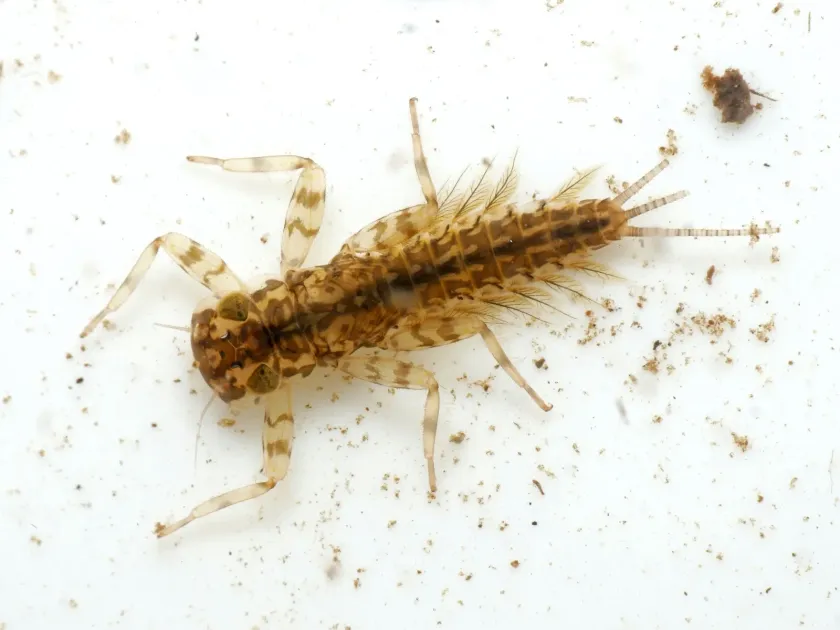
Description
How to identify
Heptagenia fuscogrisea is a species of mayfly belonging to the family Heptageniidae within the order Ephemeroptera. These insects are widely recognized for their distinct role as bioindicators of water quality in freshwater ecosystems.
Adults possess a delicate body structure characterized by two pairs of transparent wings with a dense venation pattern. The abdomen typically terminates in three long, thin filaments known as cerci, which are vital for their flight and balance.
The coloration of this species is predominantly brown and grey, providing excellent camouflage against natural substrates like tree trunks or rocks when they rest near water bodies during their brief adult stage.
The nymphs exhibit a dorso-ventrally flattened body shape, which is a specialized adaptation that allows them to cling firmly to stones in fast-flowing streams and rivers, protecting them from being swept away by currents.
Identification of this species relies on observing specific morphological details, such as the arrangement of the gill plates on the abdomen and the complex wing venation, often requiring scientific expertise for accurate confirmation.
When it appears
The lifecycle of Heptagenia fuscogrisea is predominantly aquatic, with the nymphal stage lasting significantly longer than the adult stage. Nymphs undergo multiple molts as they grow and develop within the aquatic environment.
The emergence of adults typically occurs during the late spring and early summer months, triggered by specific water temperature thresholds that signal the timing for the final transformation into the winged form.
The adult lifespan is extremely short, lasting from a few hours to a few days. During this window, the primary biological objective is to mate and ensure the survival of the next generation through egg deposition in the water.
Variations in weather patterns and water levels can significantly influence the timing and intensity of the emergence, with some years witnessing massive swarms of these insects around riparian areas.
Once the reproductive cycle is complete, the adult mayflies perish. Their remains often provide a significant source of nutrients for various bird species and other aquatic organisms, highlighting their role in the food web.
Control measures
In the context of agronomy, Heptagenia fuscogrisea is not typically classified as a crop pest, as adults do not feed on vegetation. However, large populations near irrigation systems can be considered a nuisance.
Management efforts are primarily focused on maintaining the ecological health of irrigation canals and water sources. Proper water management helps prevent the eutrophication that could otherwise support excessive mayfly populations.
Mechanical control measures, such as the use of fine-mesh screening in water intake systems, can effectively prevent the movement of nymphs into sensitive irrigation infrastructure where they might cause clogging.
Chemical intervention is strongly discouraged for these insects, as they are essential components of healthy aquatic ecosystems and possess no threat to crops, making such measures both unnecessary and ecologically harmful.
The most sustainable strategy is to focus on environmental monitoring and maintaining balanced aquatic conditions, ensuring that the local ecosystem remains stable without the need for intensive management of non-pest aquatic species.
Taxonomy
- Latin name
- Heptagenia fuscogrisea
- Family
- Heptageniidae
- EPPO code
- HEPTFG
Discussion
No discussions yet — be the first.