
Stenonema
Stenonema
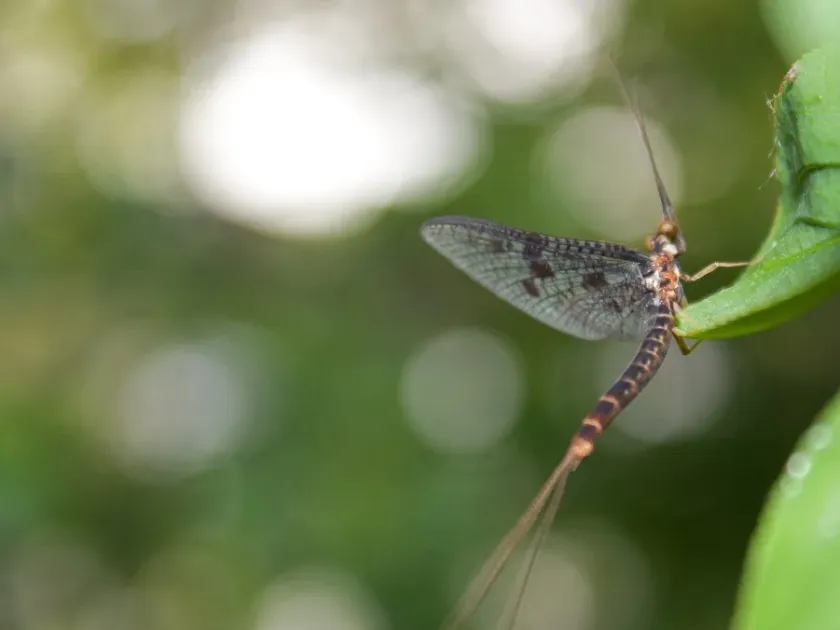
Description
How to identify
Stenonema is a genus of insects belonging to the order Ephemeroptera (mayflies) and the family Heptageniidae. It is important to note that in agricultural contexts, these organisms are primarily considered indicators of water quality rather than crop pests.
Adults are characterized by a slender body, long tail filaments, and large wings that are held vertically when at rest. The larvae possess a flattened body shape, which is a specialized adaptation for living in fast-moving water environments.
Biologically, this genus is not a specialized pest of agricultural crops. Their occasional classification as pests is often due to misidentification of other insects that actually feed on plant tissues.
The life cycle involves incomplete metamorphosis. Larvae develop in freshwater bodies, undergoing several molts, and serve as a crucial component of the aquatic food web.
For agronomists, it is essential to distinguish these mayflies from true phytophagous insects, as they do not cause direct mechanical damage to plants or reduce crop yields.
What it damages
Stenonema is not a primary pest of cultivated plants. They do not feed on leaves, stems, or roots of agricultural crops, as they are essentially aquatic organisms.
Within an agroecosystem, their presence might be noted only near irrigation ditches or water bodies, but this has no negative impact on the health or development of the crops.
Any perceived damage is often indirect, such as massive swarms causing nuisance during field operations or mechanical maintenance tasks.
Given that they lack chewing or sucking mouthparts adapted for consuming terrestrial vegetation, it is physiologically impossible for them to damage cereals, vegetables, or other crops.
Consequently, Stenonema is not included in the lists of objects requiring quarantine measures or chemical control in professional agriculture.
When it appears
Adult activity is primarily observed during the spring and summer months when massive emergences of mayflies from water bodies occur.
Temperature and light conditions are critical factors that synchronize the emergence of adults, which usually coincides with the warmer periods of the year.
The larval stage lasts throughout the year, with development slowing down during the cold winter months and accelerating as water temperatures rise in the spring.
Peak activity for adults often occurs at dusk, when they form swarms near water surfaces or surrounding vegetation.
The seasonal population dynamics are highly dependent on the environmental quality of the water bodies, as the species is sensitive to water pollution.
Signs of infestation
The main sign of this insect's presence is the formation of large swarms of adults near water sources or artificial lights during the evening hours.
Larvae can be detected in irrigation canals or drainage systems through hydrobiological analysis, as they are typically found attached to submerged substrates.
If there is leaf damage in the field, it should not be attributed to Stenonema, as they do not have the anatomy to graze on plant tissues.
Visual monitoring of the crops will show no characteristic pathologies or feeding damage that would typically signal the presence of a harmful pest.
Massive swarms of these insects are often a sign of healthy aquatic ecosystems nearby, rather than a threat that requires immediate agricultural intervention.
Control measures
Specialized control measures against Stenonema are unnecessary, as they do not inflict economic damage on crops or agricultural production.
The use of pesticides near water sources to eliminate these insects is counterproductive and harmful to beneficial entomofauna and aquatic biodiversity.
The best management strategy is regular monitoring to ensure accurate identification of true pests, preventing unjustified chemical applications.
Maintaining irrigation infrastructure and monitoring the water quality of adjacent streams helps preserve the natural ecological balance.
In cases where insect swarms interfere with field personnel, physical barriers or protective clothing are recommended as a solution, avoiding chemical interference.
Taxonomy
- Latin name
- Stenonema
- Family
- Heptageniidae
- EPPO code
- STNNSP
Discussion
No discussions yet — be the first.