
Yellow Mayfly
Heptagenia sulphurea
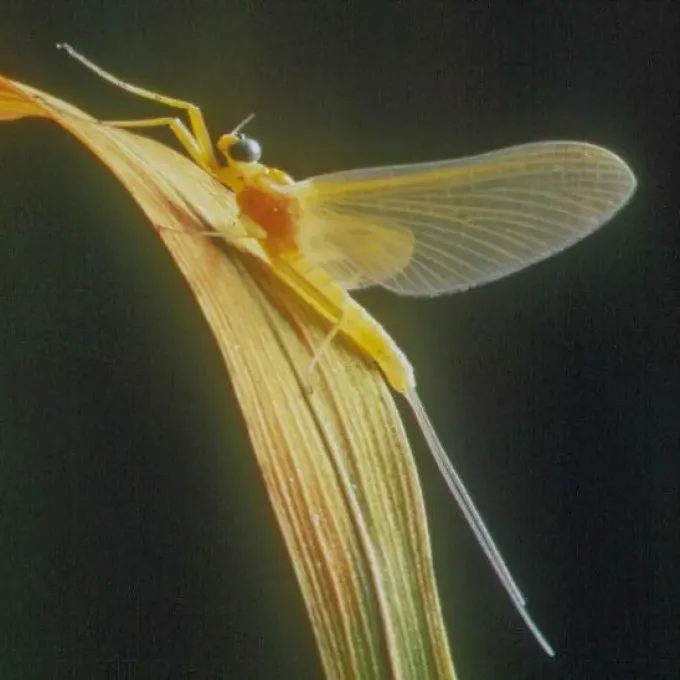
Description
How to identify
Heptagenia sulphurea belongs to the order Ephemeroptera and the family Heptageniidae. This species is widely recognized for its pale yellow, sulfur-like body coloration.
The nymphs are distinctly flattened, which is an adaptation for clinging to rocks in fast-flowing water, preventing them from being swept away by currents.
Adult mayflies possess transparent wings with a fine, delicate vein pattern that makes them look almost invisible during flight against the sky.
The eyes of the males are typically large and divided, designed specifically for spotting females during the brief mating flight phase.
This species is relatively small, with a body length of about 10–15 mm, making it a common but often overlooked inhabitant of clean rivers.
What it damages
Heptagenia sulphurea is not a pest; it poses no threat to agricultural crops, forestry, or garden plants as its entire life is tied to the water.
In aquaculture, the nymphs are considered beneficial as they contribute to the natural food supply for fish, especially salmonids.
There is no "damage" caused by this insect to human activity; rather, its absence is often a sign of environmental degradation in local watersheds.
The insect acts as a primary consumer of periphyton and organic detritus, which helps keep the riverbed surfaces clean and biologically active.
Labeling this species as a pest is scientifically incorrect, as it serves as a foundational element of the aquatic food web in many regions.
When it appears
The emergence of adult Heptagenia sulphurea occurs primarily in summer, with peak activity observed between June and August in many temperate zones.
Development from egg to adult may take several months, depending on water temperature, oxygen levels, and the availability of nutrient sources.
Adults exhibit short-lived behavior, focusing almost entirely on swarm mating and oviposition before dying within 24 to 48 hours.
Nymphs are active year-round, but their metabolic rates are significantly influenced by seasonal water temperatures, leading to slower growth in winter.
Synchronized emergence is a common strategy, where many individuals transform into adults at once to ensure a high probability of finding a mate.
Signs of infestation
Large swarms of adults hovering near riverbanks during summer evenings are the most visible sign of this insect's presence in an ecosystem.
Finding shed nymphal skins (exuviae) attached to stones or riparian plants is a definitive sign that a metamorphosis event has occurred nearby.
Observation of flattened nymphs on the underside of submerged river stones confirms the presence of a healthy, oxygen-rich environment.
A lack of Heptagenia in historically populated areas is a major bioindicator sign that water quality has declined or the riverbed has been silted.
The presence of these insects is often used by ecologists to measure the overall health and "cleanliness" of a stream or river system.
Control measures
No control measures are necessary for this species, as it is a beneficial organism that supports local fish populations and ecosystem stability.
Protection strategies should focus on preventing the contamination of waterways with pesticides, fertilizers, and industrial pollutants.
Landowners and farmers should maintain vegetative buffer strips along water edges to prevent siltation, which is the biggest threat to this species.
Chemical intervention is strictly discouraged, as it would destroy not only the mayfly population but also the broader aquatic biodiversity of the stream.
The best "management" practice is to preserve the natural flow and water quality of the river, ensuring the species continues to thrive naturally.
Taxonomy
- Latin name
- Heptagenia sulphurea
- Family
- Heptageniidae
- EPPO code
- HEPTSU
Discussion
No discussions yet — be the first.