
Stenolophus teutonus
Stenolophus teutonus
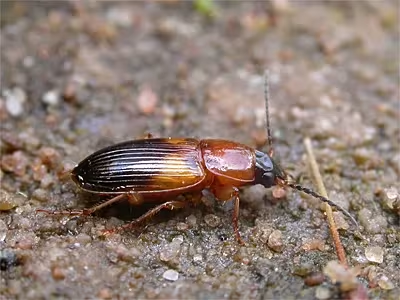
Description
How to identify
Stenolophus teutonus is a species of ground beetle belonging to the family Carabidae, often observed in agricultural landscapes.
Adult beetles are relatively small, typically measuring between 5 and 7 mm in length, with a slim and elongated body shape.
Their coloration ranges from shiny black to dark brown, often with a subtle reddish margin on the pronotum and light-colored legs.
While members of this family are typically predatory, this specific species is known to exhibit phytophagous behavior under certain environmental conditions.
The larvae live in the upper soil layers, resembling other typical carabid larvae with a soft, elongated body adapted for burrowing.
What it damages
This pest primarily attacks cereal crops, including wheat, barley, and rye, posing a significant threat to young emerging plants.
The beetles feed on the seeds directly in the soil and can also chew on the stems of seedlings, causing them to wither or die.
Crops like corn and sunflower are also susceptible, especially when the soil remains moist and provides optimal conditions for the beetle activity.
Damage is often localized, appearing as patches of missing or stunted plants in fields with high pest density.
By consuming plant tissues at the germination stage, the beetle can cause substantial thinning of the crop stand, leading to yield loss.
When it appears
Beetles become active in early spring as soon as the soil temperatures are high enough to support their biological activity.
Their peak activity occurs during late spring and early summer, coinciding with the tillering and vegetative growth phases of cereals.
Adult beetles are nocturnal, spending the daylight hours hiding under soil debris or within small cracks in the ground.
They overwinter as adults, finding refuge deep within the soil, under plant residues, or in adjacent hedgerows and forest strips.
The lifecycle takes approximately one year, with new generations emerging in the summer to continue the cycle of population growth.
Signs of infestation
The primary sign of infestation is the presence of uneven, patchy emergence of crops across the field.
Close inspection of affected seedlings often reveals shredded or partially consumed stems near the base of the plant.
Unearthed seeds that have failed to germinate often show clear signs of mechanical damage caused by the beetle's mouthparts.
During the night, visual scouting with a flashlight can reveal the beetles moving on the soil surface near the crop base.
Increased soil turnover and small entrance holes near the plant roots are also indicators of the pest's localized presence.
Control measures
Cultural control is critical, including thorough tillage and crop rotation to disrupt the beetle's habitat and overwintering sites.
Seed treatment with systemic insecticides is the most effective way to protect young crops from damage during the early germination period.
In cases of high infestation, foliar insecticide applications may be required to reduce adult population levels immediately.
Effective weed management is essential as dense weed cover serves as a primary reservoir for the beetles throughout the growing season.
Prompt incorporation of crop residues into the soil helps to eliminate secondary food sources and reduces overall pest attraction.
Taxonomy
- Latin name
- Stenolophus teutonus
- Order
- Coleoptera (beetles)
- Family
- Carabidae
- EPPO code
- STNLTE
Discussion
No discussions yet — be the first.