
Stenolophus mixtus
Stenolophus mixtus
Description
How to identify
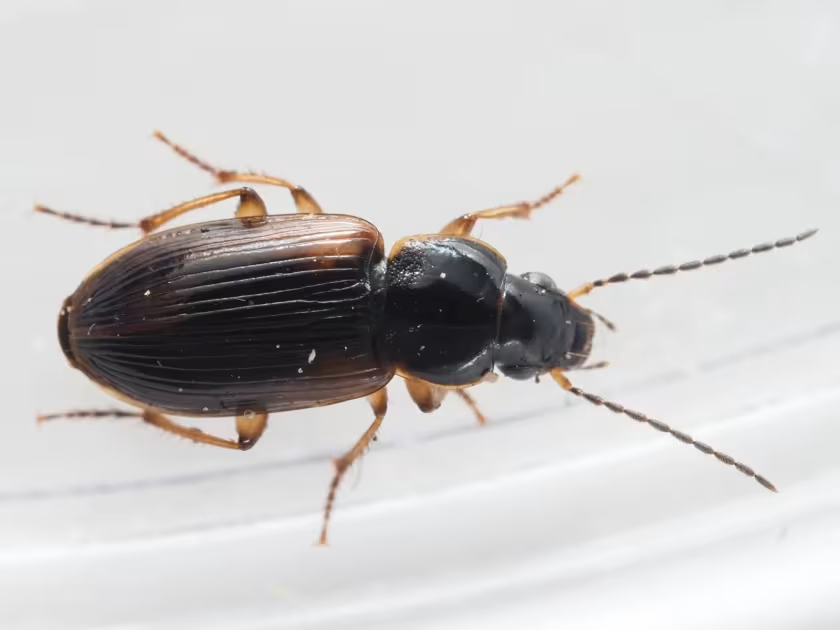
Stenolophus mixtus is a species of ground beetle (Carabidae) that, unlike most of its predatory relatives, exhibits mixophagy, meaning it consumes both animal and plant matter.
The adult beetle is typically 6 to 8 mm long, with a dark, often brownish-black body that has a slight metallic luster, making it distinct in the field.
Its morphology includes specific adaptations of the tarsi and mandibles, which facilitate its ability to feed on hard seeds and grains during the ripening stage.
Larvae are soil-dwelling, possessing elongated bodies and robust mouthparts that allow them to navigate and feed within the top layer of the soil profile.
Identification is best performed by an agronomist using specialized entomological keys to distinguish it from other non-pest carabid species found in crop fields.
What it damages
The primary economic damage is caused by adult beetles feeding on the soft, developing grains of wheat, barley, and other cereal crops during the milking and dough stages.
By hollowing out the endosperm, the beetles leave behind empty grain husks, which significantly reduces the yield and the quality of the harvest.
These damaged grains are more susceptible to secondary mold infections and various pathogens, further impacting the overall market value of the produce.
High infestations can lead to substantial economic losses, particularly when climate conditions favor the rapid proliferation of the beetle population.
In addition to standing crops, they can feed on seeds that are poorly placed or left on the soil surface, potentially impacting plant stand density.
When it appears
The life cycle of Stenolophus mixtus typically involves one generation per year, with adults emerging from their overwintering sites in early spring.
Adult activity peaks during the late spring and summer months, which coincides with the critical periods of cereal crop growth and grain development.
As temperatures rise, the beetles become highly mobile, moving across fields in search of suitable food sources, primarily ripening grain heads.
With the onset of autumn, adult beetles seek out overwintering sites, often moving into the soil or under debris to survive the winter season.
Monitoring for the presence of this pest should be prioritized during the grain filling phase to assess the risk and determine the need for intervention.
Signs of infestation
The most visible sign of infestation is the presence of "empty" or damaged grains on the heads of cereals during field inspections.
Beetles can often be spotted on the crop heads during early morning or evening inspections, as they are most active during these times of lower light.
The presence of clustered damage within a field suggests localized outbreaks that should be investigated to determine the population density.
Soil-based trapping methods, such as pitfall traps, remain the most reliable way to quantify the presence of these beetles within the agro-ecosystem.
Inconsistent ripening of grain patches can sometimes be a secondary indicator, warranting closer scrutiny of the crop stems and heads.
Control measures
Cultural control measures, such as deep autumn tillage, are crucial as they disrupt the beetle's overwintering habitat and reduce the surviving population.
Effective crop rotation practices limit the availability of suitable food sources, discouraging the build-up of beetle populations in specific areas.
If economic thresholds are exceeded, the application of targeted insecticides during the grain-filling period can prevent significant damage.
Sanitation practices, including the removal of crop residues and control of volunteer grains, help minimize food availability for the pests.
- Use of pitfall traps for population monitoring.
- Optimal sowing timing to avoid peak pest activity.
- Integrated pest management targeting overwintering sites.
Taxonomy
- Latin name
- Stenolophus mixtus
- Order
- Coleoptera (beetles)
- Family
- Carabidae
- EPPO code
- STNLMI
Discussion
No discussions yet — be the first.