
Stenolophus
Stenolophus
Description
How to identify
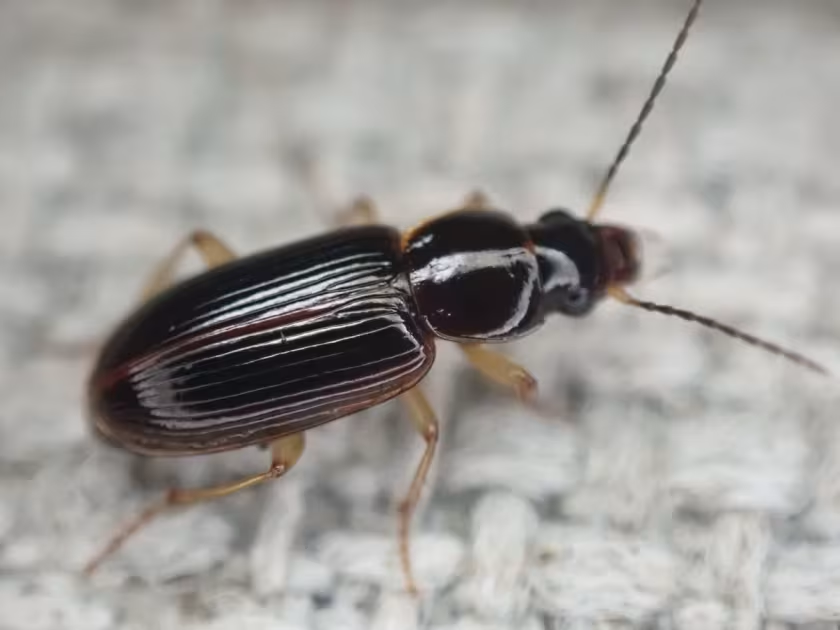
Stenolophus is a genus of ground beetles (family Carabidae) belonging to the order Coleoptera. These insects are characterized by a flattened, oval-shaped body and are generally medium-sized, often displaying dark, brownish, or metallic colors typical of many carabids.
Adult beetles possess well-developed wings, enabling them to migrate over significant distances in search of suitable habitats or feeding grounds. Their heads are equipped with powerful mandibles adapted for a chewing lifestyle.
The larvae of Stenolophus are campodeiform, meaning they are mobile with developed thoracic legs and distinct cerci at the end of the abdomen. They live primarily in the upper layers of the soil or beneath plant debris, maintaining a secretive lifestyle.
Accurate identification of specific species within the Stenolophus genus often requires microscopic examination of reproductive structures. For agronomic purposes, however, it is essential to focus on their general behavioral and ecological patterns.
Unlike many ground beetles that are purely predaceous, some species in this genus exhibit mixophagy, consuming both animal and plant matter. This behavior marks them as potential threats to certain agricultural systems.
What it damages
The primary damage caused by Stenolophus occurs during the germination and seedling emergence stages of agricultural crops. Cereal crops and corn are the most frequent targets of their activity.
The beetles and their larvae can consume the germ of the seed or feed on the base of young stems. This feeding behavior often leads to reduced plant stands, creating bare patches in fields and occasionally necessitating replanting.
In cases of high infestation, the pest can significantly reduce overall crop density and yield potential. Damage is most severe in conditions of excessive soil moisture, which slows down seedling development.
Larval damage in the soil is often difficult to detect until seedlings start wilting or dying, requiring careful monitoring of the root zone to identify the primary cause of plant death.
While cereals are the primary hosts, Stenolophus can occasionally move onto other crops if the surrounding areas provide favorable conditions and abundant weeds for their survival.
When it appears
The life cycle of Stenolophus is heavily influenced by soil temperature and moisture levels. Adult activity typically begins in the spring once the soil temperature reaches 10-12°C.
The highest level of damage occurs during cool, wet springs. These environmental conditions delay plant growth, keeping the vulnerable seedlings exposed to the beetle's feeding activity for a longer duration.
Throughout the summer, adults exhibit nocturnal behavior, spending daylight hours hiding under soil clods or organic residue to avoid desiccation and overheating.
As autumn approaches, the beetles prepare for hibernation. They spend the winter deep in the soil or within protected areas like field margins, hedgerows, and along road verges.
Monitoring for this pest is most critical during the pre-sowing and early emergence stages of the crop to ensure that protective interventions are timely and effective.
Signs of infestation
A primary indicator of a Stenolophus infestation is uneven seedling emergence and patchy plant loss throughout the field. Examining the soil often reveals destroyed seeds or stems eaten at the base.
The presence of the beetles can be verified using soil pitfall traps or by inspecting the field surface at night. Plants damaged by this pest often show characteristic shredded or jagged edges near the base of the stem.
These signs can help distinguish Stenolophus damage from other subterranean pests like wireworms or seedcorn maggots. Shredded stems are a strong indicator of this genus's chewing activity.
High weed density in fields acts as an indirect sign of potential risk, as weeds provide both food and shelter for the beetles during the pre-planting period.
Effective management requires pre-sowing soil inspections to assess pest density, allowing agronomists to determine the severity of the infestation and plan necessary protective measures.
Control measures
Management of Stenolophus is best achieved through an integrated approach. Quality agronomic practices, such as stubble cultivation and deep fall plowing, are highly effective in disturbing hibernation sites and reducing larval populations.
Adhering to optimal sowing dates allows crops to pass through their most vulnerable developmental phases quickly, reducing the time seedlings remain exposed to the pest in the soil.
Seed treatment with systemic insecticides is the most reliable method for protecting seeds and young sprouts from soil-dwelling pests during the critical early stages of crop growth.
Consistent weed control in fields and surrounding headlands is essential, as this eliminates the pest's alternative food sources and nesting habitats during the off-season.
If population thresholds are exceeded, the use of registered foliar or soil-applied insecticides may be necessary, provided they are applied according to local regulations and safety guidelines.
Taxonomy
- Latin name
- Stenolophus
- Order
- Coleoptera (beetles)
- Family
- Carabidae
- EPPO code
- STNLSP
Discussion
No discussions yet — be the first.