
Strawberry sap beetle
Stelidota
Description
How to identify
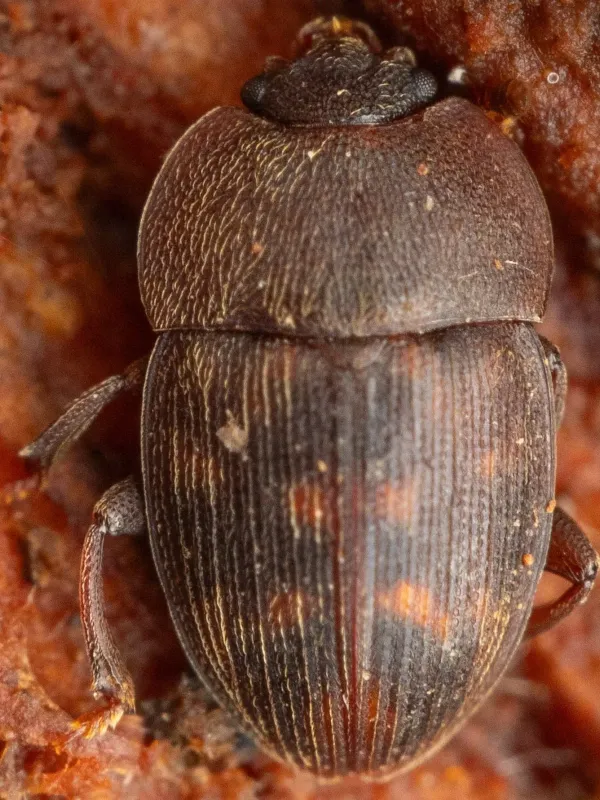
The strawberry sap beetle (Stelidota geminata) belongs to the Nitidulidae family. Adult beetles are small, measuring approximately 2.5–3 mm in length, with an oval, flattened body shape.
They are recognizable by their brownish color and distinct, lighter-colored spots arranged in a checkered pattern on their elytra, making them unique within the genus.
The body surface is covered with very fine, short hairs. These beetles are generally nocturnal or active at dusk, preferring to hide in cool, moist soil or organic debris during the day.
Larvae are pale, cream-colored with a brown head, typically developing in decaying organic matter, which serves as both their primary food source and habitat.
Identifying the species often requires careful examination, as they can be easily confused with other small sap beetles commonly found in agricultural landscapes.
What it damages
Stelidota geminata primarily targets strawberry fruit, especially when the berries are ripe, overripe, or touching the soil surface.
The beetles burrow deep into the fruit, creating cavities that render the berries unmarketable and unattractive to consumers.
Beyond direct feeding damage, their presence creates entry points for fungal pathogens, significantly accelerating the process of fruit rot and decay.
Plantations located in low-lying areas with high soil moisture and poor airflow are at the highest risk for severe infestations of this pest.
While primarily a strawberry pest, the beetle can also feed on other soft, ripening fruits that come into contact with the ground.
Signs of infestation
Signs of infestation include small, irregular holes or deep gouges on the underside of the strawberry, often hidden from casual observation.
In many cases, the fruit appears to be suffering from common fungal infections, while the actual culprits, the beetles, are hiding underneath the berry or within the decaying tissue.
Finding small, mottled brown beetles near the crown of the plant or underneath mulch during an inspection is a clear indicator of their presence.
An unusual amount of rotting fruit in a field that has otherwise been treated for fungal diseases is a strong red flag for strawberry sap beetle activity.
Monitoring the moisture levels around the base of the plant often reveals where the population is most concentrated and active.
Control measures
Effective management begins with strict field sanitation, specifically the removal of all overripe or damaged fruit to prevent food sources for the beetles.
Using plastic or fabric mulch to prevent berries from contacting the soil is highly effective at reducing the attractiveness of the site to the beetles.
Improving field drainage and reducing excessive soil moisture significantly decreases the survival rate of larvae in the soil.
- Remove all rotting fruit during each harvest cycle.
- Use fermentation-based traps to monitor and reduce adult beetle populations.
- Maintain proper spacing and airflow between plant rows.
Chemical control should be used sparingly, prioritizing products with short pre-harvest intervals to ensure food safety and minimize risks to beneficial insects.
Taxonomy
- Latin name
- Stelidota
- Order
- Coleoptera (beetles)
- Family
- Nitidulidae
- EPPO code
- STELSP
Discussion
No discussions yet — be the first.