
Spongostylum
Spongostylum
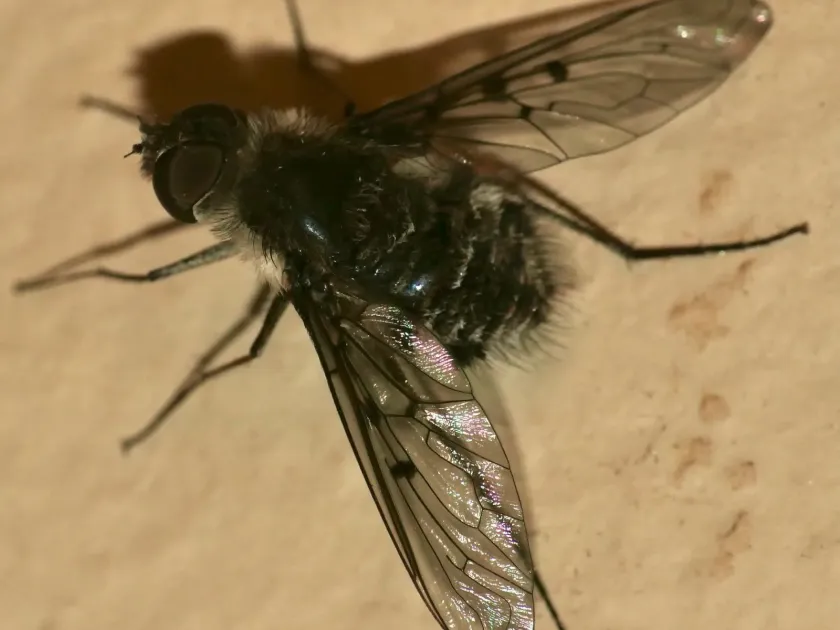
Description
How to identify
Spongostylum belongs to the order Diptera, family Bombyliidae. These insects often resemble bumblebees due to their dense body hair, which serves as a mimicry mechanism for protection.
Adults possess a long proboscis used for nectar feeding, but the larval stage is of primary interest to agronomists as a distinct ecological group.
The body of the imago is usually robust and covered in hairs of varying colors, often with a metallic sheen. Wings are either transparent or feature a distinct dark pattern that helps distinguish them from other fly species.
Identification of genus members requires examination of wing venation and head appendage morphology, usually performed by entomologists using a microscope.
Although many bee flies are parasitoids, the impact of specific species on agricultural ecosystems requires a differentiated approach when assessing their pest status.
What it damages
The pest affects a wide range of crops, often acting as a secondary factor that weakens plants when the biological balance in the field is disturbed.
Spongostylum larvae develop as endoparasites within the nests of solitary bees and other insects, but under high population density, they can indirectly affect the pollination of crops.
Reduced activity of pollinating insects, caused by larval activity in soil or ground nests, leads to incomplete fertilization and yield losses.
A specific hazard is damage to root systems or the root zone during pupation, which creates entry points for secondary infections.
Damage is often localized, but during mass outbreaks, it can cause significant harm to plantations dependent on entomophilous pollination.
When it appears
Adult Spongostylum activity occurs during the hottest and sunniest months of the growing season when plants are in their active flowering phase.
The life cycle is closely tied to the nesting period of their hosts, so the peak emergence of adults coincides with the start of the summer bee-nesting season.
Pupation takes place in the soil, where larvae spend a significant portion of their development waiting for favorable temperature conditions for adult emergence.
The lifespan of adult insects is relatively short and limited to the flowering period of melliferous plants required for their nutrition.
Population monitoring should be conducted during morning hours when insects are less active and concentrate on flowers or warmed soil patches.
Signs of infestation
Signs of the pest's presence are difficult to diagnose in early stages, as they do not leave typical chewing marks on the leaf surface.
The presence of Spongostylum is indicated by the mass presence of characteristic "hairy" flies near the nesting sites of ground-dwelling pollinators.
An indirect sign is the deterioration of fruit quality and a decrease in the number of ovaries on crops requiring cross-pollination.
Small holes may be observed on the soil surface in nesting areas, left behind after adults emerge from their puparia.
Visual inspection of plants using a sweep net allows for the detection of adults during their peak activity on the field.
Control measures
Control measures involve a comprehensive approach aimed at preserving natural enemies and the rational use of chemical agents.
- Restricting the use of broad-spectrum insecticides during the flowering phase.
- Creating buffer zones and shelterbelts to support biodiversity.
- Following crop rotation to disrupt the development cycles of parasitoids.
- Deep autumn plowing to destroy pupae in the soil.
It is essential to minimize chemical pressure to avoid harming beneficial pollinator populations, which often suffer more than Spongostylum itself.
In cases of critical population outbreaks, the use of biopesticides based on entomopathogenic fungi, which are safe for warm-blooded animals, is acceptable.
Taxonomy
- Latin name
- Spongostylum
- Order
- Diptera (flies)
- Family
- Bombyliidae
- EPPO code
- SPGSSP
Discussion
No discussions yet — be the first.