
Sphodrus leucophthalmus
Sphodrus leucophthalmus
Description
How to identify
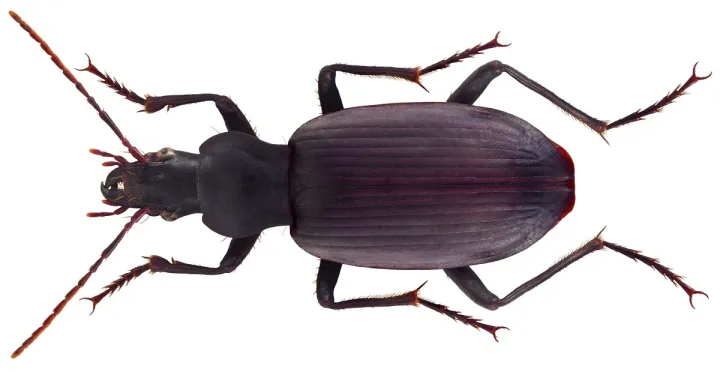
Sphodrus leucophthalmus is a notable species of the ground beetle family (Carabidae) which has adapted to living in human-built environments.
The adult beetle is relatively large, measuring between 20 and 25 mm in length, and is characterized by a sleek, black, often matte body surface.
They possess elongated antennae and long, slender legs, which are specialized for rapid movement across various substrates including walls and floors.
The larvae are campodeiform, meaning they are active hunters with well-developed mandibles, allowing them to navigate and feed effectively in dark, humid environments.
Unlike most ground beetles that live in open fields, this species is strictly synanthropic, preferring dark, protected indoor areas like cellars and basements.
What it damages
While members of the Carabidae family are generally considered predators, Sphodrus leucophthalmus is known to cause damage to stored produce.
They frequently infest damp environments such as vegetable storage rooms, basements, and root cellars where they find shelter and food.
The beetles and their larvae damage stored vegetables like potatoes, carrots, and beets by chewing into the flesh and creating tunnels.
These feeding wounds not only destroy part of the crop but also create entry points for secondary infections like fungal or bacterial rot.
The presence of this beetle is a strong indicator of poor hygiene and excessively high humidity levels within the storage facility.
When it appears
This beetle can remain active year-round if the microclimate in the cellar provides enough warmth and moisture to sustain its biological processes.
Adult beetles are the primary life stage that overwinters, hiding in cracks, crevices, or under debris to survive until conditions become favorable.
Reproductive activity usually increases during the warmer months when temperatures allow for the development of the next generation of larvae.
Infestation cycles are often closely linked to the time when new harvests are introduced into storage facilities that haven't been properly sanitized.
When temperatures drop significantly, the beetles become less active and may enter a state of dormancy until the environment warms up again.
Signs of infestation
The primary visual sign of infestation is finding the beetles themselves in dark corners, under pallets, or near damp walls in storage areas.
Damage signs on vegetables include irregular, deep feeding holes or galleries that penetrate the outer skin of the tubers or root crops.
Excrement presence on storage containers or on the floor near the produce is another clear sign that beetles are actively feeding in the vicinity.
Damaged vegetables often show signs of rapid decay, as the chewing of the beetle promotes the rapid spread of storage pathogens.
When disturbed, these beetles demonstrate a characteristic rapid scuttling movement, trying to hide immediately in dark cracks or beneath materials.
Control measures
The most effective strategy is to eliminate the moisture and humidity that attract the beetles, as they require damp environments to survive and reproduce.
Regular sanitation of storage facilities, including the removal of all decaying organic matter and dust, is essential to deprive them of shelter.
Sealing cracks and crevices in the walls and floor of storage rooms will effectively prevent the beetles from migrating into the storage space.
Maintaining a clean, well-ventilated, and dry environment is the primary non-chemical method to prevent this ground beetle from establishing a population.
- Ensure proper ventilation to reduce ambient humidity
- Remove and discard any rotting vegetables immediately
- Seal cracks in storage room walls and flooring
- Use monitoring traps to detect early signs of beetles
Taxonomy
- Latin name
- Sphodrus leucophthalmus
- Order
- Coleoptera (beetles)
- Family
- Carabidae
- EPPO code
- SPDRLE
Discussion
No discussions yet — be the first.