
Sphaerophoria sulphuripes
Sphaerophoria sulphuripes
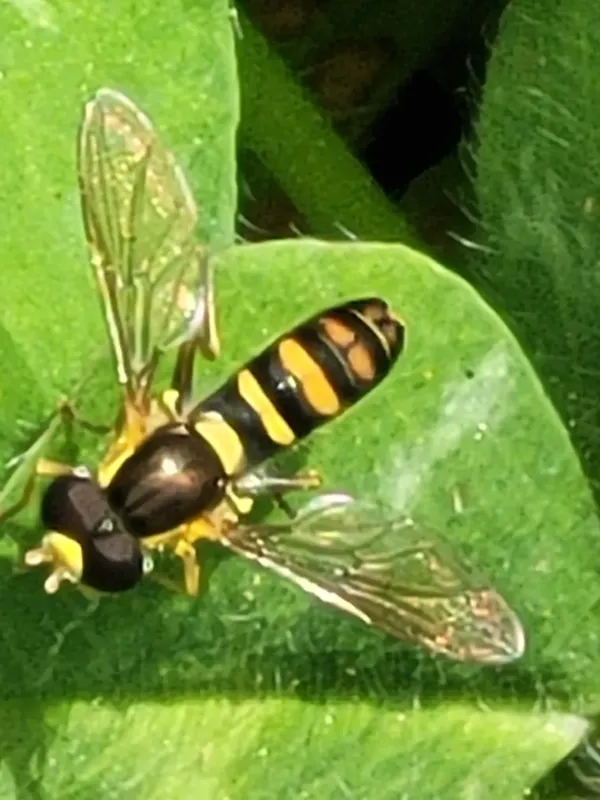
Description
How to identify
Sphaerophoria sulphuripes is a member of the Syrphidae family, belonging to the order Diptera. These hoverflies are often recognized by their striking black and yellow abdominal markings, mimicking wasps to deter potential predators.
The adults are characterized by a slender, elongated abdomen and transparent wings. They possess a high degree of flight control, often remaining motionless in mid-air before darting away quickly.
Larvae are typically cylindrical, legless, and have a translucent appearance. They blend well with plant tissues, making them difficult to detect during initial scouting phases in a field or greenhouse.
Accurate identification of this species often requires professional entomological examination of morphological features, specifically the patterns on the abdominal tergites and genital structures of males.
While many species within the hoverfly family are beneficial pollinators or aphid predators, Sphaerophoria sulphuripes can occasionally manifest phytophagous tendencies, causing concern in agricultural settings.
What it damages
The pest primarily targets vegetable and ornamental crops. The larvae cause mechanical damage by feeding on soft tissues, including stems, leaves, and occasionally flower buds.
Infestation disrupts the plant's vascular system, leading to wilting, stunted growth, and a reduction in overall crop vigor. These wounds also serve as entry points for secondary bacterial and fungal pathogens.
Young seedlings are particularly vulnerable to infestation. If the larvae damage the apical meristem, the plant may cease to grow normally or develop malformed branches.
In high-density cultivation environments, the damage can lead to significant economic loss. Affected produce often fails to meet quality standards due to visible scarring and deformation.
The severity of the damage is often correlated with environmental stressors, such as high humidity and suboptimal nutrition, which make plants less capable of recovering from larval grazing.
When it appears
Adult activity begins in late spring, triggered by rising temperatures. The flies are most active during warm, sunny days, which facilitate mating and egg-laying processes.
Population peaks are typically observed in early summer. Depending on local climatic conditions, several generations can occur within a single growing season.
The life cycle involves an egg stage, several larval instars, a pupal stage, and the adult phase. Pupation usually occurs in the soil or within protected areas near the host plant.
As autumn approaches, the flies prepare for overwintering. They seek refuge in sheltered areas, such as leaf litter or deep within the soil profile, to survive the winter temperatures.
Field monitoring is best achieved through the use of yellow sticky traps, which attract the adult flies, providing an early warning system for producers to implement control measures.
Signs of infestation
Early symptoms include localized yellowing of leaves and unexpected drooping of shoots. These signs often appear in patches within the field where the population density is highest.
The presence of larval excrement (frass) on the surface of stems or leaves is a diagnostic sign. Damaged plant sections frequently exhibit necrosis or darkening at the point of entry.
Distorted growth, such as curling leaves or twisting stems, indicates that the larvae have compromised the growing tip. Splitting the stem may reveal tunnels and the presence of the larvae.
In cases of heavy infestation, plants may show signs of severe stress, including poor fruit set and reduced harvestable yield, even if the plant itself does not die immediately.
- Chlorosis (yellowing) of foliage.
- Deformation of the growing tips.
- Visible larval entry holes in the stems.
Control measures
Effective management starts with cultural practices, such as rigorous crop rotation. Moving away from susceptible hosts for at least one season disrupts the pest's reproductive cycle.
Sanitation is critical; clearing away crop residues and controlling weeds around the field perimeter reduces the potential for larval development and adult overwintering sites.
Biological control options involve the use of naturally occurring parasitoid wasps that predate on the larvae. Promoting beneficial biodiversity within the farm ecosystem helps maintain balance.
If economic thresholds are exceeded, targeted application of systemic insecticides may be necessary. It is important to apply these during the most vulnerable stages of the pest's development.
Proper plant nutrition and moisture management enhance the plant's natural resilience, allowing it to withstand minor infestations without substantial impacts on yield or quality.
Taxonomy
- Latin name
- Sphaerophoria sulphuripes
- Order
- Diptera (flies)
- Family
- Syrphidae
- EPPO code
- SPHPSU
Discussion
No discussions yet — be the first.