
Sphaerophoria cylindrica
Sphaerophoria cylindrica
Description
How to identify
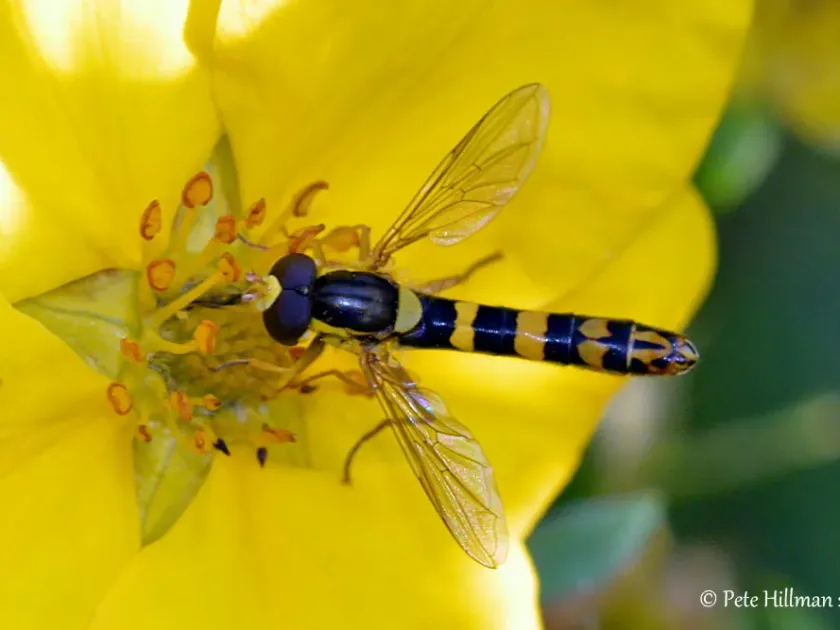
Sphaerophoria cylindrica belongs to the family Syrphidae, also known as hoverflies. This species is characterized by its slender, elongated, and cylindrical abdomen, which makes it distinct among other fly species.
Adult flies exhibit bright yellow and black patterns, often mimicking wasps to deter potential predators. This coloration is a classic example of Batesian mimicry found in many hoverfly species.
The head is dominated by large compound eyes. Males can typically be distinguished from females by the proximity of their eyes, which touch at the top of the head in males.
Larvae are typically small, legless, and soft-bodied, often greenish or translucent. They are primarily found in sheltered environments where they can access plant tissues or prey.
The morphology of these insects allows them to be highly agile in flight, enabling them to hover or move rapidly between flowers and leaves to feed or lay eggs.
What it damages
While many syrphid larvae are beneficial predators, Sphaerophoria cylindrica larvae can cause direct damage by feeding on the tender tissues of various plant species.
Common crops affected include various horticultural plants and leafy vegetables where the larvae damage the epidermis and inner tissues, leading to reduced plant vigor.
The feeding activity can cause localized tissue necrosis, creating entry points for secondary pathogens like bacteria and fungi, which often exacerbate the overall damage.
Significant infestations can lead to deformation of new growth, stunted development, and reduced photosynthetic efficiency, directly impacting the final yield quality.
Greenhouse environments are particularly prone to damage from this pest, as the controlled climate provides an optimal year-round environment for reproduction.
When it appears
The active life cycle of Sphaerophoria cylindrica begins in late spring, triggered by rising temperatures and the availability of early floral resources.
The species typically undergoes multiple generations per year, with the number of cycles being highly dependent on local climate conditions and food availability.
Summer months are characterized by peak activity, during which adult flies are most visible in fields and gardens, actively mating and laying eggs.
As temperatures drop in autumn, the insects transition towards hibernation, with overwintering occurring in the pupal or adult stage protected by soil or debris.
Monitoring for this pest is essential during the warm growing months, as rapid population explosions can occur if environmental conditions are favorable.
Signs of infestation
The presence of this pest is often signaled by irregular feeding marks and yellowing patches on leaves, which indicate larval activity in the area.
Deformed, twisted, or stunted young shoots are classic signs of feeding damage, as the larvae frequently target the most tender meristematic zones of the plant.
Visual confirmation of the adult flies hovering near plants during sunny days suggests that the pest is present and likely to be laying eggs on the foliage.
Secondary signs of infection include the presence of necrotic spots that grow over time, eventually causing the leaf tissue to wither or collapse entirely.
- Stunted plant growth and reduced vigor.
- Presence of larvae on the underside of leaves.
- Necrotic spots on tender stems and leaves.
- Rapid decline in plant aesthetic value.
Control measures
Integrated pest management (IPM) strategies are the most effective way to handle this pest, starting with rigorous cultural practices like crop rotation.
Maintaining clean fields by removing organic debris and weeds reduces the availability of overwintering sites, significantly lowering the population size for the following season.
Biological control, including the use of parasitic wasps or entomopathogenic fungi, can help suppress the population without disrupting the wider ecosystem.
Chemical intervention should be considered a last resort, using selective insecticides that target the specific larval stages while minimizing risks to beneficial insects.
Sticky yellow traps provide an excellent monitoring tool, allowing farmers to track adult population levels and implement targeted control measures before eggs are laid.
Taxonomy
- Latin name
- Sphaerophoria cylindrica
- Order
- Diptera (flies)
- Family
- Syrphidae
- EPPO code
- SPHPCY
Discussion
No discussions yet — be the first.