
Sphaerocera curvipes
Sphaerocera curvipes
Description
How to identify
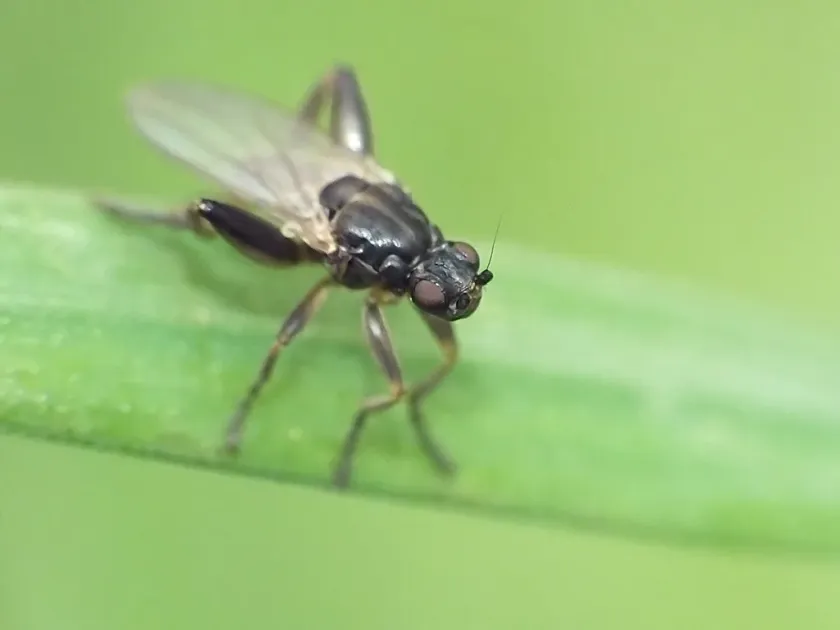
Sphaerocera curvipes is a small species of fly belonging to the family Sphaeroceridae, commonly known as lesser dung flies. These insects are characterized by their small size, typically measuring between 2 and 3 millimeters in length, with a generally dark or blackish body.
The scientific name refers to the distinctive curvature of the hind legs in adult specimens, which is a key morphological feature for identification. They possess well-developed wings and exhibit a short, hopping, or low-altitude flight pattern near the substrate surface.
The larval stage consists of small, legless, maggot-like creatures that are translucent white or pale yellow. They are highly adapted to living in decaying organic matter and lack a clearly defined head capsule.
These flies are saprophagous, meaning they feed primarily on decomposing organic material. They are frequently found in moist environments, including greenhouses where manure or organic fertilizers are used during soil preparation.
Their life cycle is relatively rapid, allowing for multiple overlapping generations under favorable greenhouse conditions. The transition from egg to adult is highly dependent on ambient temperature and moisture levels.
What it damages
The primary agricultural damage caused by Sphaerocera curvipes occurs when the larval stage interacts with the root systems of greenhouse seedlings. While primarily decomposers, larvae can become opportunistic pests of weakened or young plants.
Vegetable crops such as cucumbers, tomatoes, and bell peppers are most susceptible during the early establishment phase. Larvae may consume fine root hairs and tunnel into the base of the stem, particularly if the plant tissue is softened by excessive moisture or rot.
This feeding activity compromises the plant's ability to take up nutrients and water, leading to visible signs of stress. Furthermore, these larvae create wounds in the roots that serve as entry points for secondary soil-borne pathogens, including fungi and bacteria.
Seedlings affected by high larval densities often show stunted growth, chlorosis, and wilting during peak sunlight hours. If left unmanaged, heavy infestations can lead to total plant loss and significant economic impact on greenhouse nurseries.
Damage is almost exclusively linked to the presence of non-decomposed organic matter in the root zone. In soil mixes lacking fresh organic waste, the threat from this fly is significantly lower.
When it appears
The presence of Sphaerocera curvipes is year-round in temperature-controlled greenhouses. The pest population dynamics are primarily driven by the availability of breeding substrates rather than external seasonal variations.
Peak activity periods frequently align with the start of the planting season, when greenhouse soils are heavily amended with organic fertilizers or compost. Spring planting is a particularly sensitive period for nursery stock.
During the summer, populations can remain high if the soil surface is kept constantly damp. High humidity in the greenhouse environment facilitates the flies' breeding cycle and increases the survival rate of offspring.
Autumn and winter populations persist in greenhouses as long as the temperature remains above a certain threshold. The flies often seek out the warmest, most humid areas within the structure to maintain their reproductive cycle.
Under optimal conditions (20–25°C), a single generation can complete its development in less than three weeks. This high turnover rate allows the pest to quickly reach high densities if not properly monitored.
Signs of infestation
The most immediate sign of an infestation is the observation of numerous small, dark flies walking on the soil surface or resting on the lower leaves of plants, especially shortly after irrigation.
An unpleasant, earthy, or rotting odor emanating from the soil mix is a strong indicator that conditions are ideal for Sphaerocera development. A waterlogged substrate with visible decomposing particles confirms this risk.
Visual inspection of the root zone of wilted seedlings often reveals the larvae. These tiny, whitish maggots are typically found clustered around the main root system or the collar of the plant.
Monitoring with yellow sticky traps is an effective diagnostic tool. A high number of these small dipterans on the traps provides clear evidence of a population explosion that requires intervention.
Persistent wilting of plants that does not respond to regular irrigation is a classic sign of root-level stress. When soil-borne diseases are suspected, the involvement of these flies as vectors or wound-causers should be considered.
Control measures
The most effective management strategy is strictly prophylactic, focusing on the use of fully composted and well-decomposed organic materials. Avoiding fresh manure in seedling substrate is the primary preventative measure.
Proper greenhouse sanitation is essential. Removing crop debris and cleaning up organic spillages prevents the establishment of breeding sites. Maintaining good soil drainage is also critical to discourage colonization.
Physical barriers, such as a layer of dry sand or fine grit on the soil surface, can prevent female flies from accessing the moist soil to lay their eggs, effectively disrupting the life cycle.
Biological control options include the application of entomopathogenic nematodes (e.g., Steinernema feltiae), which actively hunt and parasitize the larvae within the soil without posing risks to the crops.
Chemical control should be considered a last resort. If insecticides are required, they should be applied as soil drenches and must be registered for use in greenhouse environments to ensure safety and regulatory compliance.
Taxonomy
- Latin name
- Sphaerocera curvipes
- Order
- Diptera (flies)
- Family
- Sphaeroceridae
- EPPO code
- SPOCCU
Discussion
No discussions yet — be the first.